The question of “post-tournament legacy” dominated recent discussions at the Salé Forum. Tourism and cultural leaders are working to ensure that the 2030 FIFA World Cup does not become a short-lived highlight, but rather a launchpad for structured, cross-continental growth.
Our field analysis shows that the Confédération Nationale du Tourisme (CNT) has already successfully integrated Spanish and Portuguese travel agencies into Morocco’s national network, resulting in a 12% rise in Spanish arrivals since late 2024. This trilateral cooperation is now the blueprint for the 2030 visitor experience.
| Strategic Pillar | 2030 Implementation Plan | Expected Impact |
|---|---|---|
| Tourism Flow | Joint “Mediterranean Corridor” travel packages | 30M+ Visitors target |
| Infrastructure | Multi-event stadiums & digital water management | Year-round venue ROI |
| Tech & Innovation | Travel-tech startups & FITUR collaborations | Smart City transformation |
What is the “Borderless Corridor” vision for the 2030 World Cup?
With fewer than 14 kilometers separating Morocco from Spain, stakeholders are designing a seamless travel experience. This “borderless” vision connects Morocco, Spain, and Portugal through unified digital tourism platforms and integrated transport links. The goal is to allow international visitors to experience three countries as one single, high-value destination, effectively redrawing the map of Mediterranean tourism.
How will Morocco avoid the “mega-event spike” and decline?
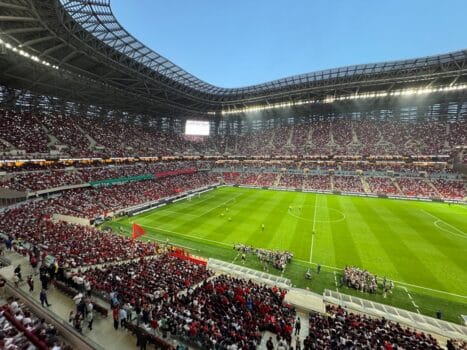
To prevent the typical post-event economic slump, Morocco is investing in “smart legacy” infrastructure. Future stadiums are being built as multi-purpose venues capable of hosting international concerts, trade fairs, and cultural gatherings year-round. By integrating the creative industries with stadium management, Morocco ensures that these multi-billion dollar investments remain profitable long after the final whistle.
Can Morocco reach 30 million tourists by 2030?
While the official government target is 26 million, industry leaders at the Salé Forum believe that the trilateral partnership could push Morocco past the 30 million milestone. The strategy relies on converting the massive global visibility of the World Cup into permanent travel routes, especially by attracting Portuguese travel-tech startups and expanding representation at major international fairs like FITUR in Madrid.
Infrastructure as a Base for Long-Term Development
Beyond the pitch, the 2030 vision includes implementing cutting-edge solutions like digital water-management systems and smart mobility corridors. This technological cooperation between the three host nations ensures that the 2030 FIFA World Cup serves as a catalyst for Morocco’s broader smart-city goals, solidifying its position as a modern, high-tech hub in Africa.
Source: Lematin.ma