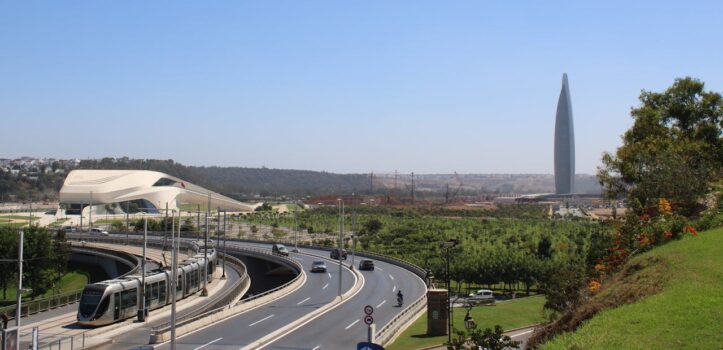
Morocco is advancing a national strategy that positions smart cities as a central component of its broader economic and infrastructure transformation. While the FIFA World Cup 2030 accelerates investment and visibility, the country’s digital urban agenda extends well beyond the event. It aligns with long term objectives that focus on governance efficiency, infrastructure modernization, and global competitiveness.
This transformation integrates transport systems, energy networks, digital governance, and urban planning into coordinated frameworks. As Morocco expands its infrastructure capacity, it increasingly relies on data driven systems and intelligent technologies to manage growth and improve service delivery.
National Strategy Behind Smart Cities in Morocco
Morocco’s smart city development is anchored in national planning frameworks such as the Digital Morocco strategy and Vision 2030. These policies prioritize digital infrastructure, artificial intelligence, and public service digitization as core drivers of economic growth.
The government promotes interoperability between institutions, which allows data sharing across sectors such as transport, security, and urban planning. Once implemented, this approach reduces administrative delays and improves coordination between local and national authorities.
At this stage, smart city development is not limited to pilot projects. It reflects a systemic transition toward digital governance and infrastructure integration that supports both daily urban life and large scale international events.
Transport Infrastructure as the Backbone of Smart Cities
Rail and High Speed Expansion
The national railway operator ONCF continues to expand high speed rail infrastructure, building on the success of the Al Boraq line between Tangier and Casablanca. New extensions aim to connect major cities and improve intercity mobility ahead of 2030.
These developments support smart mobility systems by reducing travel time and enabling better synchronization with urban transport networks. When integrated with digital ticketing and real time scheduling, rail infrastructure becomes a key component of smart urban ecosystems.
Airports and Passenger Flow Optimization
The Moroccan Airports Authority ONDA is modernizing major airports including Casablanca Mohammed V and Marrakech Menara. These upgrades include biometric systems, automated passenger processing, and improved logistics flows.
As a result, airports operate as smart hubs that manage high passenger volumes efficiently, which is essential during global events such as the World Cup.
Ports and Logistics Infrastructure
Tanger Med has established itself as one of Africa’s leading logistics platforms. The port integrates digital tracking systems, automated cargo handling, and real time logistics management.
This infrastructure strengthens Morocco’s role in global trade while supporting smart logistics systems that connect ports with inland transport networks.
Urban Transformation and Smart City Projects
Casablanca Smart City
Casablanca leads Morocco’s smart city initiatives through integrated urban management systems. The city deploys intelligent traffic control, digital administrative platforms, and urban data centers.
These systems reduce congestion, improve service delivery, and provide real time insights for decision makers. As urban density increases, such tools become essential for maintaining efficiency and quality of life.
Rabat Smart Governance Model
Rabat focuses on digital governance and public service accessibility. Authorities implement platforms that allow citizens to access administrative services online, which reduces processing time and improves transparency.
In practice, this model strengthens citizen engagement while supporting a more responsive public administration.
Zenata Eco City
Zenata represents a large scale sustainable urban development near Casablanca. The project integrates green infrastructure, energy efficiency, and smart urban planning principles.
After this phase, Zenata is expected to function as a model for environmentally sustainable smart cities in Morocco.
Digital Infrastructure and AI Integration
Morocco is investing in data centers, cloud infrastructure, and artificial intelligence systems to support smart city operations. These technologies enable predictive analytics for traffic management, energy consumption, and public safety.
When integrated across sectors, AI systems shift urban management from reactive responses to proactive planning. This improves efficiency while reducing operational costs.
The government also supports digital skills development to ensure that the workforce can sustain this transformation.
Renewable Energy and Smart Infrastructure
Renewable energy plays a central role in Morocco’s smart city strategy. MASEN leads major projects such as the Noor Ouarzazate solar complex, which contributes to national energy sustainability.
These energy systems integrate with smart grids that optimize distribution and reduce energy loss. As a result, cities benefit from more stable and efficient power supply.
Smart Stadiums and World Cup Infrastructure
Preparations for the 2030 FIFA World Cup include the construction and renovation of stadiums equipped with advanced digital systems. These facilities incorporate crowd management technologies, security monitoring, and connected services for spectators.
Once operational, these stadiums will serve as long term infrastructure assets that support tourism and large scale events.
Challenges and Implementation Constraints
Despite strong progress, Morocco faces several challenges in implementing smart city systems. Institutional fragmentation can slow down integration between sectors. In addition, unequal access to digital services may widen the gap between urban and rural areas.
At this stage, addressing these constraints requires coordinated governance, investment in digital inclusion, and continuous system interoperability improvements.
What Makes Morocco’s Smart City Strategy Unique
Morocco combines infrastructure development with digital transformation rather than treating them as separate processes. This integrated approach ensures that transport, energy, and governance systems evolve together.
Similarly, the country aligns its smart city initiatives with economic goals such as trade expansion, tourism growth, and industrial development.
Conclusion
Smart cities in Morocco reflect a long term national transformation that extends beyond the World Cup 2030. The country is building interconnected systems that combine infrastructure, digital technology, and governance reform.
As projects move from implementation to integration, Morocco strengthens its position as a regional hub for smart urban development. This transition supports economic growth, improves urban efficiency, and creates a foundation for future innovation.
Related Articles
Tangier smart traffic signage for World Cup 2030
Morocco infrastructure masterplan for World Cup 2030
Rabat 4000 smart cameras urban security project
Morocco Vision 2030 development strategy