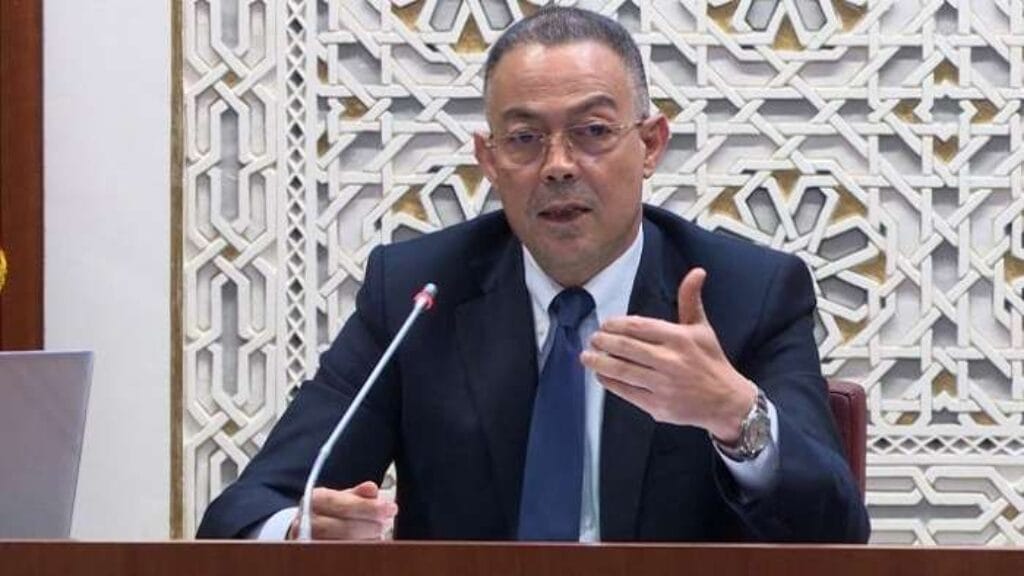
Fouzi Lekjaa. Photo Credit: MAP
Building on the successful organization of AFCON 2025, Morocco is setting ambitious goals for the 2030 FIFA World Cup. Speaking in Salé, FRMF President Fouzi Lekjaa outlined Morocco’s vision to deliver a historic and unprecedented global tournament.
AFCON 2025 as a foundation for 2030
Addressing Moroccan, Spanish, and Portuguese economic leaders at the Mohammed VI Football Complex in Salé, Fouzi Lekjaa highlighted AFCON 2025 as a major proof of Morocco’s organizational maturity.
He stressed that the tournament was entirely delivered by Moroccan expertise, from design and construction to operations and logistics, positioning the country as fully ready for the demands of the World Cup.
An intercontinental and centenary World Cup
The 2030 World Cup will mark the tournament’s centenary and will be hosted for the first time across two continents, Africa and Europe, by Morocco, Spain, and Portugal.
Lekjaa underlined the shared historical, cultural, and economic ties between the three countries, describing them as a solid foundation for success. The competition will feature 104 matches within a compressed schedule, requiring seamless coordination across cities such as Madrid, Marrakech, and Lisbon.
This unprecedented mobility model demands uniform standards in infrastructure, transport, security, and logistics across all host nations.
Businesses at the heart of the project
According to Lekjaa, companies of all sizes will play a central role in delivering the tournament. From small local firms to major enterprises responsible for stadium construction, ticketing, and security, all stakeholders are expected to contribute actively.
The World Cup is designed as a long-term value creation engine, extending far beyond the sporting event itself.
Strong tripartite cooperation
CGEM President Chakib Alj called for a structured framework to encourage cooperation between Moroccan, Spanish, and Portuguese companies, particularly to help SMEs access World Cup-related opportunities.
Spanish business leaders emphasized the tournament’s broader role as a platform for economic and territorial integration, while Portuguese representatives highlighted its potential to generate lasting jobs, partnerships, and euro-African cooperation.
What it means for Morocco
The 2030 World Cup is envisioned as a unifying project that mobilizes youth, strengthens international ties, and delivers lasting economic and social benefits.
For Fouzi Lekjaa, the objective is clear: to make the 2030 tournament the best World Cup in history.
Related Reads:
- “Morocco, Land of Football”: Fouzi Lekjaa Celebrates Morocco as a Host of Major Events and a Meeting Place of Civilizations
- AFCON 2025: €1.5 Billion in Revenue and 80% of 2030 World Cup Infrastructure Completed, Says Ryad Mezzour
- CGEM: AFCON Success Sets the Blueprint for World Cup 2030
- How AFCON 2025 and World Cup 2030 Are Fueling Morocco’s Construction Boom