Photo Credit: MAP
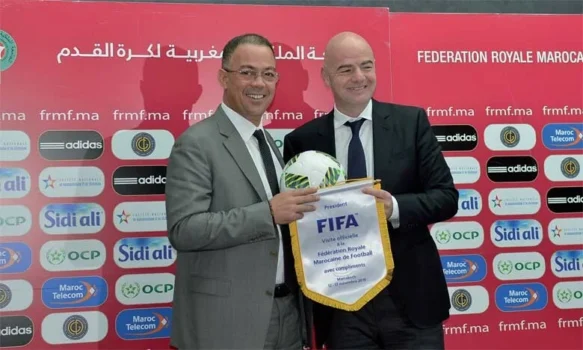
Morocco’s long-term investment in youth development is gaining international recognition. The Royal Moroccan Football Federation announced that its National Youth Talent Development Program has received strong praise from the FIFA, which is now considering adopting the Moroccan model in other African countries.
The acknowledgment comes within the framework of FIFA’s global Talent Development Scheme. As part of the initiative, FIFA conducted two official visits to Morocco to closely examine the structure and implementation of the national program.
FIFA Visits Highlight Club-Level Excellence
During these visits, FIFA representatives toured several leading Moroccan clubs, including Wydad Athletic Club, Raja Club Athletic, FUS Rabat, and RS Berkane.
According to the federation, FIFA officials expressed strong appreciation for the technical standards, training methodologies, and organizational structures observed within these academies. The visits focused on infrastructure, coaching systems, and talent identification processes.
The positive evaluation has encouraged FIFA to organize a seminar in Morocco next April aimed at strengthening the qualifications of Moroccan youth coaches and technical staff.
Financial and Structural Support Through the Federation
FIFA, which contributes financially to talent development programs across Africa, will also partner with the Moroccan federation to support selected clubs participating in the national program. The funding will be directed toward upgrading and modernizing infrastructure.
Importantly, financial contributions will not be transferred directly to clubs. Instead, they will pass through the Royal Moroccan Football Federation, which will allocate resources based on each club’s needs within the development framework.
As Morocco prepares for major continental and global milestones toward 2030, youth development continues to form the backbone of its football strategy. If adopted across Africa, the Moroccan model could position the country as a continental benchmark in structured talent formation.
Related:
- Five Stars, One Academy: How Mohammed VI Football Academy Built a Generation Through Long-Term Vision
- How the Mohammed VI Football Academy Shaped Morocco’s Rise to Global Football Power
- Stade Rennais and Mohammed VI Academy Strengthen Ties Through Friendly Match
- Five Moroccan Kings of Africa’s Ballon d’Or