
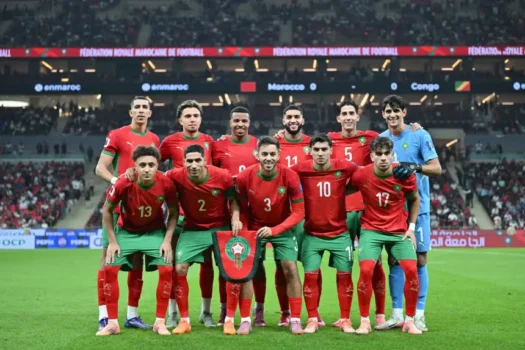
Photo source: FRMF.ma
They do not share the same position on the pitch. They did not follow identical career routes. They express football in different ways once the ball is at their feet. Yet Nayef Aguerd, Azzedine Ounahi, Oussama Targhalline, Youssef En-Nesyri, and Aït Boudlal are connected by one common origin. All five emerged from the same institution, shaped by the same philosophy, and prepared by the same long-term project: the Mohammed VI Football Academy.
Related: How the Mohammed VI Football Academy Shaped Morocco’s Rise to Global Football Power
Their presence at the highest level is not a coincidence. Instead, it reflects a carefully constructed model that favored patience over urgency and structure over improvisation. Morocco did not simply produce five elite players. It built a system capable of doing so repeatedly.
From Royal Vision to a National Institution
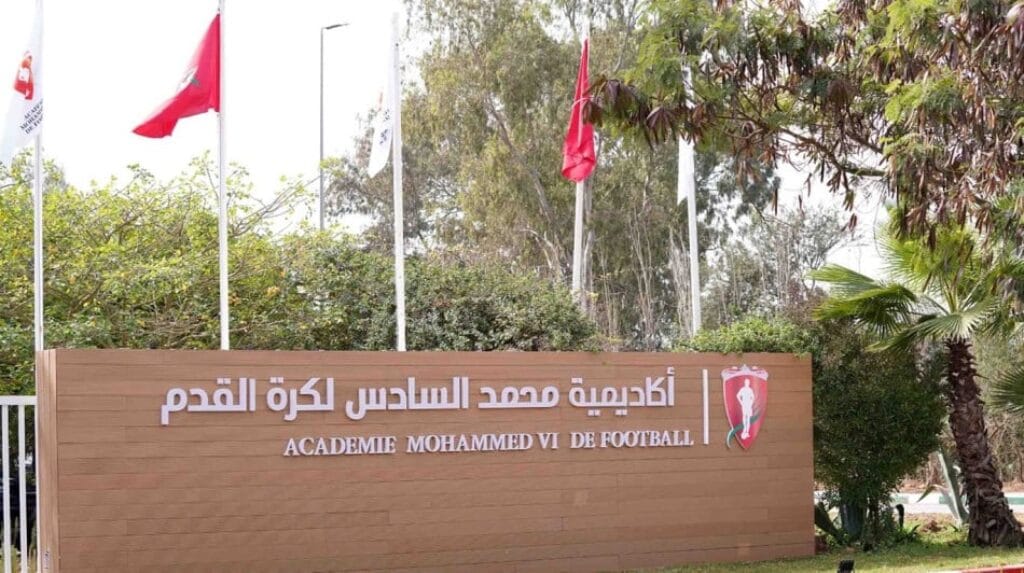
The Mohammed VI Football Academy was never designed as a short-term response to results. From the outset, it formed part of a broader national vision aimed at reshaping Moroccan football in a sustainable way. As recruitment director Tarik El Khazri has often underlined, the academy resulted from a royal initiative intended to create lasting excellence rather than temporary success.
This vision required more than modern facilities. It demanded a complete ecosystem. When Nasser Larguet arrived as the academy’s first technical director, he started from a blank page. There was no existing framework to refine. Everything needed to be imagined, tested, and implemented.
Between 2007 and 2010, the project took shape. Architecture, training methodology, educational programs, and daily life organization all followed a single guiding principle: long-term player development. During that period, more than 15,000 young players were observed across the country. Only 37 were selected. The filtering process was strict by design.
As a result, the academy moved quickly from concept to reality. Within two years, several players had already joined Morocco’s youth national teams. Progress became visible early, yet the focus remained firmly on development rather than immediate recognition.
Related: Nasser Larguet Reveals the Blueprint Behind Morocco’s Football Revolution
One Academy, Five Careers, a Shared Football Language
Although Aguerd, Ounahi, Targhalline, En-Nesyri, and Aït Boudlal followed different paths, they speak the same football language. That shared identity represents what insiders now describe as the “AMF signature.”
First, it appears in technical behavior. Academy-trained players show composure under pressure, precision in tight spaces, and clarity in decision-making. These qualities did not emerge by chance. Training sessions regularly reproduced high-stress scenarios, forcing players to think quickly while remaining calm.
At the same time, the academy emphasized attitude. Humility toward work remained essential. Collective responsibility mattered more than individual status. Every player learned that representing the academy meant carrying values as much as talent.
Aguerd illustrates this approach through defensive stability and leadership built on calm authority. Ounahi embodies game intelligence, controlling tempo rather than forcing actions. Targhalline brings balance and discipline, ensuring structure remains intact. En-Nesyri transformed athletic potential into efficiency through tactical education. Meanwhile, Aït Boudlal reflects continuity, already shaped by the same standards at an early stage.
Different journeys, therefore, emerged from one common foundation.
Related: France24: Inside the Mohammed VI Football Academy, Morocco’s Engine for Future Champions
When Development Becomes Proof, Not Promise
For academy officials, success is not measured at the moment of recruitment. Instead, it is measured over time. Tarik El Khazri often explains that a model proves its maturity when it produces leaders capable of performing under extreme pressure.
From the beginning, Nasser Larguet insisted on durability. A professional contract alone did not define success. The academy aimed to create players able to maintain elite performance across many seasons, both at club level and with the national team.
Statistics confirm that strategy. Of the 57 players closely supported during Larguet’s tenure, 47 reached professional status. Fifteen played in Europe. Several competed in World Cups, Olympic Games, and major continental tournaments. Moroccan youth development, therefore, evolved from promise into a structured pathway.
Education as the Foundation of Performance
Football never stood alone at the Mohammed VI Academy. Education remained central. Larguet frequently repeated that once education was addressed, everything else followed.
Players joined the academy at nine, ten, or twelve years old. No professional future was guaranteed. That reality was openly acknowledged. Academic education, personal discipline, and social development formed essential pillars of the project.
Daily routines emphasized respect, punctuality, and responsibility. Schooling progressed alongside football training. As a result, players developed emotional stability as well as technical skill. When pressure arrived later in their careers, it felt familiar rather than overwhelming.
This approach explains why many academy graduates handle decisive moments with composure. They learned early that setbacks form part of growth, not failure.
A Model That Redefined Local Development
By investing heavily in structure and methodology, Morocco challenged a long-standing assumption. Elite players no longer needed to leave early in order to succeed. Development could occur at home, within a controlled and culturally familiar environment.
The academy combined modern infrastructure with a clear identity. It did not reject international exposure. Instead, it delayed it until players were mentally and physically prepared. That balance proved decisive.
As Tarik El Khazri has noted, Africa can produce excellence for Africa. The Mohammed VI Academy stands as proof that local investment can meet global standards when guided by vision and patience.
Playing at Home, Carrying Responsibility
For Nayef Aguerd, representing Morocco on home soil carries special meaning. He often describes it as both an honor and a responsibility. That responsibility extends beyond personal performance. It includes defending the values of the academy that shaped him.
Aguerd consistently credits the royal vision behind Moroccan football’s transformation. His words reflect a broader sentiment shared by many academy graduates. They see themselves as ambassadors of a system rather than isolated successes.
Beyond Results, a Lasting Legacy
In the future, this generation will not be remembered only for match results. It will be remembered for what it represents. Five stars emerging from one academy illustrate the maturity of a national model built with patience and conviction.
Morocco continues to pursue major titles. However, something more durable already exists. A football culture grounded in education, structure, and belief now defines the country’s approach.
Five stars. One academy. A long-term vision that reshaped Moroccan football from the ground up.