Photo credit: MAP / by Rizko Abdelmajid
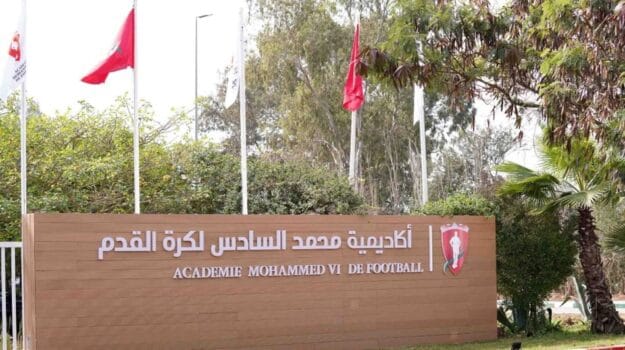
How the Mohammed VI Football Academy Shaped Morocco’s Rise to Global Football Power.In Moroccan football’s extraordinary decade of transformation, from the senior national team’s heroics in Qatar 2022 to the historic U-20 World Cup triumph in 2025, one name keeps surfacing at the core of every success story: the Mohammed VI Football Academy (AMF).
Built on vision rather than chance, this academy has reshaped the country’s sporting landscape. It symbolizes how structured ambition can elevate a nation, where education, discipline, and opportunity merge to produce a steady stream of world-class players.
A Vision Rooted in Purpose
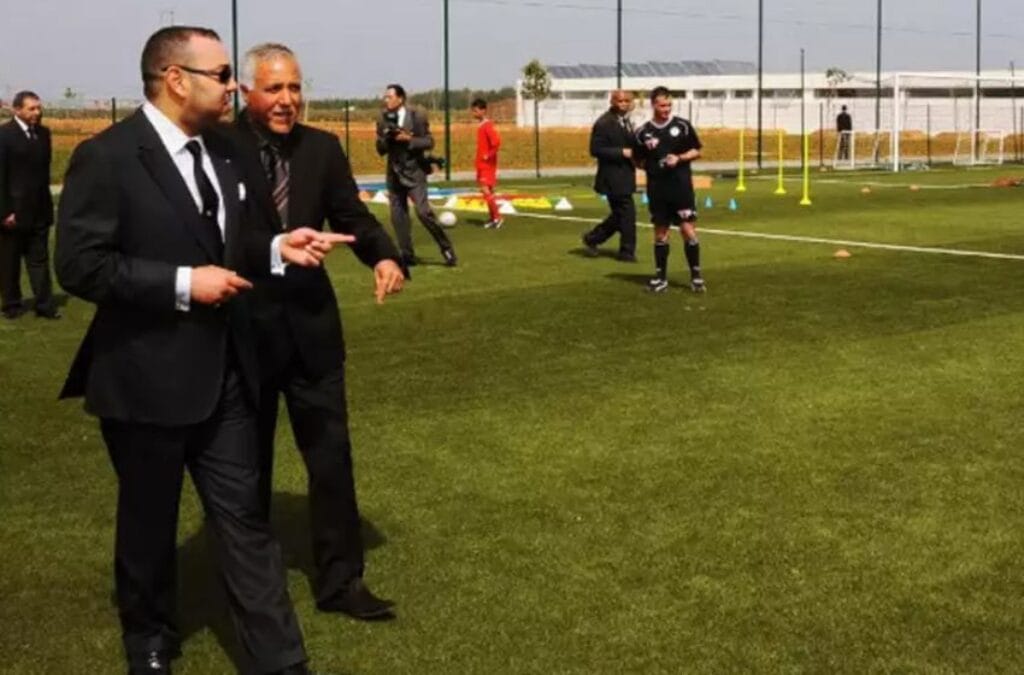
The academy was created under the direction of King Mohammed VI, who understood that sport could be both a tool for excellence and a bridge for social cohesion. Construction began in 2007 in Salé, near Rabat, with an investment of nearly MAD 140 million (€13 million). Officially inaugurated in 2010, the AMF was designed to reflect the Kingdom’s long-term dream — producing athletes who could stand proudly among the best in the world.
The facility spans around 25 hectares, designed by Groupe 3 Architectes, with world-class training fields, dormitories, study halls, and medical centers. (fr.wikipedia.org)
But the academy’s soul extends beyond architecture. It was envisioned as a sport-education institution, ensuring young players study, learn languages, and acquire values alongside technical skills. The model draws inspiration from European excellence yet remains proudly Moroccan, grounded in ethics, respect, and community.
Structure, Curriculum, and Philosophy
The academy welcomes youth between 12 and 18 years old, selected through national scouting programs. Training follows a three-stage development model:
- Foundation Phase (12-14 years): Emphasis on physical coordination, game understanding, and academic balance.
- Specialization Phase (14-16 years): Tactical awareness and competitive exposure.
- Professional Phase (16-18 years): Full immersion in professional rhythm — nutrition, strength, and match performance.
Education remains non-negotiable. Young athletes follow the national school curriculum, with subjects in Arabic, French, and English, complemented by digital literacy. The goal is to form complete individuals, not just competent players.
The academy also employs certified UEFA-trained coaches, psychologists, and analysts. Recovery facilities, cryotherapy, physiotherapy, and medical monitoring, reflect Morocco’s ambition to meet global standards.
The Pipeline That Changed Moroccan Football
The results have been transformative. The academy has produced players who now headline top European clubs and anchor Morocco’s national teams:
| Academy Graduate | Current/Recent Club | Role |
|---|---|---|
| Youssef En-Nesyri | Al Hilal | Clinical Striker |
| Nayef Aguerd | Olympique de Marseille | Defensive Leader |
| Azzedine Ounahi | Girona | Creative Midfielder |
These players embody what the academy was meant to do: produce athletes capable of adapting to international football without losing their Moroccan identity.
The U-20 World Cup Victory: A Dream Realized
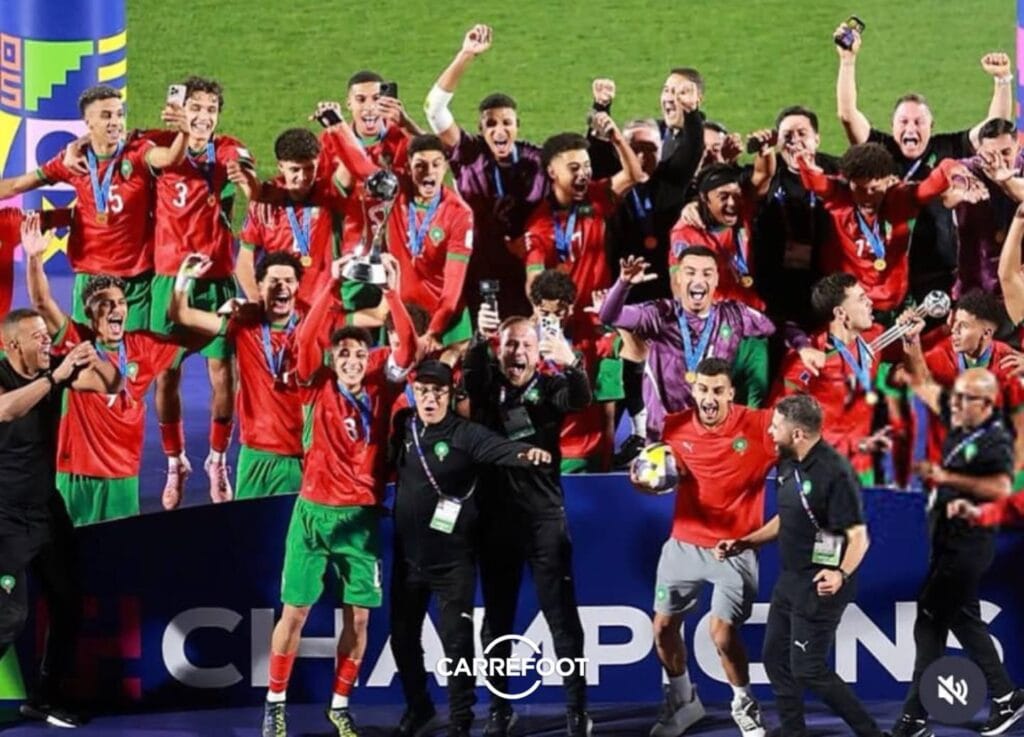
In October 2025, Morocco’s U-20 team lifted the World Cup, defeating Argentina U‑20 national football team 2-0 in the final in Chile, a victory that stunned the football world. Many members of that squad, including Zahouani, Zabiri, and Houssam Essadak, were nurtured through the Mohammed VI Football Academy’s system.
Their triumph was not a miracle. It was the result of years of structure, vision, and resilience. When these young players faced the world’s elite, they played with tactical maturity, technical discipline, and emotional composure, the hallmarks of AMF training.
The win also validated Morocco’s broader football philosophy: build from the ground up, invest in youth, and believe in process. For millions watching, the sight of Morocco crowned U-20 world champion represented a full-circle moment, proof that national investment in education and sport can yield historic glory.
Related: Morocco Crowned U-20 World Cup Champions After Historic 2-0 Win Over Argentina
From Local Roots to Global Recognition
AMF’s success has reached beyond Morocco’s borders. International media such as Ouest-France and The Guardian have described the academy as “the silent architect of Morocco’s football revolution.” Clubs across Africa and Europe now send delegations to study its model.
The academy’s U-19 international tournament attracts elite teams like Real Madrid, PSG, and Ajax Amsterdam, giving Moroccan talents valuable exposure.
This exposure doesn’t only improve technique; it expands confidence. Moroccan youth now see a clear path from local fields to international stadiums. The academy has become both a dream and a destination.
Socioeconomic and Educational Impact
Beyond sport, AMF reshapes lives. Many trainees come from modest backgrounds; the academy covers their education, lodging, and full support. For them, football becomes an instrument of mobility, not only financial, but social and intellectual.
The academy teaches responsibility, community awareness, and leadership. Alumni who don’t reach professional leagues still graduate as disciplined, bilingual young adults ready to contribute in other fields.
This aligns with King Mohammed VI’s vision that sport should serve as a catalyst for national cohesion, linking physical well-being with moral and civic education. The AMF’s motto could easily read: “Form men before forming players.”
Infrastructure Beyond the Main Campus
The Mohammed VI Football Academy inspired a national replication plan. Satellite centers and partnerships with regional academies now operate under similar standards in Rabat, Casablanca, Fez, Marrakech, and Laâyoune. The approach decentralizes talent discovery, ensuring that gifted youth from remote provinces access the same level of opportunity.
By integrating regional academies under a shared philosophy, Morocco has built an ecosystem, one that feeds directly into club academies and national youth teams. This network ensures the pipeline remains dynamic and inclusive.
Integration with National Ambitions
The AMF also functions as a cornerstone for Morocco’s broader 2030 World Cup co-hosting project with Spain and Portugal. Beyond stadiums and logistics, FIFA evaluates youth development structures, legacy programs, and grassroots systems. Morocco’s academy provides an exemplary model that demonstrates sustainability and social impact.
With AFCON 2025 set to showcase new infrastructures and training facilities, the academy’s graduates will likely play decisive roles. The same philosophy that produced En-Nesyri and Ounahi will define Morocco’s football brand during the tournament, dynamic, disciplined, and daring.
Challenges Ahead
Success also brings responsibility. The academy now faces new challenges:
1. Scaling Without Diluting Quality
As Morocco’s reputation grows, demand for access skyrockets. Maintaining individualized training and education remains essential.
2. Bridging Youth and Senior Football
Transitioning academy graduates into consistent first-team performers, both in local clubs and abroad, requires stronger coordination between AMF, the FRMF, and professional teams.
3. Expanding Women’s Football
The next evolution involves developing a parallel system for women and girls. Plans for a Mohammed VI Women’s Football Academy are already in discussion, potentially another transformative step.
4. Sustainability and Mental Health
As football’s pressures intensify, the academy must continue integrating sports psychology and holistic care to protect its young athletes’ well-being.
Global Partnerships and Knowledge Exchange
The AMF collaborates with elite clubs for technical exchange, from Lyon and PSG to Chelsea and Ajax. Moroccan coaches frequently visit Europe for training, while international specialists deliver workshops in Salé. This constant knowledge transfer keeps the academy aligned with global trends while preserving its Moroccan identity.
Its alumni’s success abroad further enriches this exchange: Aguerd and En-Nesyri often return during off-season to mentor current students, creating a virtuous cycle of inspiration.
Cultural Diplomacy and Soft Power
Morocco’s football story carries diplomatic weight. The academy is both a sports hub and a cultural ambassador. Every successful graduate amplifies Morocco’s image as a nation of discipline and creativity.
During global tournaments, commentators now mention the Mohammed VI Academy as the root of Moroccan football’s transformation, similar to how Clairefontaine symbolizes France or La Masia represents Spain. That comparison alone shows how far Morocco has come.
The academy’s symbolism extends to Africa as well. It has trained players from other African countries and hosts exchange programs that reinforce Morocco’s leadership in continental sport diplomacy.
Related: Morocco’s Rising Voice at FIFA: Four High-Level Seats Won on International Committees
A Model for the Future
As Morocco advances toward the 2030 World Cup, the Mohammed VI Academy stands at the center of a larger blueprint: use football as a driver of sustainable development. The institution reflects national confidence, the belief that homegrown talent, properly nurtured, can achieve global success.
The academy’s next decade will likely focus on digital analytics, AI-driven performance monitoring, and ecological responsibility, integrating smart infrastructure that supports both training and sustainability goals.
If Morocco continues to connect these threads, education, inclusion, innovation, and pride, it will redefine what football academies in Africa can be.
The Beat Behind the Glory
The Mohammed VI Football Academy is not just a training center. It is the heartbeat of Moroccan football’s renaissance. From the World Cup semi-final in Qatar to the U-20 World Championship, the rhythm that began on its fields now echoes across continents.
Every goal scored by a Moroccan player on the world stage carries the fingerprint of this academy, a blend of vision, structure, and identity. It represents a nation that chose to believe in youth before the world believed in it.
As Morocco prepares to welcome new tournaments, new generations, and new challenges, the academy’s story continues, one of purpose, patience, and national pride.
When the world watches Morocco lift trophies, it sees victory. But behind those celebrations lies the real triumph, a field in Salé where dreams are trained, not wished.