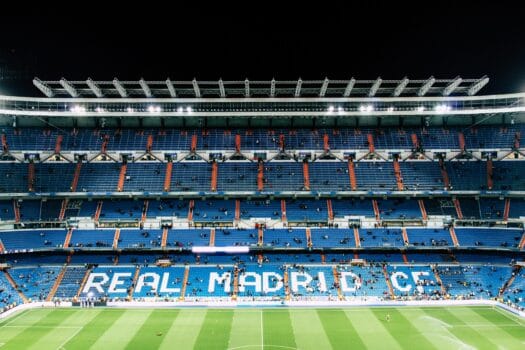
Photo by Vienna Reyes via Unsplash
With the 2030 World Cup set to be jointly hosted by Spain, Morocco, and Portugal, recent stadium incidents in Spain have reignited debate about organizational and security readiness.
During a recent Real Madrid away match against CA Osasuna, disturbances in the stands required security intervention to restore order. Spanish media outlets reported tensions among sections of supporters, prompting renewed scrutiny of matchday control measures in La Liga stadiums.
While crowd incidents are not uncommon in European football, the timing is sensitive. Spain is preparing to co-host the 2030 FIFA World Cup, a tournament that will demand the highest standards in security coordination, fan management, and stadium operations.
Broader Concerns Over Stadium Infrastructure
Beyond isolated crowd disturbances, Spanish football has recently faced criticism over stadium conditions. Media reports in previous seasons highlighted structural and maintenance concerns in certain venues, including issues related to water leaks during heavy rain and operational shortcomings during high-attendance matches.
For example, the ongoing renovation of Camp Nou has drawn attention to infrastructure upgrades required to meet modern standards. While renovation projects aim to modernize facilities ahead of 2030, transitional phases often expose logistical weaknesses.
Concerns have also emerged regarding crowd flow management at stadium entrances during major fixtures, with overcrowding incidents prompting calls for improved coordination between clubs and local authorities.
A Competitive Hosting Landscape for 2030
The 2030 World Cup will be a shared responsibility among Spain, Morocco, and Portugal. As preparations intensify, comparisons between host nations are inevitable.
Morocco recently demonstrated large-scale organizational capacity during the 2025 Africa Cup of Nations, delivering matches across multiple cities under demanding weather conditions. The country has invested heavily in infrastructure, stadium modernization, and security protocols as part of its long-term 2030 strategy.
For Spain, the recent incidents do not undermine its deep football heritage or hosting experience. However, they highlight the importance of sustained upgrades and strict operational standards.
As the countdown to 2030 continues, all host nations will face increased scrutiny. Ensuring seamless organization, safe environments, and modern infrastructure will be central to protecting the global image of the tournament.