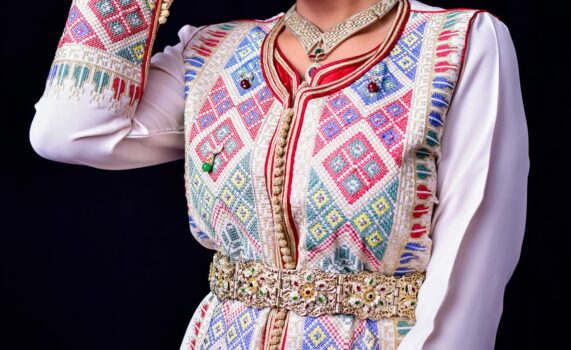
Photo by MAG Photography via Pexels
The Moroccan caftan stands as one of the most recognizable expressions of the country’s cultural identity, a traditional long garment worn by women of different ages and social backgrounds during celebrations and special occasions. In a significant cultural milestone, the caftan was recently added to the Representative List of Intangible Cultural Heritage by UNESCO, acknowledging its deep roots in Moroccan history and its enduring role in society.
This recognition reinforces the caftan’s status not merely as clothing, but as a living tradition that reflects craftsmanship, heritage, and the transmission of skills across generations.
A Garment That Embodies Moroccan Heritage
The Moroccan caftan is defined by its distinctive structure and refined details. It typically features a central front opening, carefully crafted decorative buttons, and intricate handmade embellishments that include embroidery, beads, and sequins. It can be worn with an ornate belt or left flowing, depending on the occasion and personal style.
Designs vary widely in fabric and aesthetic expression. Artisans use luxurious materials such as brocade, velvet, and silk, producing garments that range from understated elegance to elaborate ceremonial pieces. The caftan is commonly worn at weddings, religious celebrations, and cultural festivals, where it serves as both a fashion statement and a symbol of tradition.
Beyond its visual appeal, the garment carries strong cultural meaning. It represents continuity between past and present, connecting modern Moroccan society to centuries of artistic and social practice.
Craftsmanship at the Heart of the Caftan
The creation of a Moroccan caftan involves a network of specialized crafts and artisans. The process begins with textile production, where weavers create brocade, velvet, or silk fabrics that form the foundation of the garment. Skilled tailors then shape the piece, followed by button makers and embroidery specialists who add intricate decorative elements.
These skills are often passed down within families, workshops, and vocational training centers, ensuring that the tradition remains alive. Each caftan reflects not only aesthetic preferences but also the knowledge and dedication of multiple craftspeople.
This ecosystem of artisans plays a critical economic and cultural role, supporting local industries while preserving heritage practices that define Moroccan identity.
From Traditional Attire to Global Fashion Icon
While deeply rooted in Morocco, the caftan has gained international visibility over recent decades. Its flowing silhouette, vibrant colors, and refined ornamentation have attracted designers, celebrities, and fashion enthusiasts worldwide.
Global interest in the caftan grew significantly as Western fashion circles embraced Eastern-inspired garments. The piece came to symbolize comfort and elegance while maintaining a strong visual identity.
Fashion houses and designers have revisited the caftan repeatedly, adapting it to contemporary trends while retaining its essential structure.
Among the influential figures who reinterpreted the garment was Yves Saint Laurent, whose designs drew inspiration from Moroccan aesthetics. His reinterpretations preserved the caftan’s defining elements, a T-shaped silhouette reaching the ankles and a design that can be worn easily over the head — while aligning it with evolving fashion movements.
Hollywood and the Rise of Caftan Glamour
The caftan’s international fame also owes much to prominent cultural figures. In the 1970s, Elizabeth Taylor became closely associated with the garment, incorporating it into her personal wardrobe during a period when Hollywood fashion was shifting toward freer, more expressive styles.
Taylor owned an extensive collection of couture caftans crafted from antique Middle Eastern textiles. Her public appearances helped transform the garment into a symbol of glamour and sophistication beyond its traditional context.
One of the most memorable moments occurred in 1975, when she wore a tie-dye caftan during her second wedding to actor Richard Burton in Botswana. The image contributed to the caftan’s global appeal, linking Moroccan-inspired fashion with celebrity culture and international media attention.
Cultural Identity Meets Contemporary Relevance
Today, the Moroccan caftan occupies a unique position. It remains firmly anchored in tradition while continuing to evolve within modern fashion. Designers in Morocco and abroad experiment with cuts, colors, and materials, creating pieces that appeal to younger generations without losing authenticity.
Its versatility allows it to function across contexts:
- ceremonial attire at weddings and celebrations
- fashion statements at cultural festivals
- contemporary designs showcased on international runways
The caftan’s ability to bridge these worlds explains its lasting relevance.
UNESCO Recognition and What It Means
The inclusion of the Moroccan caftan on UNESCO’s heritage list signals global acknowledgment of its cultural importance. It highlights not only the garment itself but also the knowledge systems, artisanal skills, and social traditions associated with it.
Such recognition strengthens Morocco’s cultural diplomacy, positioning the country as a custodian of rich intangible heritage. It also supports efforts to preserve traditional crafts and ensure that future generations continue to engage with them.
For Morocco, the caftan becomes part of a broader narrative, one that connects heritage, tourism, fashion, and national identity.
A Symbol Beyond Fashion
Ultimately, the Moroccan caftan represents more than a garment. It tells a story of artistry, continuity, and cultural pride. From local celebrations to international runways, it carries the imprint of Moroccan craftsmanship and social life.
Its recent recognition at the global level confirms what Moroccans have long understood: the caftan is not simply worn, it is inherited, adapted, and celebrated.
As Morocco moves toward major international events such as the 2030 World Cup, symbols like the caftan will continue to play a role in shaping the country’s global image, reminding the world that cultural heritage remains one of Morocco’s most powerful forms of influence.
Related:
- Morocco’s Cultural Powerhouse: From Argan & Gnaoua to the Caftan, Jemaa el-Fna & Saharan Moussems, UNESCO’s Living Treasures
- Moroccan Caftan Officially Added to UNESCO’s Intangible Cultural Heritage ListEssaouira travel guide: transport, hotels, food, festivals, weather, and local tips
- How Salvador Dalí’s Spanish Surrealism Inspires a New Vision of the Moroccan Caftan
- Essaouira travel guide: transport, hotels, food, festivals, weather, and local tips