Estimated reading time: 9 minutes
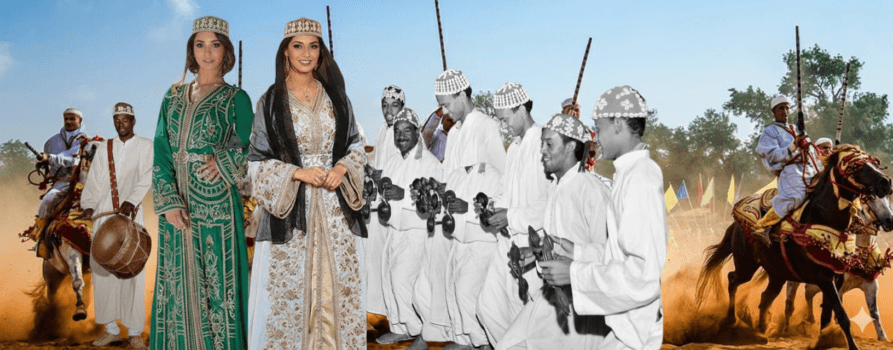
Morocco has firmly established itself as one of Africa’s cultural heavyweights on UNESCO’s Intangible Cultural Heritage list, with 16 elements officially recognized to date. These inscriptions are not just historical records; they represent a deep commitment to preserving a living identity that is practiced, celebrated, and transmitted every day.
The Argan Tree: Ancestral Know-How Rooted in Nature
The argan tree, endemic to southwest Morocco, symbolizes centuries of ecological balance and cultural transmission. Recognized by UNESCO in 2014 under “Argan, practices and know-how concerning the argan tree”, this heritage is inseparable from rural Amazigh communities.
Women play a central role in this tradition, mastering every step, from harvesting and drying the fruit to extracting the oil using ancestral techniques. Beyond its economic value, argan reinforces social cohesion, community solidarity and respect for nature.
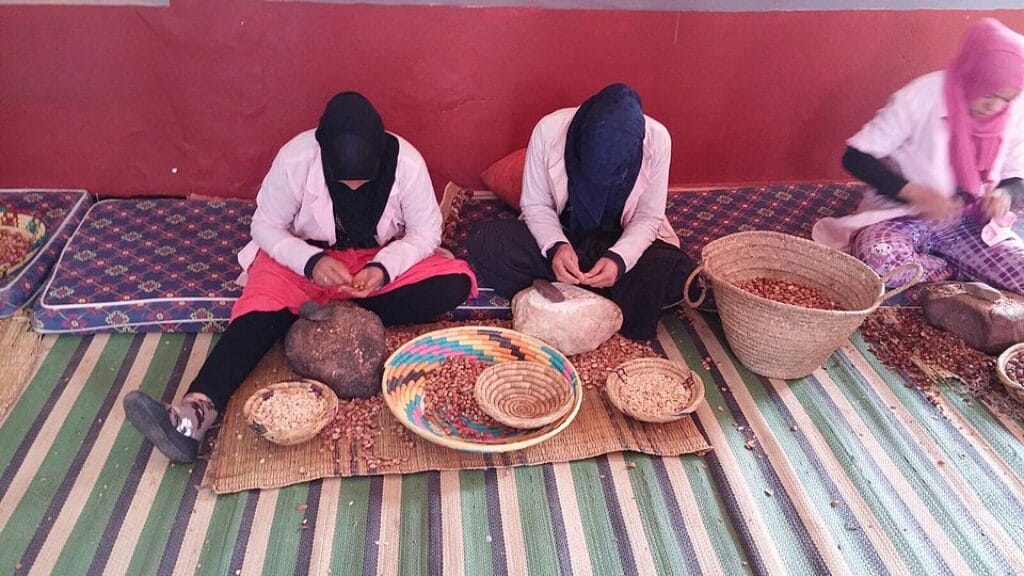
Moroccan Argan oil workers. Photo credit: Orlysi On Wikimedia.org
Taskiwin: The Martial Dance of the High Atlas
Inscribed in 2017 as heritage in need of urgent safeguarding, Taskiwin is a powerful martial dance from the western High Atlas. Performed with decorated horns and shoulder ornaments, it combines rhythm, movement and symbolism.
Accompanied by drums and flutes, Taskiwin is both a form of artistic expression and a social ritual that strengthens bonds between generations. Today, its survival depends on continued community engagement and cultural transmission.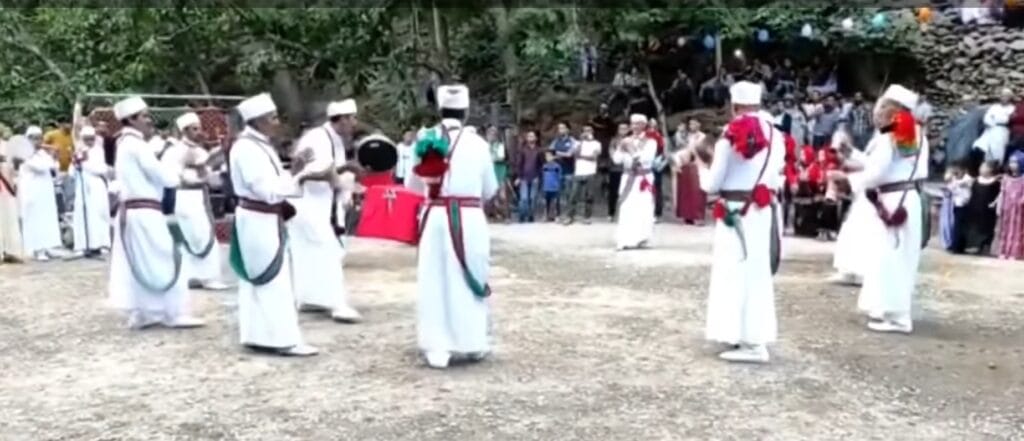
Gnaoua: Spiritual Music of Memory and Resistance
Recognized by UNESCO in 2019, Gnaoua music represents one of Morocco’s most powerful spiritual and musical legacies. Rooted in Sub-Saharan African history and Sufi traditions, it blends ritual, healing and performance.
Thanks to festivals and cultural initiatives, Gnaoua continues to inspire new generations while preserving its sacred foundations.
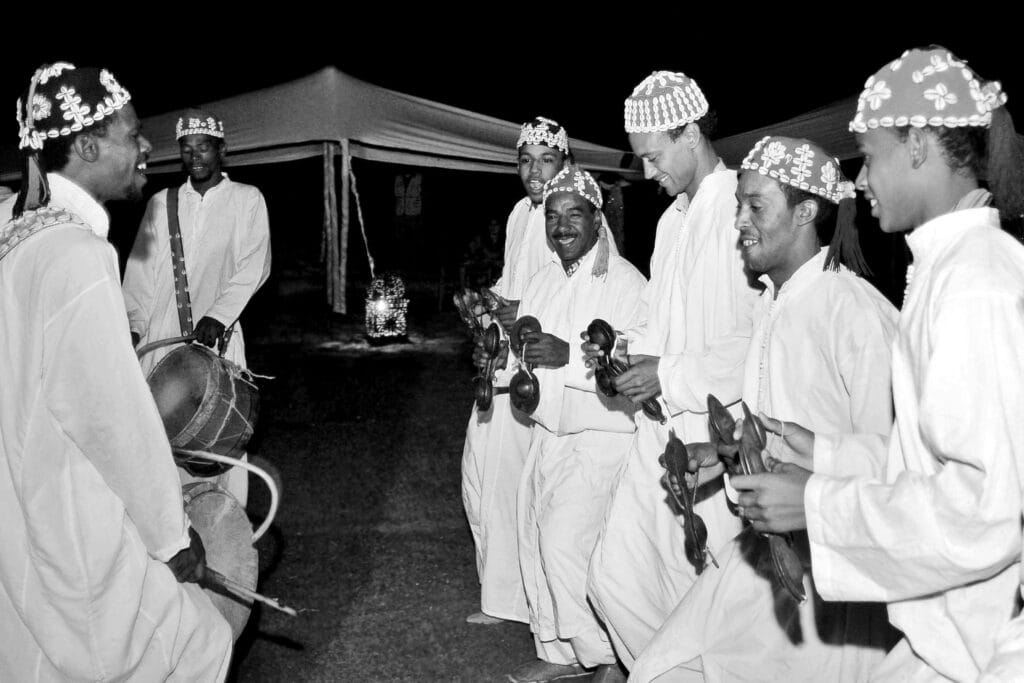
Gnawa/ Gnaoua heritage. Photo Credit: Moussa Idrissi/ Pexels
Tbourida: Morocco’s Equestrian Heritage
Tbourida, inscribed in 2021, recreates ancestral cavalry charges through synchronized horse riding and gunfire. Dating back to the 16th century, it reflects Morocco’s martial traditions and tribal identity.
The performance requires absolute harmony between rider and horse, symbolizing honor, discipline and collective pride.
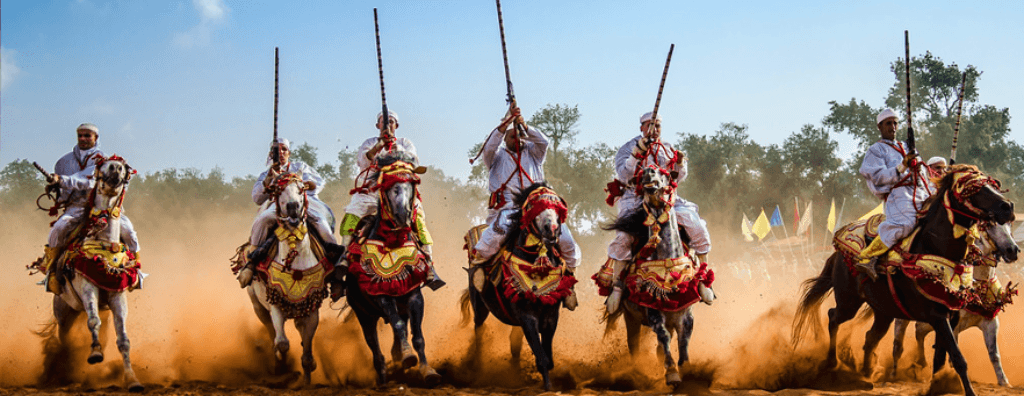
Tbourida: Morocco’s Equestrian Heritage. Photo Credit: A.messour12/ Wikimedia.org
Malhoun: Poetry Sung Through Generations
Added to UNESCO’s list in 2023, Malhoun is a poetic and musical art form performed in Moroccan Arabic and sometimes Hebrew. Its themes range from spirituality and love to social commentary and daily life.
By blending literature, music and oral performance, Malhoun remains a unifying cultural force across Morocco.
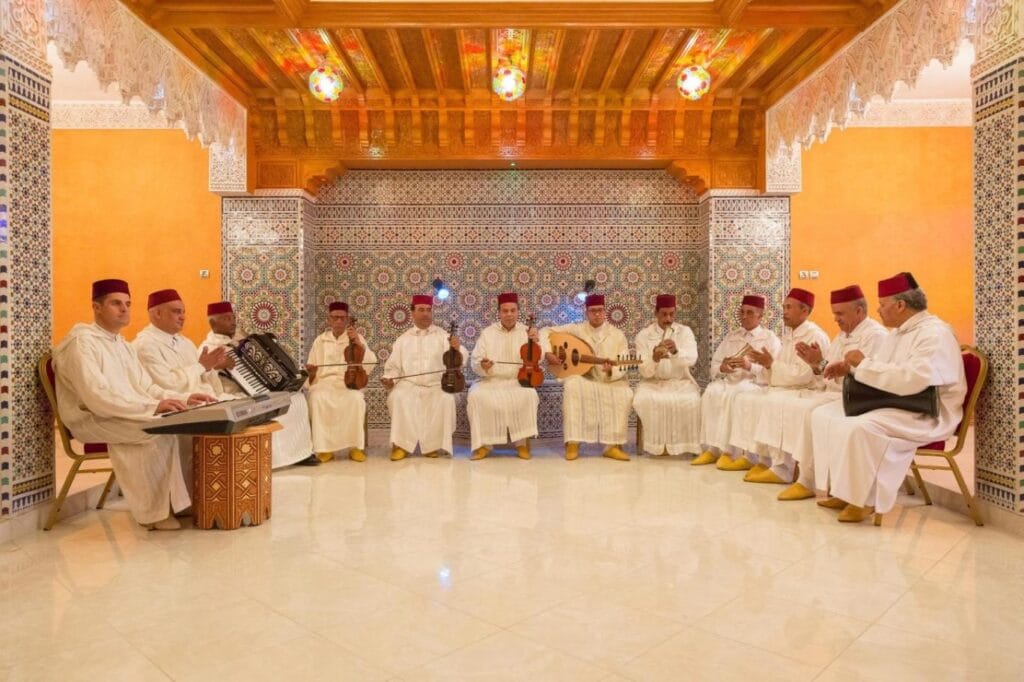
Malhoun A Poetry Sung Through Generations. Photo Credit: Independent Arabic
The Moroccan Caftan: A Global Symbol of Elegance
The most recent addition, inscribed in 2025, is the Moroccan caftan. More than traditional clothing, it represents centuries of craftsmanship involving weavers, tailors and embroidery masters.
Worn during major celebrations, the caftan embodies identity, status and continuity, while supporting an entire ecosystem of artisans.
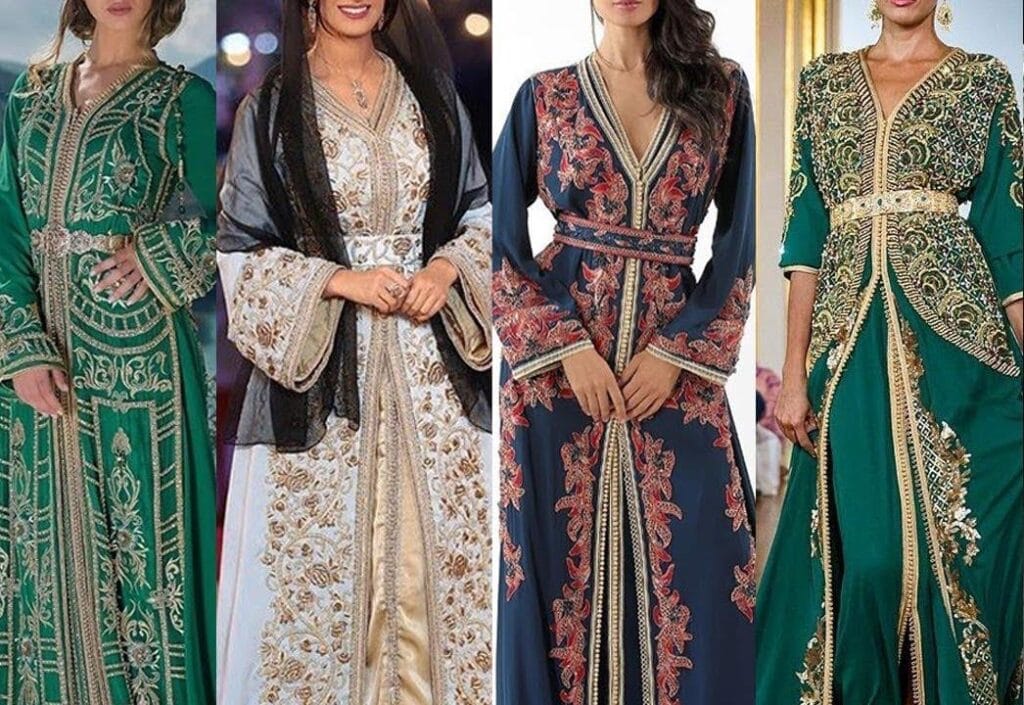
The Moroccan Caftan: A Global Symbol of Elegance. Photo Credit: Medi1news
The Moussem of Tan-Tan: Safeguarding Saharan Nomadic Life
The Moussem of Tan-Tan, held in southwest Morocco, brings together over thirty Saharan tribes in a celebration of nomadic life. Originally linked to herding and trade cycles, it includes poetry, music, camel races, rituals and Hassanie oral traditions.
Revived after years of interruption, the Moussem has become a crucial platform for protecting a way of life threatened by urbanization and economic change.
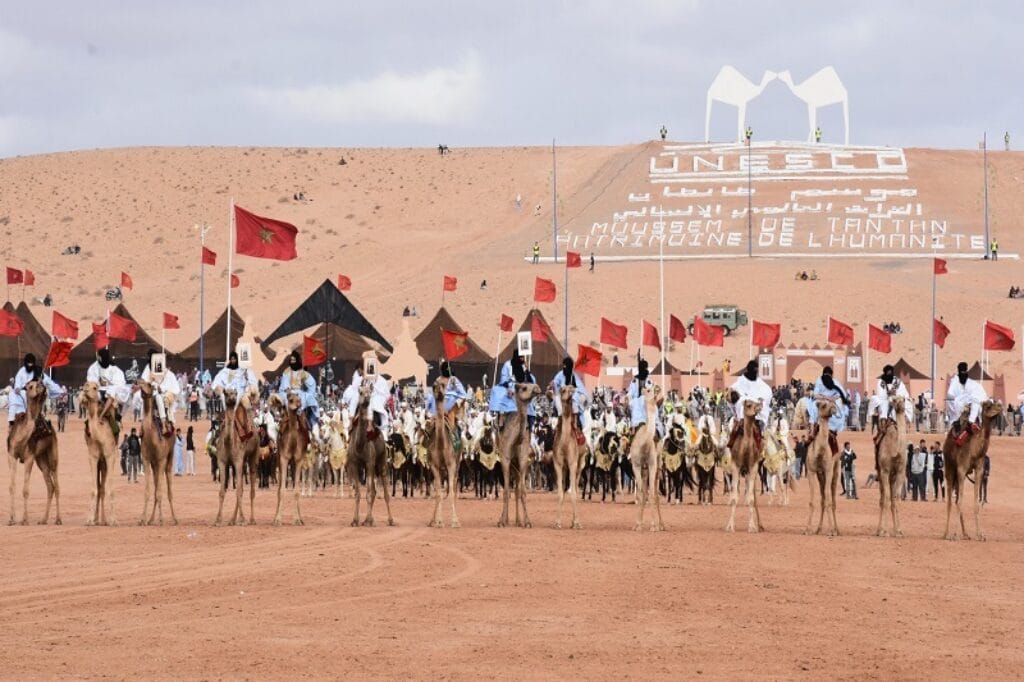
The Moussem of Tan-Tan: Safeguarding Saharan Nomadic Life. Photo Credit: maroc28.ma
Jemaa el-Fna Square: The Living Stage of Morocco
Inscribed as a cultural space, Jemaa el-Fna in Marrakesh is one of the world’s most iconic living heritage sites. Storytellers, musicians, healers and performers transform the square into a daily celebration of Moroccan oral tradition.
Despite modern pressures, Jemaa el-Fna remains a beating heart of popular culture and collective memory.
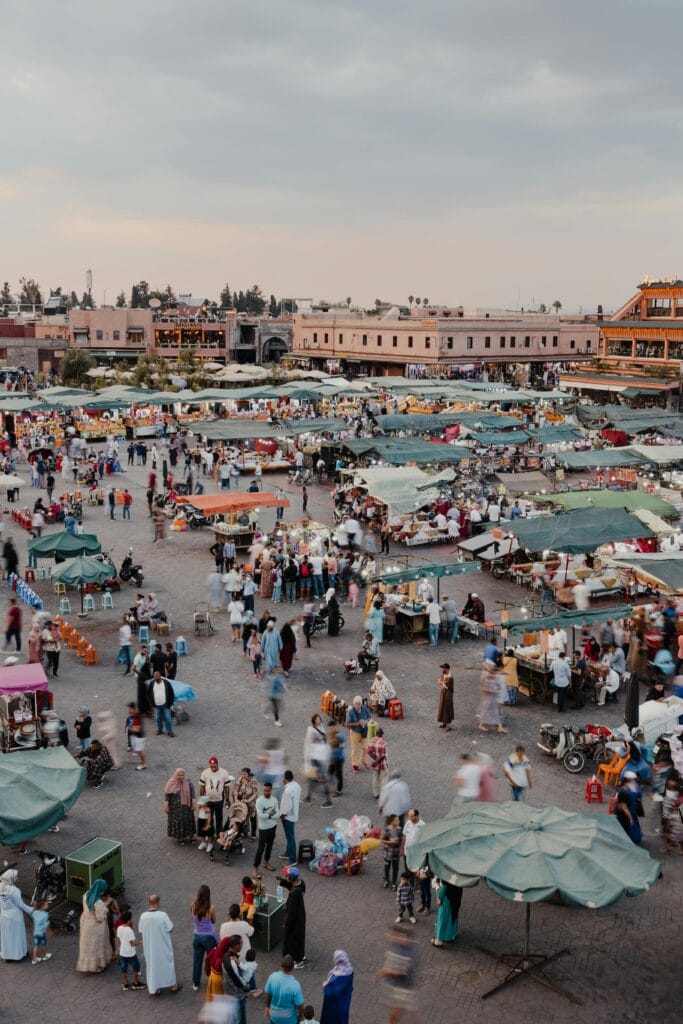
Jemaa el-Fna square, Marrakech, Morocco.
Photo credit: Faruk Tokluoğlu/ Pexels
The Cherry Festival of Sefrou: Nature, Pride and Community
Every June, Sefrou’s Cherry Festival celebrates both agriculture and identity. The election of the Cherry Queen, parades and performances unite the entire city.
This festival strengthens local pride and ensures cultural continuity by actively involving younger generations.
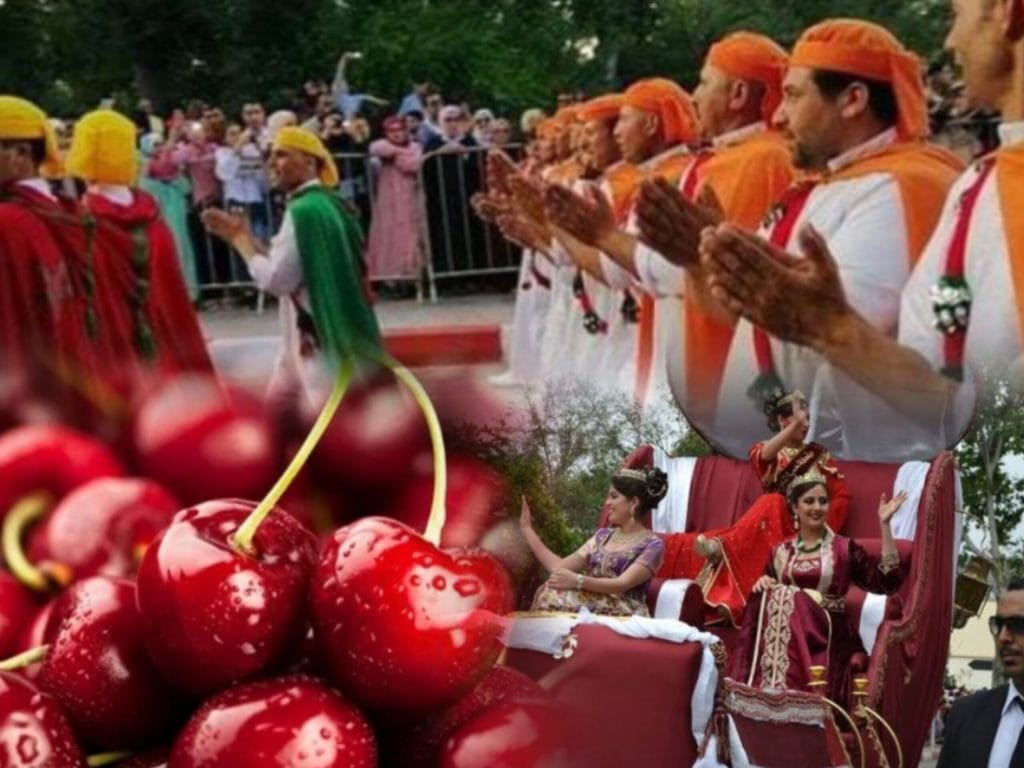
The Cherry Festival of Sefrou: Nature, Pride and Community. Photo Credit: Nojoumpress.ma
A Shared Heritage Across Borders: Morocco and Multinational UNESCO Traditions
Beyond elements that are uniquely Moroccan, the Kingdom also plays a central role in several multinational UNESCO-listed traditions, reflecting a cultural heritage built on exchange, coexistence and shared history across the Mediterranean, Arab and African worlds.
The Mediterranean diet, jointly inscribed by Morocco alongside countries such as Spain, Italy and Greece, goes far beyond food. It encompasses agricultural knowledge, fishing traditions, seasonal rhythms, rituals and above all the act of sharing meals. Markets, family gatherings and festive occasions are vital spaces where hospitality, neighbourliness and intercultural dialogue are practiced daily, with women playing a key role in transmitting this heritage across generations.
Similarly, couscous is recognized as a shared heritage between Morocco, Algeria, Tunisia and Mauritania. Its preparation is a ceremonial process rooted in solidarity and togetherness, involving collective know-how passed down through observation, imitation and social rituals. From clay utensils crafted by potters to communal meals symbolizing unity, couscous remains one of the strongest cultural connectors in North Africa.
Arabic calligraphy, another multinational inscription, represents a living art practiced across Arab and non-Arab countries, including Morocco. Using traditional tools such as the qalam and handmade ink, this discipline blends spirituality, aesthetics and creativity. From manuscripts and architecture to contemporary calligraffiti, Arabic calligraphy continues to evolve while preserving its classical foundations.
Falconry, practiced for more than 4,000 years, is also shared among numerous countries across the Arab world, Europe and Asia. In Morocco, it reflects a deep relationship between humans and nature, emphasizing values of respect, mentorship and environmental stewardship. Today, falconry communities focus on conservation, training and intergenerational transmission.
The date palm represents another shared heritage connecting Morocco to a wider Arab cultural space. Central to oasis life for centuries, the date palm supports food security, craftsmanship, poetry and social rituals. Its cultivation techniques and associated crafts remain vital to desert communities and regional identity.
Finally, metal engraving on gold, silver and copper is a craft shared across several countries, including Morocco, where it is deeply embedded in social life. Used for jewelry, household objects and ceremonial items, engraved metals convey symbolic meanings related to identity, spirituality and social status, with skills transmitted through family lineages and artisanal workshops.
Henna, also inscribed as a multinational UNESCO heritage, represents a set of ritual, aesthetic and social practices deeply rooted in North Africa and the Middle East, including Morocco. Derived from the leaves of the henna tree, the paste is traditionally used for adornment during joyful occasions such as weddings and births, as well as in everyday life. Beyond its decorative role, henna carries symbolic, medicinal and spiritual meanings, accompanied by chants, songs and oral expressions. Transmitted mainly through family and community practice, henna rituals continue to strengthen social bonds and preserve centuries-old cultural knowledge.
Together, these shared UNESCO inscriptions highlight Morocco’s historical role as a cultural crossroads، a nation that preserves its distinct identity while actively contributing to a collective heritage built on dialogue, exchange and mutual respect.
A Living Heritage Shared with the World
From the Sahara to the Atlas Mountains, from medinas to rural villages, Morocco’s UNESCO-listed traditions reflect a nation that values its past while confidently projecting its culture globally.
These living treasures are not museum pieces، they are practiced, celebrated and transmitted every day.
Related Reads:
- Rabat Patrimoine: A New App to Explore the UNESCO Heritage of Morocco’s Capital
- Moroccan Caftan Officially Added to UNESCO’s Intangible Cultural Heritage List
- The Soul of the Friday Table: Moroccan Couscous, a Journey of Heritage and Flavor
- Bab Mansour Gate in Meknes: The Most Magnificent Imperial Gate in Morocco