Photo By Paul Macallan From Unsplash
Morocco is often associated with desert heat and Saharan horizons, yet few countries contradict their own image as dramatically. Within the same borders, and sometimes within the same journey, Morocco offers snow-covered mountains, frozen forests, and ski slopes alongside some of the most iconic desert landscapes in North Africa. This coexistence is not anecdotal; it is the result of a powerful geographic structure that defines the country’s climate, history, and way of life.
Where Snow Belongs in Morocco’s Landscape
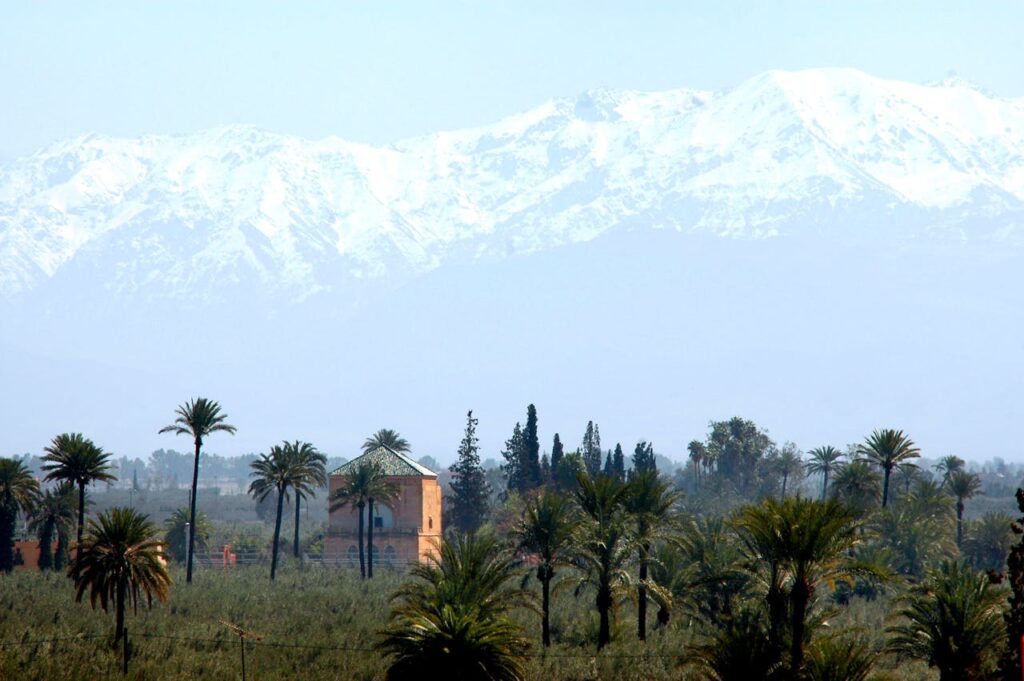
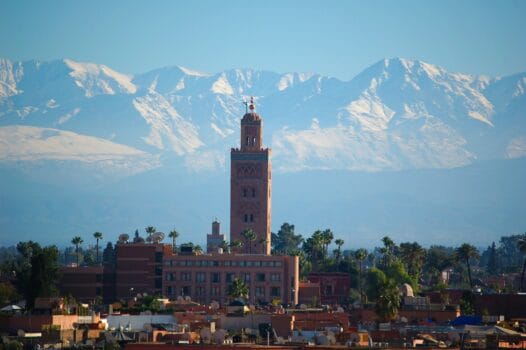
Snow in Morocco is not an exception or a recent phenomenon. It is a recurring and predictable feature of the country’s northern and central highlands, especially across the Atlas mountain systems. The High Atlas and Middle Atlas ranges rise sharply enough to intercept moist air masses coming from the Atlantic and the Mediterranean, creating conditions where snowfall becomes a seasonal constant rather than a rarity.
In the High Atlas, winter transforms the terrain into a rugged alpine environment. Villages built of stone and earth sit beneath white peaks, and mountain passes can become impassable for days. This is not a touristic spectacle alone; it directly affects transport, agriculture, and pastoral rhythms that have existed for centuries.
One of the most visible expressions of this reality is Oukaïmeden, perched above 2,600 meters. It stands as a reminder that snow in Morocco is not symbolic, it is functional, lived, and economically relevant, even if far removed from the scale of European ski destinations.
Ifrane and the Cold Heart of the Middle Atlas
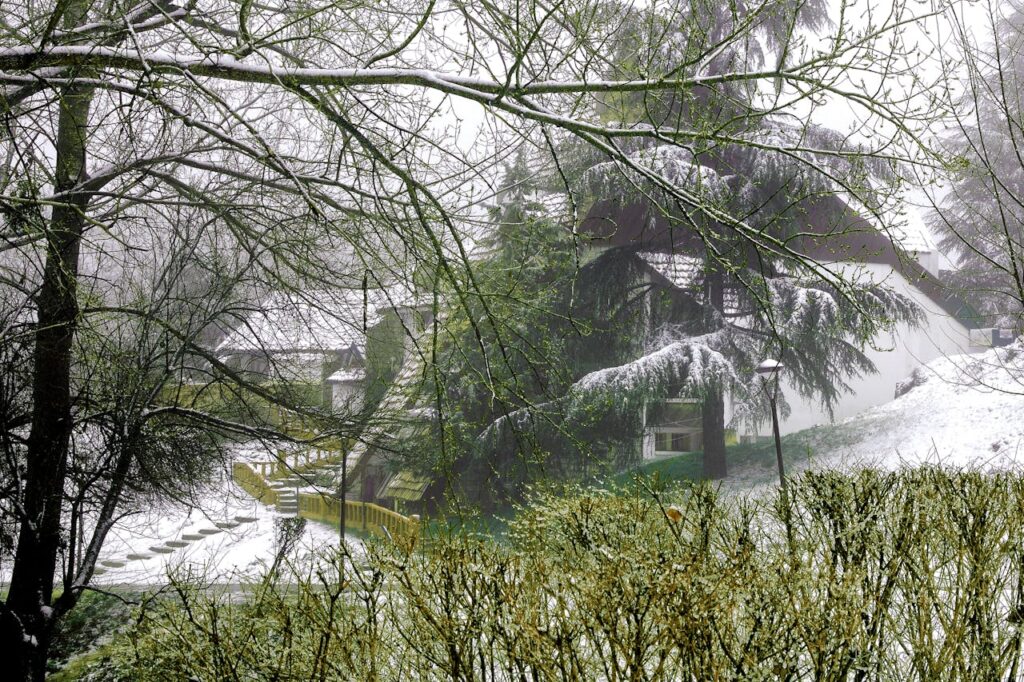
Further north, the Middle Atlas offers a different winter identity. Ifrane experiences some of the lowest temperatures in the country, with snowfall shaping daily life rather than merely decorating mountain peaks. Forests of cedar and oak become silent under heavy snow, and the city’s urban form, distinctly European in appearance, amplifies the sense of climatic rupture within Morocco itself.
Here, winter is not defined by altitude alone but by latitude, forest density, and prolonged cold spells. The Middle Atlas shows that Moroccan snow is not limited to extreme elevations; it can dominate entire regions for months.
Crossing South: From Mountains to Arid Worlds
What makes Morocco exceptional is not the presence of snow or desert individually, but the abrupt transition between them. South of the Atlas ranges, the landscape changes decisively. Green valleys narrow, rivers weaken, and stone plateaus stretch toward the Sahara. The mountains act as a climatic wall: rain and snow remain largely to the north, while aridity intensifies beyond them.
This transition zone explains how Morocco sustains both snow-fed agriculture and desert oases within the same hydrological system. Meltwater from the Atlas does not disappear; it feeds valleys, palm groves, and seasonal rivers that allow life to persist deep into arid regions.
The Moroccan Sahara: More Than Endless Sand
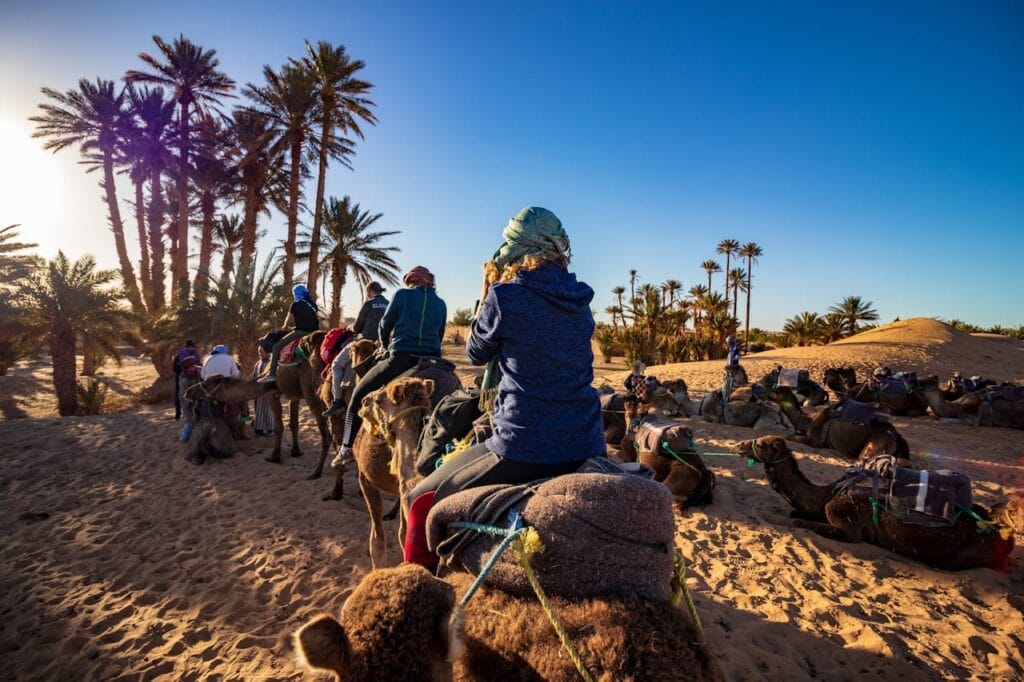
The Sahara in Morocco is often reduced to imagery of dunes, yet it is far more diverse. Rocky deserts, dry riverbeds, and palm-filled oases dominate large areas before true sand seas appear.
The most emblematic dunes rise in Erg Chebbi, near Merzouga. These towering formations of sand shift constantly, shaped by wind and extreme temperature contrasts. Days can be intensely hot, while nights fall into sharp cold, another reminder that Morocco’s climate defies simple labels.
Further west, around Zagora, the landscape becomes pre-Saharan. Here, desert life is structured around oases, caravan history, and river valleys that flow only part of the year. This is not an empty space but a historically connected region linking Morocco to sub-Saharan Africa.
One Geography, Interconnected Extremes
Snow and desert in Morocco are not opposing worlds; they are interdependent. The Atlas Mountains regulate water, temperature, and movement, while the Sahara influences heat patterns and atmospheric pressure. Together, they create sharp contrasts that shape architecture, clothing, food preservation, and settlement patterns across the country.
Historically, mountain passes controlled access to desert trade routes. Culturally, seasonal migration between highland and lowland zones remains embedded in Amazigh traditions. Environmentally, the balance between snowpack and desert expansion is increasingly central to discussions about climate resilience.
Conclusion
Morocco’s identity cannot be captured by a single climate or landscape. Snow-covered peaks and Saharan dunes are not distant opposites—they are neighboring realities within a single geographic system. This proximity is what makes Morocco singular: a country where winter and desert are not metaphors, but measurable, coexisting facts.
Understanding Morocco means understanding how snow melts into sand, and how both continue to define the nation.
Related:
- Morocco’s Atlas Mountains in Winter: What to Know
- Why Morocco Is One of the World’s Dream Sun Destinations This Winter
- Hidden Desert Glamping Spots in Morocco: Experience Luxury Under the Stars
- At the Gates of the Sahara: Festival Zamane Makes the Desert Pulse
- Hercules Caves: Where Myth, Ocean, and History Meet Near Tangier