Image credit: Othman Alghanmi / Unsplash
Just fifteen kilometers west of Tangier, along the scenic road leading to Cap Spartel, the Hercules Caves open dramatically onto the Atlantic Ocean. Shaped by both nature and human hands over thousands of years, these caves are among the most iconic historical sites in northern Morocco. Long before becoming a landmark for travelers, they were inhabited during the Neolithic era and wrapped in the enduring legend of Hercules, the mythical hero of Greek antiquity.
A First Encounter Between Antiquity and the Present
The visit begins even before entering the caves. Outside, dozens of pigeons gather, scatter, and return in a perfectly choreographed ballet as visitors approach. One often perches atop a giant football-shaped sculpture near the entrance, an unexpected nod to modern Morocco as the country prepares to host major continental football events. The contrast is striking: a contemporary symbol of sport standing at the threshold of a site rooted in ancient myth and deep geological time.
A gentle slope leads toward the main entrance, where the mountain appears almost hand-carved. In reality, it has been patiently sculpted by wind, water, and centuries of human passage. The rock surface bears silent witness to civilizations that came and went long before modern borders existed.
The Cave of Arts and the Legend of Hercules
To the left of the main cavern lies the Cave of Arts, accessible for a small additional fee. A few steps downward reveal a monumental painting depicting Hercules battling the Nemean Lion, one of the Twelve Labors that define his myth. According to Greek legend, Hercules was forced to confront the monstrous lion whose skin could not be pierced by weapons. He ultimately defeated it with his bare hands and used its claws to skin it, turning the hide into an impenetrable armor.
This image of superhuman strength marks the symbolic foundation of the site’s mythology. Here, legend and place merge, turning stone walls into narrative surfaces. Traditional musicians often perform inside the caves, their rhythms echoing against the rock while water trickles down the walls in thin cascades. Every corner seems to whisper the name of Hercules, even though only one chamber officially bears his name.
Inside the Main Cave: Light, Shadow, and the Atlantic
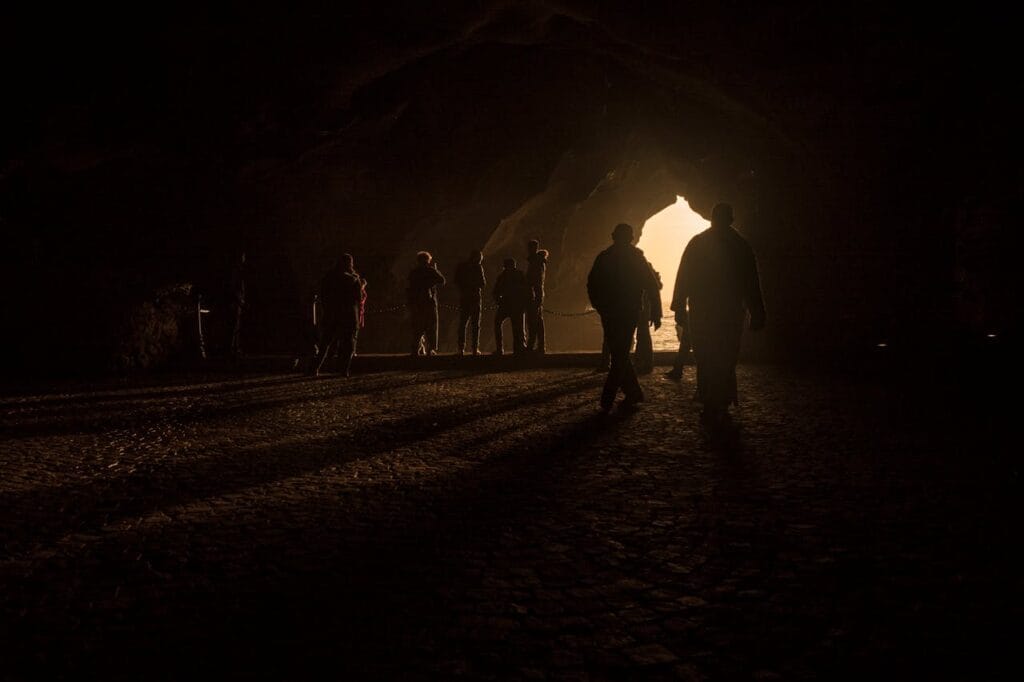
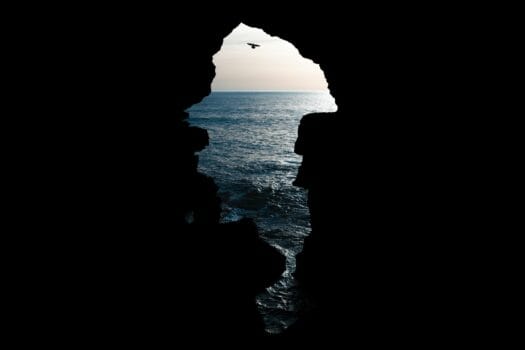
A cold wind sweeps through the main cave as visitors step inside. Darkness dominates, punctuated only by faint lanterns placed along the ground. Then, suddenly, a burst of light appears, the famous maritime opening of the cave. Silence settles in, broken only by the deep, rhythmic sound of waves crashing against the rocks.
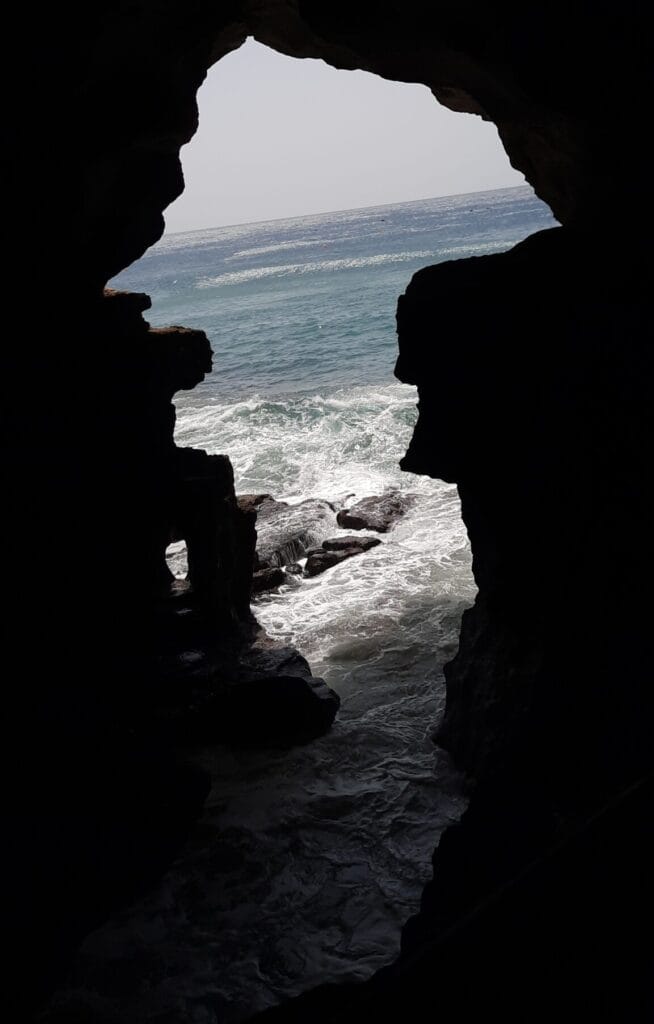
This opening is what makes the Hercules Caves globally recognizable. From inside, the natural aperture appears in the shape of the African continent, sometimes upright, sometimes inverted, depending on perspective and light. The effect is immediate and mesmerizing, leaving many visitors stunned. Cameras rise instinctively as people attempt to capture the moment, though the experience often transcends photography.
When the sea is rough, the spectacle intensifies. Waves surge violently into the cave, roaring as they collide with the stone. Children watch in awe; adults fall quiet, absorbed by the raw power of nature meeting ancient rock.
Between Wonder and Reflection
The Hercules Caves fascinate and provoke reflection. Some visitors question the entrance fee, around 80 dirhams, and note that the visit itself is relatively brief. Yet most leave deeply impressed. The emotional impact of the place often outweighs practical considerations.
Exiting the caves involves climbing stairs that lead toward natural rock formations along the coastline. From here, a breathtaking view of the Strait of Gibraltar unfolds. This narrow passage between Europe and Africa has shaped centuries of trade, migration, and cultural exchange. Waves, wind, and shifting sunlight extend the magic, creating a constantly changing panorama.
Nearby cafés and artisan shops invite visitors to linger. Some sit quietly, gazing at the horizon, while others browse handmade crafts that echo the region’s cultural heritage.
A Road Between Continents
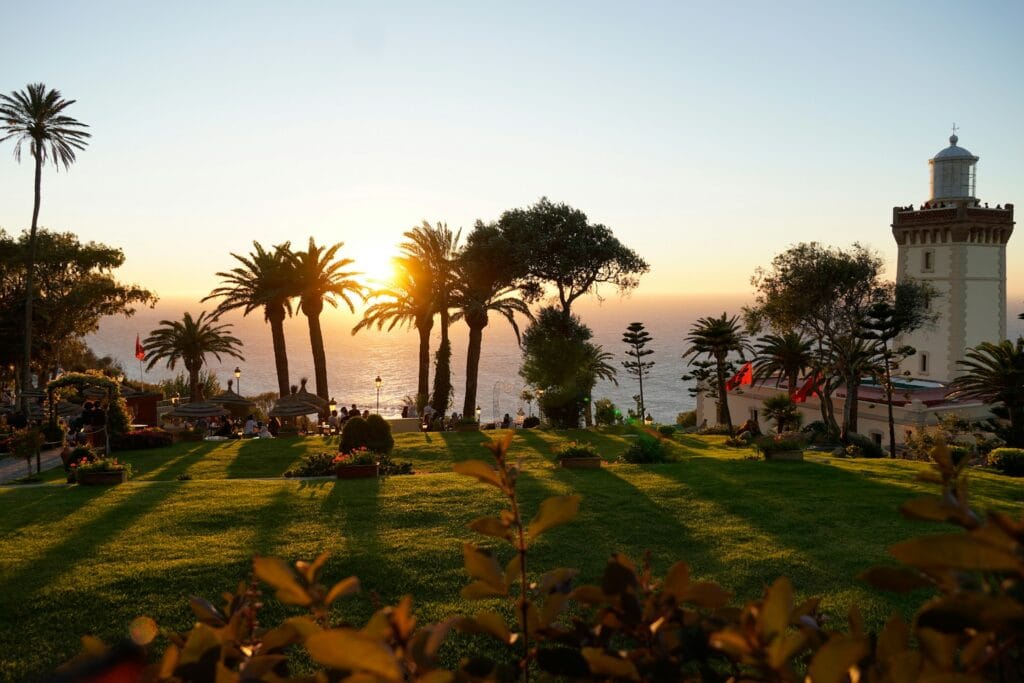
Image credit: Todor Andonov / Unsplash
On the return journey, the experience continues. Drivers often point toward distant mountains across the water. “That’s Spain,” many say, referring to Tarifa or Algeciras, visible on clear days and reachable in about an hour by boat. Few places in the world offer such a tangible sense of continental proximity.
The road hugs the Atlantic, descends from Cap Spartel, and winds past cliffs and Achakkar Beach. These landscapes invite contemplation, closing the visit not with a single moment, but with a sequence of impressions that linger long after departure.
A Journey Through Time
Visiting the Hercules Caves is more than a stop on a travel itinerary. It is a journey through time, where myth, geology, and geography converge. The caves connect ancient legend to modern Morocco, the Atlantic to the Mediterranean, Africa to Europe. Few places offer such a layered experience, making the Hercules Caves not just a destination, but a story carved into stone.
Related: