Photo by Smail Zouak from Pexels
Nestled where the last palm groves turn golden and the dunes of the Sahara begin to swell, lies the oasis village of M’Hamid El Ghizlane. In this edge-of-desert terrain, the Festival Zamane convenes each November a gathering of rhythms, songs and stories rooted in the caravans of history. Now in its fourth edition, the 2025 festival (14–16 November) signals a new chapter in the desert’s musical life. (Joudour Sahara)
A Location That Resonates
M’Hamid El Ghizlane stands at the end of National Route 9, beyond Zagora, in the Drâa-Tafilalet region. It is a place where the Wadi Drâa dries into sand, and memory of the Saharan caravan routes lingers in every breeze.
This year’s edition brings an amplified commitment: more than 150 artists from Ganga, Gnawa, Amazigh, Arab, Daraoua and Saharan traditions will converge for three days of outdoor concerts, workshops and communal gatherings. (Le 360)
Music as Heritage, Transmission and Community
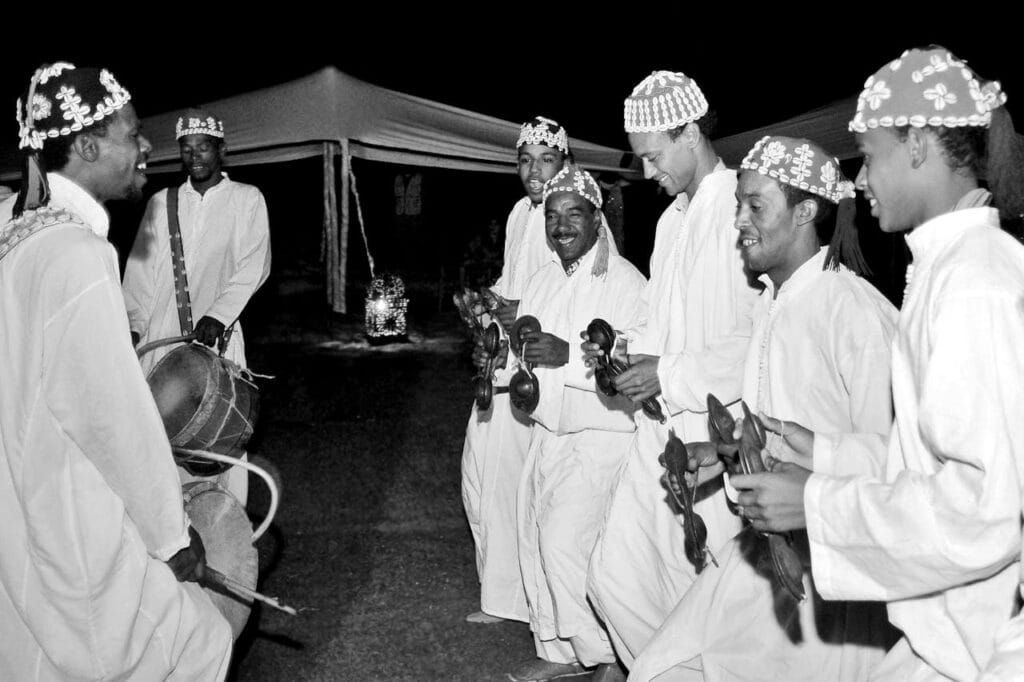
Zamane is not merely a festival to witness; it is one to take part in. From drum-circles at dusk to storytelling around the desert fire, from camel-treks through palmeraies to spontaneous jam-sessions under stars, the event weaves community, heritage and creativity. In 2025 the theme leans heavily on transmission, masters and young musicians sharing space, techniques and narratives.
At its heart lie the musical forms of the region:
- Ganga: a rich tradition of drumming and chanting that comes from the Draa Valley and Saharan periphery.
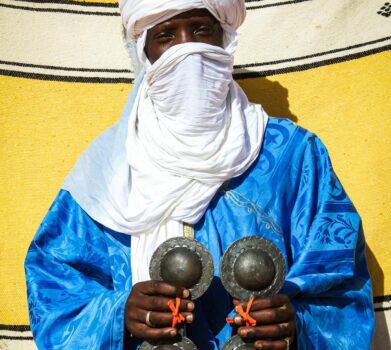
- Gnawa: the trance-inspired rhythms with roots in sub-Saharan Africa, brought north by caravan routes and now part of Morocco’s sonic tapestry.
- Amazigh, Arab & Saharan vernaculars: each bringing their own percussion, vocals and dance into the mix.
The 2025 Edition: What’s New
For 2025 (14–16 November) the festival has some particular highlights:
- A signature stage set under open sky between dunes and palms.
- Workshops that place local youth side-by-side with elder masters, an intergenerational dialog in percussion and oral tradition.
- An expanded “heritage-meets-innovation” programme: alongside traditional ensembles, there are fusion acts mixing blues, desert rock and electronic textures. Artist mention includes Vieux Farka Touré and Majid Bekkas.
- A focus on the region’s place in African cultural routes: the festival emphasises caravan-heritage, the legacy of Timbuktu-to-Morocco trade and how musical exchange moved across the Sahara.
- Free concerts in central village spaces aimed at locals, not just tourists, a deliberate inclusive move in a region where cultural access is limited.
A Cultural Anchor in the Heart of the Desert
Culture in a Remote Land
M’Hamid and its surroundings have few of the trappings of high-end tourism: remote roads, shifting sand, limited infrastructure. But that unpolished edge is part of the appeal. Here, music does not fold into luxury, it rises from tradition. The festival offers an authentic entry into a culture that is rarely on display elsewhere.
Heritage in Motion
The festival is not about preserving tradition like a museum exhibit; it is about letting heritage breathe and evolve. When Ganga drummers and Gnawa masters perform next to younger artists pushing saxophones or electric guitars, the culture moves forward.
Community & Local Impact
In this rural region, cultural events like Zamane carry social weight. They provide local employment, encourage younger generations to value their roots and give a platform for nomadic and oasis-based populations often overlooked by mainstream cultural circuits. A local director noted that for many young people, this festival is the only bridge to the broader cultural world.
The Desert as Stage
Few venues capture the imagination like an open-air stage set between palms and sand. At night, the sky expands. The stars feel close. The drums echo longer. The environment is as much part of the show as the musicians. The desert itself becomes the acoustic chamber, the audience the dunes.
Practical Visitor Guide
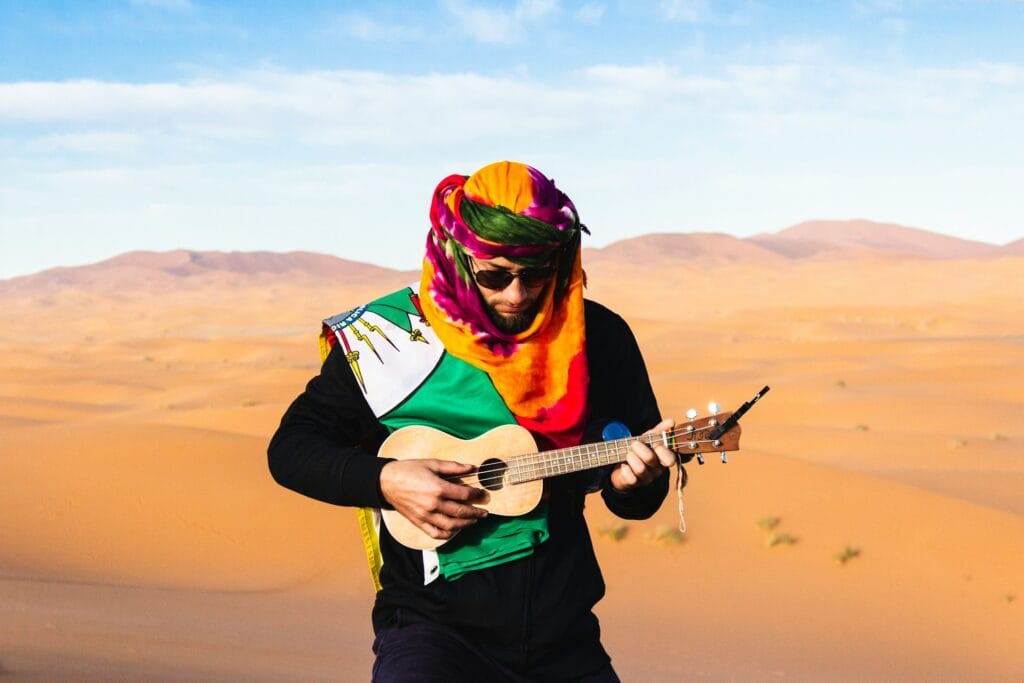
For travellers heading to Zamane:
- Dates: November.
- Location: M’Hamid El Ghizlane, Zagora Province, Morocco.
- How to get there: From Marrakech, drive through Ouarzazate or Zagora; be prepared for desert conditions.
- Accommodation: Options range from local guest-houses in M’Hamid to mobile desert camps near the dunes.
- What to bring: Warm clothing for cool nights, comfortable footwear, and a readiness for simplicity and natural spaces.
- What to expect: Concerts under the stars, workshops in the oasis, camel rides at dawn, informal jams at midnight.
- Local respect: The festival emphasises respectful engagement with local communities, no tourist-style voyeurism of nomadic life, but shared experience.
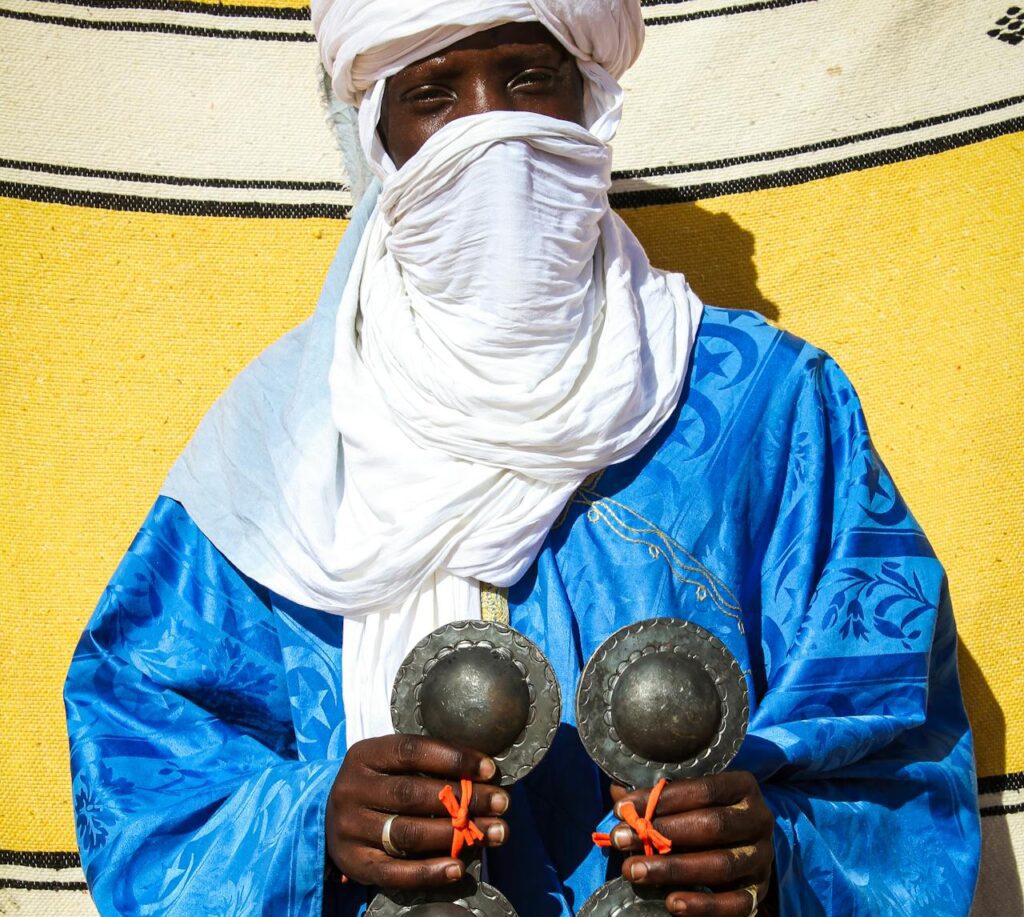
What to Listen For
When you hear the drum-circle start, listen for:
- The guembri’s deep resonance in a Gnawa group.
- The linear repetition of the ganga rhythm, primal and driving.
- The call-and-response vocals bringing audience into the performance rather than simply watching.
- The desert wind joining the percussion; the sand a silent participant.
A Moment for Reflection
The 2025 edition of Zamane arrives at a moment when desert regions face mounting challenges: environmental stress, migration of youth to cities, loss of traditional practice. In this context, the festival does more than entertain: it offers a lens on survival, adaptation and cultural dignity. As the director stated, the event reminds us of “the role of Morocco, its African roots and its links with the southern borders: from Timbuktu to the Senegal River.” (Le 360)
In a world where many festivals grow bigger, more commercial, more remote from local context, Zamane holds fast to a different path: one of rootedness, intersectionality and narrative. It asks its attendees not only to witness but to join, not only to listen but to belong.
Final Note
M’Hamid El Ghizlane may be small. It may lie at the edge of map grids. But at this festival, music pulses, traditions converse and the desert world opens itself in full. For 2025, the Festival Zamane invites you not only to attend, it invites you to arrive, to stay, to listen and to carry its rhythm with you.
Related:
- The 7 Most Beautiful Oasis You Must Visit in Morocco
- Gueliz vs. the Old Medina: Where Marrakech’s Heart Beats Louder
- Meknès Revisited: Imperial Calm Between Fès and Volubilis
- Top 25 Morocco Travel Tips for 2026: From the Old Medina to Desert Kasbahs
- Aït Ben Haddou: The Fortress Village That Time Refused to Erase