Estimated reading time: 4 minutes
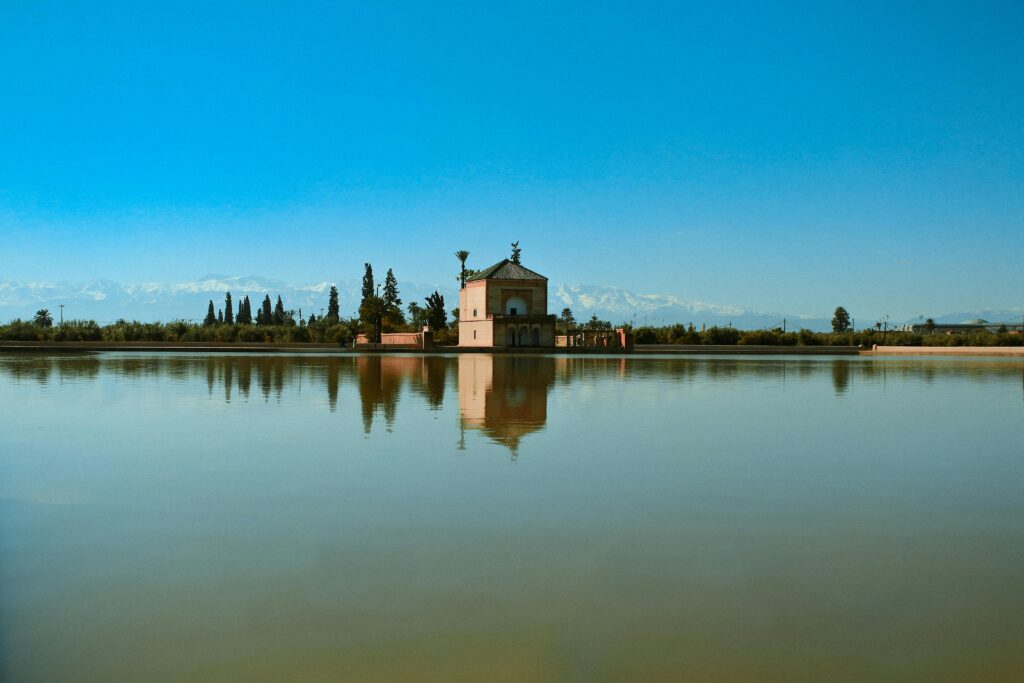
Menara Gardens, Marrakech. Image Credit : André Manuel / Pexels
The Menara Gardens (Jardin de la Ménara) are an essential stop in any Marrakech itinerary. Both travelers and locals flock to this historic site to stroll around the great rectangular basin that has become one of the most famous images of the Ochre City.
A staple of any Marrakech travel itinerary, the Menara Gardens are one of the most photographed and visited landmarks in the “Red City.” Both tourists and locals gather around the vast rectangular basin that has become a visual emblem of Marrakech.
A Historic Oasis in the Heart of Marrakech
The Menara Gardens date back to the 12th century during the Almohad dynasty under Caliph Abdelmoumen. Originally planted with olive trees, palms, and cypresses, the gardens were designed as an agricultural and leisure estate.
The large central basin — the heart of the site — has been supplied for more than 700 years by an ingenious hydraulic system channeling water from the Atlas Mountains, located roughly 30 kilometers away. This irrigation system remains a remarkable example of medieval engineering.
- Founded: 12th century (Almohad period)
- Main feature: Large rectangular irrigation basin
- Water source: Atlas Mountains (approx. 30 km away)
- Setting: Vast olive grove with mountain backdrop
Sunset Views and Iconic Landscapes
The best time to visit is undoubtedly at sunset. As the sun dips behind the snow-capped peaks of the Atlas, the basin’s blue reflections create a stunning mirror effect. The pavilion with its green-tiled pyramidal roof completes the postcard-perfect scenery.
It is a dream setting for photography lovers and couples seeking a romantic stroll. The tranquility of the gardens contrasts beautifully with the lively energy of Marrakech’s medina.
The Pavilion: Saadian or 19th Century?
The origins of the Menara pavilion remain debated. Some historians attribute its construction to the 16th century during the Saadian period, possibly as a summer residence for Sultan Abderrahmane Ibn Hicham. Others suggest the pavilion dates to the 19th century.
Regardless of its precise origins, the structure’s elegant green pyramidal roof has become one of Marrakech’s most recognizable architectural features.
| Feature | Historical Context |
|---|---|
| Origins | 12th Century (Almohad Dynasty) |
| The Pavilion | Saadian/19th Century summer palace |
| Vegetation | Olive trees, palms, and cypress |
| Best View | Snow-capped High Atlas at Sunset |
A Legend of Unrequited Love
According to local legend, the Menara Gardens witnessed the unfulfilled love of Sultan Moulay Ismail for the daughter of King Louis XIV of France.
After receiving a portrait of the French royal family, the Moroccan ruler was captivated by the beauty of the Princess of Conti. He sent his ambassador, the corsair Ben Aïcha, with lavish gifts to propose marriage on his behalf. The negotiations reportedly failed twice.
Heartbroken, the Sultan is said to have returned to the Menara and planted two cypress trees as a symbol of his impossible love. Since then, the gardens have carried a romantic aura, especially at dusk.
A Haven of Freshness and Calm
Beyond its history and legends, the Menara Gardens are a true sanctuary. During Marrakech’s intense summer heat, the shade of the olive trees and the proximity of water provide welcome relief.
Families enjoy peaceful walks, children delight in spotting fish in the basin, and couples linger by the water’s edge. The atmosphere remains calm and meditative, a rare quiet space within the bustling city.
Practical Information
- Opening Hours: Daily from 8:00 AM to 5:00 PM
- Entrance Fee: Free
- Best Time to Visit: Late afternoon or sunset
- Tip: Combine with a visit to the Agdal Gardens or the historic medina
A Timeless Marrakech Experience
The Menara Gardens are more than a tourist stop — they are a living symbol of Marrakech’s heritage, engineering ingenuity, and romantic legends.
Whether you come for the history, the scenery, or a moment of peaceful reflection, the Menara remains an essential chapter in any Marrakech journey.
In the golden light of sunset, with the Atlas in the distance, the Menara Gardens reveal the serene soul of the Red City.