
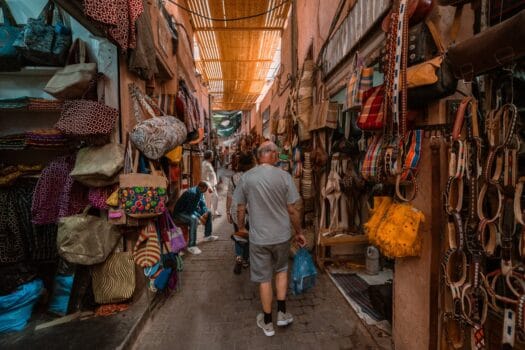
Where the Smell of Leather Tells Stories
Deep inside Marrakech’s Medina, far from the loud hum of Jemaa el-Fna, a quieter rhythm fills the air. Souk Cherratine is where leather breathes, a world of earthy scents, warm colors, and the slow patience of Moroccan craftsmanship. Travelers who reach these narrow lanes discover a side of the Red City untouched by hurry.
Generations of artisans have worked here, shaping hides into bags, belts, slippers, and poufs. The market takes its name from cherratine, meaning leatherworkers, and every sound, from the soft scrape of a blade to the thud of a mallet, carries the memory of centuries.
A Market Rooted in Heritage
Souk Cherratine dates back to the early days of Marrakech’s Medina, when trades clustered together by guild. Tanners worked near Bab Debbagh, the city’s old tanning quarter, while sellers gathered along the Cherratine alleys to display finished leather goods. That layout remains almost unchanged today.
The souk sits north of Souk El Kebir and near Souk Attarine, where brass, perfumes, and spices fill the air. Yet Cherratine keeps its identity firmly tied to leather. Raw materials often arrive straight from nearby tanneries, and many artisans still rely on plant-based dyes such as indigo, saffron, and pomegranate rind. Their methods survive because they work durable, breathable, and naturally beautiful.
Related: Souk Semmarine: The Beating Heart of Marrakech’s Medina.
What to Expect When You Visit
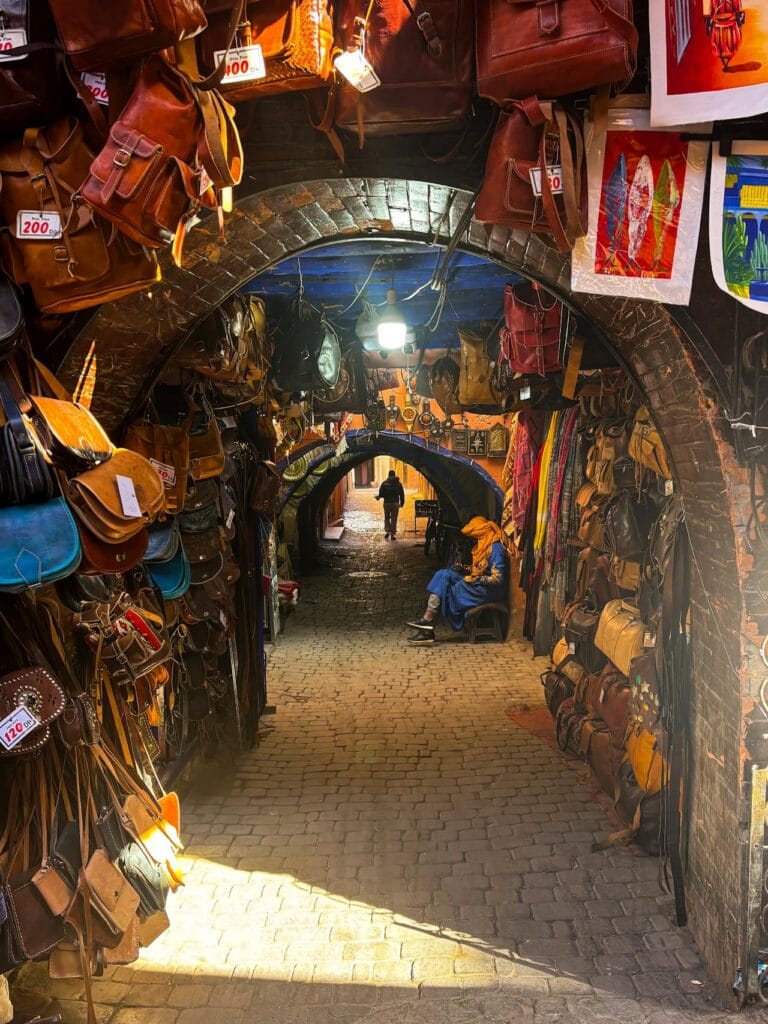
The entrance looks modest: a shadowed lane leading into a cascade of colors. Then the view opens to dozens of shops stacked high with satchels, slippers, wallets, and ottomans. Each stall shows the maker’s personality, neat displays for some, cheerful clutter for others.
Travelers can watch artisans cutting, stitching, and polishing leather by hand. The scent of tanned hide mixes with cedar oil and spices from neighboring streets. Light falls through wooden slats above, drawing golden lines across polished brass buckles and dyed belts.
Typical finds include:
- Hand-stitched bags in camel, goat, or cow leather.
- Traditional babouches, the pointed Moroccan slippers.
- Embossed belts, wallets, and leather journals.
- Poufs and cushions dyed in natural colors for home décor.
Each piece carries a small mark of individuality, the slight imperfection that proves a human touch.
How to Explore Like a Local
Take time to wander slowly. The souk reveals its rhythm only to patient eyes. Morning and late afternoon offer the best light for photos, while midday brings the strongest scents from the workshops.
Bargaining remains part of the experience. Start with a friendly tone, smile, and ask questions about materials and dyes. Most vendors appreciate genuine curiosity. You might even receive a small demonstration of the craft, a quick cut or burnish done right before your eyes.
A few steps beyond the main lane, small workshops hide behind wooden doors. These quieter corners often sell to locals, offering excellent quality at fair prices. Many artisans here love sharing stories about their families and trade; conversation enriches the visit as much as the purchase.
Related: Inside Marrakech’s Medina: The Streets That Still Whisper History.
Leather, Culture, and Continuity
Souk Cherratine represents more than shopping. It shows how Marrakech protects its heritage while welcoming the world. The Medina lives through its crafts and through people who keep handwork alive.
Every belt, bag, or cushion becomes a bridge between traveler and artisan. When you leave the souk carrying something handmade, you also carry a story of Morocco’s endurance and pride.
Walk through Souk Cherratine with open senses. Smell the leather, feel the texture, listen to the rhythm of tools, and you will understand why this market remains one of Marrakech’s most treasured places.