What Marrakech Feels Like in Ramadan
Ramadan is the ninth month of the Islamic lunar calendar. In 2026, Ramadan falls mainly from 19 February to 20 March. Muslims fast from dawn to sunset, refraining from food, drink, smoking and often public displays of indulgence. In Marrakech you’ll notice calm, slower daytime rhythms, and a surge of social life after sunset. The moment of breaking the fast (Iftar or Ftour) is especially atmospheric, often signaled by a traditional cannon blast or the call from mosques, and the city’s markets and squares come alive late into the night.
Should Tourists Fast?
No, visitors are not required to fast. Hotels, riads, and most tourist-area cafés and restaurants remain open. Local tourism professionals are well used to serving non-fasting guests. That said, out of respect, try to avoid eating, drinking or smoking in public streets where you may be visible to fasting people.
Food, Restaurants & Ftour in Marrakech
Food options for visitors remain plentiful, but expect adjustments:
- Hotels & riads: Breakfast and lunch are normally served.
- Local restaurants: Some close during daylight hours and reopen after sunset.
- Alcohol: Availability is limited; most liquor stores close for the month and only select hotels/restaurants may serve it.
- Dinner timing: Many places serve main evening meals after 9:00 PM.
Don’t miss a traditional Ftour, the sunset meal to break the fast. Typical Ftour dishes include harira soup, dates, chebakia pastries, baghrir, msemen, eggs and fresh juices. If you enjoy Moroccan cuisine’s blend of heritage and innovation, check our Modern Moroccan Culinary Fusion Guide.
Opening Hours, Museums & Sightseeing in Marrakech
During Ramadan Morocco temporarily suspends daylight saving time and moves from GMT+1 to GMT; many businesses change hours to accommodate prayers and meals. Practical effects in Marrakech:
- Shops open later and often close before sunset.
- Monuments and museums may reduce hours, often closing mid-afternoon.
- Souks revive late in the evening and remain lively after Ftour.
Tip: schedule outdoor sightseeing and museum visits for the morning or early afternoon, and reserve evenings for culinary experiences and night markets.
Appropriate Clothing & Cultural Respect
Modest dress is important year-round in Marrakech and even more so during Ramadan. Choose loose, breathable materials (cotton, linen) and cover shoulders, knees and torso. Neutral or soft colors are preferred.
For Men
- Modesty: Cover from navel to knees.
- Styles: Loose trousers, long shirts, djellabas or tunics.
For Women
- Cover up: Shoulders, elbows, knees, and legs.
- Styles: Long dresses, midi skirts, wide-leg trousers, tunics.
- Layering: Use cardigans, kimonos or abayas over sleeveless tops.
- Avoid: Tight, low-cut, short, or see-through clothing.
For more on local etiquette and sensitive behaviours during major events, see Things to Avoid in Morocco During Major Events.
Special Ramadan Experiences in Marrakech
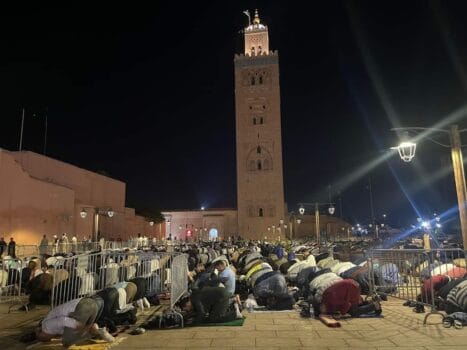
- Sunset at Koutoubia Mosque: A moving sight as thousands head to prayer.
- Evenings at Jemaa el-Fnaa: The square turns into a lively, joyful festival of food, music and community.
- Night souks: Late-night shopping and seasonal treats.
- Join a Ftour: Many riads and restaurants welcome guests for the communal evening meal.
If you’re preparing to visit Marrakech for CAN 2025 events or need travel planning tips tied to big match days, see our Marrakech Travel Guide.
Weather, Energy & Etiquette
May can be warm, particularly in southern and inland areas; combined with late nights and fasting, people can feel tired during daytime. Be patient, polite and friendly, a simple “Ramadan Kareem” goes a long way.
Unforgettable Ramadan Experiences
- The Cannon Blast: Listen for the traditional cannon shot that echoes across the Medina to signal Maghrib (sunset) and the start of Ftour.
- Jemaa el-Fnaa After Dark: Experience the square at its most authentic, filled with families enjoying post-fast treats and spiritual Gnawa music.
- Taraweeh Prayers: Witness the thousands of worshippers gathering outside the Koutoubia Mosque for evening prayers—a truly moving sight of faith and community.
Practical Tips
- Book Ftour experiences in advance during busy weekends.
- Check museum and site opening times the day before you go.
- Carry a water bottle and sunscreen for daytime sightseeing (drink discreetly in non-public areas if required).
- Be flexible with schedules; the city’s rhythm changes during Ramadan.