Estimated reading time: 4 minutes
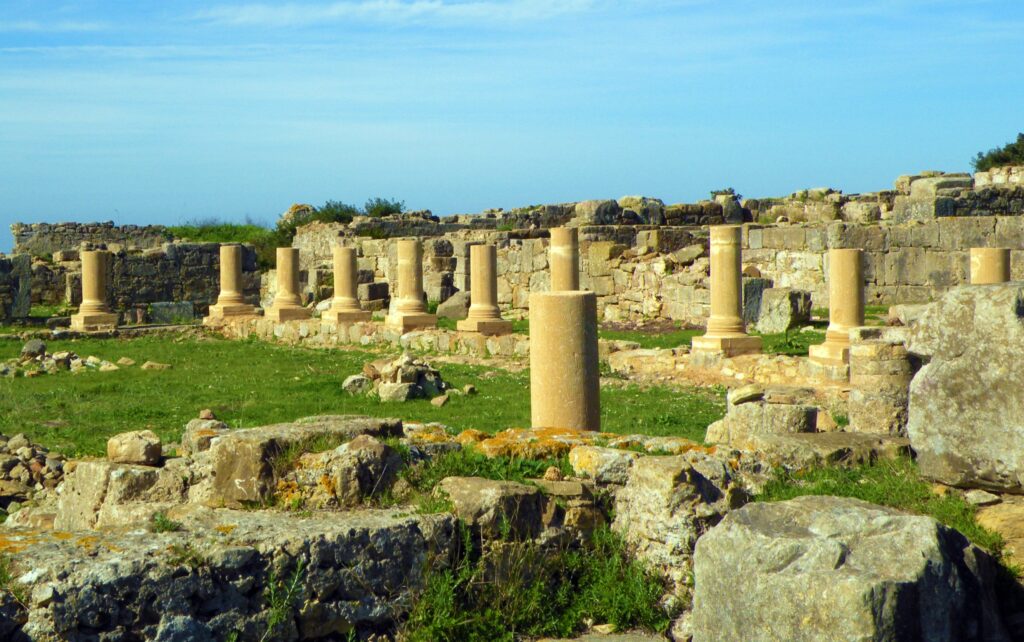
Lixus archaeological site Larache. Image Credit: Fanky Tee/ Wikimedia.org
Overlooking the Loukkos River near Larache, Lixus stands as one of North Africa’s oldest cities, a Phoenician, Carthaginian, Roman, and Islamic crossroads steeped in history and legend.
As part of our ongoing series exploring Morocco’s most fascinating heritage sites, we turn to Lixus, an ancient city whose origins date back to the 12th century BCE. Located just seven kilometers from Larache in northern Morocco, this archaeological gem offers breathtaking views, layered civilizations, and mythological prestige.
Where Is Lixus Located?
Lixus sits on the hill of Tchoumich, overlooking the Loukkos River, once navigable and vital for trade. Its strategic Atlantic position made it a natural hub for maritime civilizations.
- Location: 7 km from Larache
- Region: Tanger-Tétouan-Al Hoceïma
- Setting: Hilltop overlooking the Loukkos River
- UNESCO Status: On Morocco’s tentative World Heritage list since 1995
One of North Africa’s Oldest Cities
The Roman writer Pliny the Elder described Lixus as one of the most ancient cities of North Africa. Its foundation may even predate Carthage and Cádiz, highlighting its strategic importance in early Mediterranean trade networks.
The first settlers were Phoenician navigators who established the city to strengthen commercial ties with local Paleo-Berber populations. Lixus became a key Atlantic base for maritime expansion and supply routes toward other African destinations.
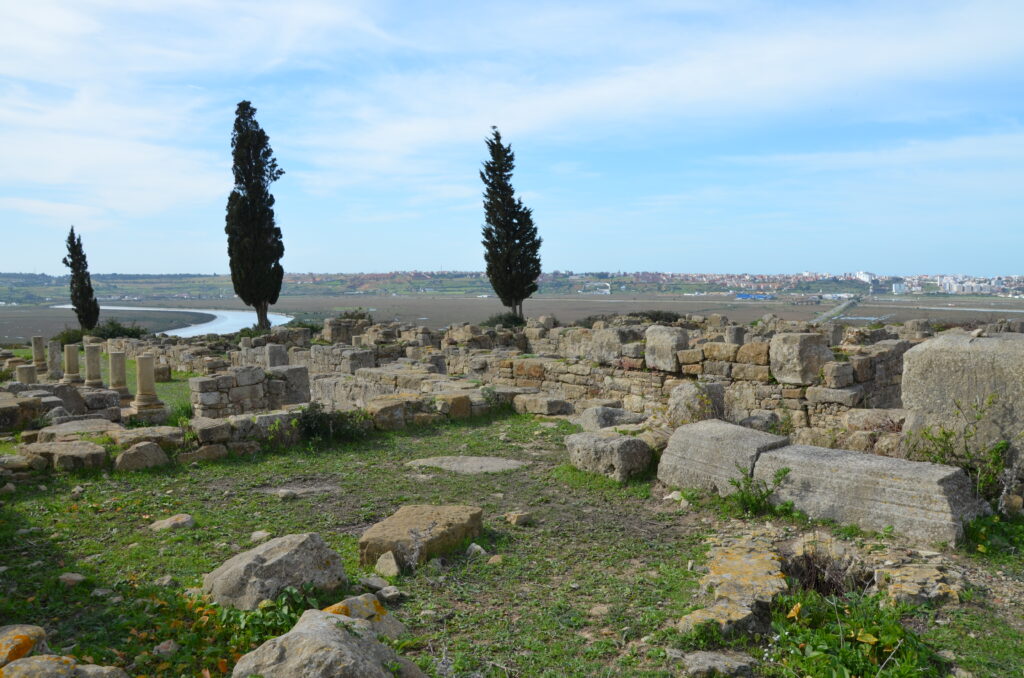
Lixus archaeological site Larache. Image Credit: Carole Raddato / Wikimedia.org
Carthaginians, Romans, and Muslims
The Carthaginian Period
After the Phoenicians, the Carthaginians attempted to control Lixus. Although their political grip was limited, the city continued to flourish economically, benefiting from its Atlantic trade connections.
The Roman Colony
In 39/40 CE, Lixus officially became a Roman colony. The Romans transformed the city with impressive infrastructure:
- Peristyle houses
- Public baths (thermae)
- Garum production facilities (fish sauce export)
- Fortifications against Moorish incursions
During Roman times, Lixus was a thriving industrial and commercial center, especially known for salted fish and garum production exported across the empire.
The Islamic Era
By the late 7th century, the city had undergone Christianization before the arrival of Muslim forces. Under the Umayyad Caliphate of Damascus, a mosque and baths were built near the ancient acropolis. Eventually, Lixus declined as Larache rose in prominence, marking a historical transition from antiquity to the medieval period.
A City of Myth: Hercules and the Golden Apples
Lixus is also deeply rooted in Greek mythology. According to legend, Hercules performed two of his labors here:
- Defeating the giant Antaeus
- Harvesting the golden apples from the Garden of the Hesperides, guarded by a dragon
This mythical dimension reinforces Lixus’ aura as a place where history and legend intertwine.
Archaeological Discoveries
The first archaeological excavations began in 1925 under Spanish direction. After Morocco’s independence, further research campaigns were conducted between 1957 and 1967 by the Moroccan Antiquities Service.
Today, visitors can explore visible remains including:
- Roman amphitheater ruins
- Ancient baths
- Mosaic fragments
- Industrial fish-salting basins
- Residential quarters
The panoramic view from the hilltop over the Loukkos estuary adds to the immersive experience, offering both historical depth and natural beauty.
Why Visit Lixus?
- Discover one of Morocco’s oldest urban settlements
- Explore Phoenician, Roman, and Islamic layers of history
- Enjoy panoramic Atlantic and river views
- Experience a lesser-known archaeological treasure
- Connect with Morocco’s pre-modern Mediterranean heritage
Travel Tips
- Best visited in spring or autumn for mild weather.
- Combine with a visit to Larache’s medina and Atlantic coastline.
- Wear comfortable walking shoes, terrain is uneven.
- Bring water and sun protection.
A Living Testament of Civilizations
Lixus is not merely a collection of ruins. It is a silent witness to centuries of trade, conquest, cultural exchange, and myth. From Phoenician merchants to Roman colonists and Islamic dynasties, the city reflects Morocco’s deep Mediterranean and Atlantic roots.
Standing above the Loukkos River, Lixus remains a powerful symbol of Morocco’s archaeological richness, a cradle of Larache and a cornerstone of North African history.