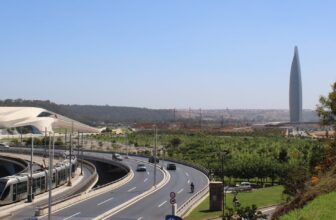
Photo Credit: Reda Benkhadra/ Wikimedia.org
A Shared Governance Model for Strategic Infrastructure
The newly created regional companies operate under a joint governance structure that brings together the State, regional councils, municipalities and the Fédération Royale Marocaine de Football. This financial and institutional architecture distributes both responsibility and risk, while ensuring alignment with national objectives ahead of the 2030 FIFA World Cup.
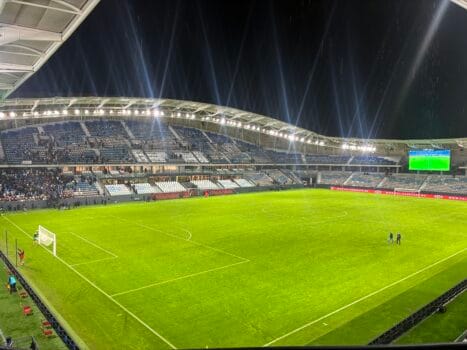
Each company functions as a joint-stock entity with a board of directors, providing professional oversight and structured decision-making. The objective is to centralize stadium management under specialized entities capable of meeting international operational standards, particularly those required by FIFA.
From Public Facilities to Revenue-Generating Assets
The reform introduces an economic logic centered on long-term sustainability. Stadiums will adopt diversified revenue models, including digital ticketing systems, advertising rights management, hosting of sporting and cultural events, and commercial space exploitation.
This strategy seeks to transform large sports venues into productive assets capable of generating steady financial flows. At the same time, access for local clubs, youth associations and regional communities remains part of the mandate, reinforcing sport’s social and territorial dimension.
Conclusion
Morocco’s preparations for 2030 now extend beyond construction and renovation. By establishing specialized governance structures in key host cities, authorities are reinforcing institutional capacity alongside infrastructure upgrades. The approach reflects a broader ambition: to deliver a professionally managed World Cup while leaving behind financially viable, internationally aligned sports assets for future generations.
Related: