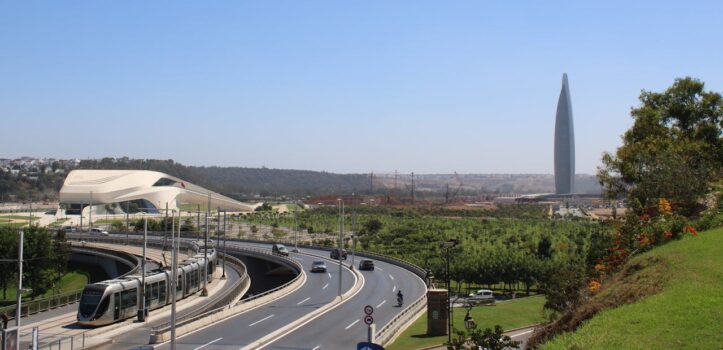
Morocco is accelerating the expansion of its highway network as part of a broader national infrastructure strategy linked to Vision 2030 and preparations for the FIFA World Cup 2030. The government has launched major road projects designed to improve connectivity between key urban centers, support logistics corridors, and facilitate access to stadiums and transport hubs across the country.
The highway expansion program forms one pillar of a larger infrastructure transformation that also includes high speed rail, airport modernization, and port development. Together these investments aim to strengthen Morocco’s position as a regional logistics hub connecting Europe, Africa, and the Atlantic trade routes.
Within this framework, new motorways connecting major cities such as Rabat, Casablanca, Marrakech, Tangier, and Agadir will play a critical role in managing passenger flows during the 2030 tournament while also supporting long term economic growth.
Morocco Highway Expansion as Part of Vision 2030
The Moroccan government has committed significant resources to expanding the national highway network during the current decade. According to infrastructure investment plans presented by Moroccan authorities, the country intends to extend its motorway system to approximately 3,000 kilometers by 2030. Source
This expansion responds to growing traffic volumes, rising tourism, and increasing industrial activity in logistics hubs such as Casablanca and Tangier. National highway operator Autoroutes du Maroc (ADM) has reported continued traffic growth across the motorway network, reinforcing the need for additional capacity and new corridors connecting major cities. Source
The highway program is closely aligned with Morocco’s preparations for major sporting events. Infrastructure upgrades will improve mobility between the six Moroccan cities selected to host World Cup matches in 2030, including Casablanca, Rabat, Tangier, Marrakech, Agadir, and Fez. Source
These investments also complement other transport projects described in Morocco’s masterplan for World Cup infrastructure, which outlines how roads, railways, and airports will operate as a coordinated national mobility system.
Key Highway Projects Connecting Morocco’s Major Cities
Rabat–Casablanca Continental Motorway
One of the most significant projects in Morocco’s highway expansion is the Rabat–Casablanca Continental Motorway. This new 60 kilometer corridor will provide an alternative route between the political capital and the country’s economic center.
The project aims to reduce congestion on the existing Rabat–Casablanca motorway, which remains one of the busiest transport corridors in North Africa. Once completed, the new road will connect the Rabat ring road at Ain Atiq with the Casablanca southern bypass near Tit Mellil. Source
The motorway represents an investment of roughly 6.5 billion Moroccan dirhams and forms part of a broader infrastructure package designed to facilitate travel between host cities during the 2030 World Cup. Source
Once operational, the new route will improve freight circulation between the two metropolitan areas while also providing faster access to major transport nodes such as Casablanca’s international airport and regional logistics zones.
Tit Mellil–Berrechid Highway Corridor
Another key project in Morocco’s highway expansion program is the Tit Mellil–Berrechid motorway. This corridor will strengthen connections between Casablanca’s southern industrial areas and the national motorway network.
The route will link the Casablanca ring road near Tit Mellil with the Berrechid junction on the Casablanca–Marrakech motorway. As a result, traffic traveling from northern Morocco toward Marrakech or Agadir will bypass congestion within the Casablanca metropolitan area.
The project also improves access to the future Grand Stade Hassan II, the large football stadium currently under construction in the Casablanca region for the 2030 World Cup. Source
A detailed analysis of that stadium project and its surrounding infrastructure appears in this report on the Grand Stade Hassan II development.
Upgrades to Major Highway Interchanges
In addition to building new motorways, Morocco is investing heavily in upgrading major highway interchanges in urban areas. Two of the most strategic projects involve the modernization of the Ain Harrouda and Sidi Maârouf interchanges near Casablanca.
These junctions handle some of the highest traffic volumes in the country because they connect national highways, urban roads, and industrial zones within the Casablanca metropolitan area. Modernizing these intersections will reduce congestion and improve travel reliability between Morocco’s largest economic centers. Source
Improved road capacity around Casablanca also supports the airport modernization strategy discussed in this analysis of the Casablanca airport expansion project.
Existing Motorways Linking Morocco’s Main Economic Regions
Morocco already operates one of the most extensive motorway networks in Africa. Several strategic routes form the backbone of the national road system, linking the country’s major economic and tourism regions.
Casablanca–Agadir Highway
The Casablanca–Agadir motorway represents one of the most important transport corridors in the country. This 429 kilometer highway connects the economic capital Casablanca with the tourism hub of Agadir via Marrakech. Source
The route crosses the High Atlas mountains and serves major cities such as Settat and Marrakech before reaching Agadir on the Atlantic coast. Since its completion in 2010, the motorway has significantly reduced travel times between northern and southern Morocco while supporting tourism and logistics activity across the region. Source
Berrechid–Beni Mellal Expressway
The Berrechid–Beni Mellal expressway provides another important connection between central Morocco and the Casablanca region. The 173 kilometer motorway links agricultural and mining areas in the Beni Mellal–Khenifra region with industrial and export infrastructure in Casablanca. Source
By connecting phosphate mining areas and agricultural zones to coastal ports and industrial clusters, the route plays a key role in Morocco’s logistics and export economy.
Why Highway Expansion Matters for the 2030 World Cup
Large sporting events require complex logistics systems capable of moving millions of visitors between cities, airports, and stadiums. Morocco’s highway expansion therefore forms an essential component of its World Cup preparation strategy.
Government infrastructure plans allocate approximately 12.5 billion Moroccan dirhams to new highway projects between 2025 and 2032, focusing on improving access to stadiums and transport hubs in host cities. Source
New roads will support travel between airports, hotels, and stadium venues while also reducing congestion in major urban areas during the tournament.
These road investments operate alongside major rail developments. Morocco is expanding its high speed rail network from Kenitra to Marrakech, which will reduce travel times between the northern and southern regions of the country. Source
The integration of highways, rail, and airports will allow Morocco to distribute passenger flows across multiple transport modes during large international events.
Highways and Morocco’s Long Term Economic Development
Although the World Cup provides an important catalyst for infrastructure investment, Morocco’s highway expansion strategy extends far beyond the tournament itself.
Improved road connectivity supports the country’s industrial policy by linking logistics zones, manufacturing clusters, and export ports. Highways also enable more efficient freight transport between inland production areas and coastal trade gateways such as Tanger Med, one of the largest container ports in the Mediterranean.
Better road infrastructure also strengthens tourism development across the country. Faster connections between cities encourage domestic travel while making it easier for international visitors to explore multiple destinations.
Similarly, highway expansion supports regional development strategies by integrating interior provinces into national economic networks.
Infrastructure upgrades at airports also complement road development. Increased passenger traffic at regional airports demonstrates the growing demand for integrated transport systems, as explored in this analysis of Rabat-Salé Airport growth and this report on Morocco’s airport modernization strategy.
Conclusion
Morocco’s highway expansion program reflects a strategic effort to modernize national transport infrastructure ahead of the FIFA World Cup 2030 while supporting long term economic development. New motorways connecting major cities such as Rabat, Casablanca, and Marrakech will reduce congestion, improve logistics efficiency, and strengthen access to stadiums and airports.
Through investments in highways, railways, airports, and ports, Morocco is building an integrated mobility system capable of supporting both large international events and future economic growth. As these projects progress during the coming decade, the country’s expanding motorway network will play a central role in connecting regions, facilitating trade, and reinforcing Morocco’s position as a regional infrastructure hub.
Sources
Global Highways – Morocco motorway expansion program
US International Trade Administration – Morocco infrastructure overview
Assahifa – Morocco highway projects linked to World Cup 2030
Construction Briefing – Morocco highway investment for World Cup
Casablanca–Agadir expressway overview
Berrechid–Beni Mellal expressway overview