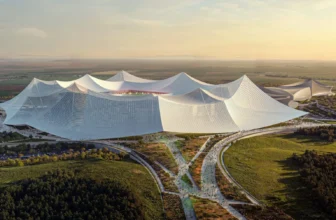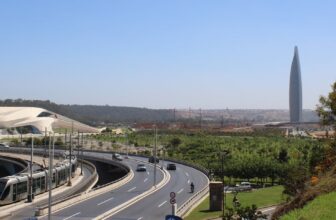

Morocco is undertaking one of the largest aviation infrastructure transformations in Africa as part of its preparations for the FIFA World Cup 2030 and its broader Vision 2030 development strategy. At the center of this transformation stands the expansion of Mohammed V International Airport in Casablanca, the country’s largest aviation hub and primary international gateway.
The project reflects Morocco’s long term objective to strengthen its global connectivity, support tourism growth, and position Casablanca as a strategic logistics hub linking Europe, Africa, and the Americas. Alongside rail expansion, stadium construction, and urban modernization, the airport development forms a key pillar of the national infrastructure agenda linked to World Cup preparations.
The expansion of Casablanca Airport therefore represents more than a transport upgrade. It illustrates how Morocco is aligning large scale infrastructure investments with global sporting events to accelerate national development and economic integration.
Casablanca Airport at the Center of Morocco’s World Cup 2030 Logistics Strategy
Mohammed V International Airport currently serves as Morocco’s largest aviation hub and the main base of Royal Air Maroc. As passenger traffic has grown rapidly in recent years, authorities have launched an ambitious expansion program designed to accommodate the surge expected by the end of the decade.
The Moroccan government and the National Airports Office (ONDA) have approved a national airport modernization program aimed at increasing Morocco’s total airport capacity from roughly 30 million passengers to 80 million passengers annually by 2030. This expansion is closely linked to the country’s preparations for co hosting the FIFA World Cup with Spain and Portugal. Source
Within this national strategy, Casablanca Airport plays a central role because it concentrates the majority of intercontinental flights and serves as the main transfer hub between Africa, Europe, and North America. As a result, the government has prioritized the modernization of this facility in order to manage both tourism flows and international logistics related to the tournament.
This aviation transformation also complements the broader infrastructure framework described in Morocco’s masterplan for World Cup infrastructure development, which outlines the transport networks and urban investments supporting the 2030 event.
The New Terminal Project at Mohammed V International Airport
A MAD 15 Billion Investment to Expand Capacity
The flagship project at Casablanca Airport is the construction of a major new passenger terminal designed to dramatically increase the airport’s capacity and operational efficiency. The project represents an investment of approximately 15 billion Moroccan dirhams, equivalent to about 1.5 billion US dollars. Source
The terminal is expected to accommodate an additional 20 million passengers per year once operational, raising the airport’s overall capacity to roughly 35 million passengers annually by the end of the decade. Source
This expansion responds to rapid growth in air traffic. Morocco’s airports have already experienced record passenger volumes in recent years due to tourism growth and the expansion of international routes. As travel demand continues to increase, infrastructure upgrades have become essential to maintain service quality and operational efficiency.
Completion Timeline Before the 2030 World Cup
The construction of the new terminal is scheduled for completion in 2029, ensuring that the facility will be fully operational before the 2030 World Cup begins. Source
Moroccan construction companies SGTM and TGCC have been awarded major contracts for the project, which includes the development of the terminal structure as well as associated airport infrastructure. Source
By completing the project before the tournament, Morocco aims to ensure that Casablanca can manage the large number of international visitors expected during the World Cup.
Engineering Design and Hub Architecture
A Hub Style Terminal for Global Connectivity
The new terminal has been designed using a hub style architecture intended to optimize passenger connections and aircraft operations. The facility will cover roughly 600,000 square meters and adopt an H shaped layout that allows aircraft to access gates efficiently from both sides of the terminal. Source
This design reflects international hub airport standards where centralized processing areas handle security, baggage, and passenger circulation before directing travelers toward boarding areas located on extended concourses.
Such configurations improve operational performance because they reduce taxiing times for aircraft and facilitate faster passenger transfers between flights.
Supporting Infrastructure at the Airport
The expansion program also includes additional airport infrastructure beyond the terminal building. Plans include the construction of a new parallel runway, expanded aircraft parking areas, and a modern control tower capable of managing higher traffic volumes. Source
These elements are essential because terminal capacity alone cannot accommodate higher traffic levels without corresponding upgrades in airside operations.
The project therefore integrates runway systems, air traffic management technology, and ground handling infrastructure into a single coordinated development plan.
Integration with Morocco’s National Transport Network
The modernization of Casablanca Airport does not operate in isolation. Instead, it forms part of a broader transport ecosystem connecting aviation, rail, highways, and logistics infrastructure.
Morocco is simultaneously expanding its high speed rail network with a new line linking Kenitra to Marrakech via Rabat and Casablanca. This project will significantly reduce travel times between major cities and improve connections to the airport. Source
Once integrated, the rail system will allow passengers to travel from northern Morocco to Casablanca Airport in under three hours, strengthening the facility’s role as a national and international hub.
The airport expansion also supports Morocco’s strategy to strengthen the competitiveness of Royal Air Maroc, which plans a major fleet expansion in order to develop Casablanca as a global connection point linking Africa with Europe and the Americas. Source
Passenger Experience and Smart Airport Technology
In addition to capacity increases, the modernization program aims to improve the passenger experience through digital systems and operational efficiency.
Authorities plan to introduce biometric identification gates, faster security processing, and advanced baggage handling systems designed to reduce waiting times. These systems will operate in coordination with national security services and customs authorities. Source
These improvements align with the modernization goals explored in Morocco’s airport passenger experience strategy for 2030, which focuses on digitization, security integration, and service quality upgrades across the national airport network.
Expanding Airport Infrastructure Across World Cup Host Cities
The Casablanca expansion represents only one component of a broader airport development strategy across Morocco. As part of the Airports 2030 program, several major airports in World Cup host cities are also undergoing upgrades.
Marrakech Menara Airport is expanding its terminal capacity to approximately 16 million passengers, while modernization projects are also underway in Agadir, Tangier, and Fez. Source
These investments ensure that visitors arriving for the World Cup can enter the country through multiple gateways rather than relying exclusively on Casablanca.
Similarly, airport modernization supports the growing tourism sectors in several regions. Increased air capacity allows Morocco to sustain higher visitor volumes beyond the World Cup itself.
Other transport developments complement these airport upgrades. For example, stadium construction projects such as the future Hassan II Grand Stadium in Casablanca are designed to integrate with improved transport corridors and urban planning initiatives. A detailed analysis of that project appears in this report on the Grand Stade Hassan II development.
Meanwhile, airports serving the capital region are also experiencing growth. Passenger traffic increases at Rabat Salé Airport highlight how infrastructure upgrades are expanding Morocco’s aviation network across multiple cities, as discussed in this analysis of Rabat airport traffic trends.
Why the Casablanca Airport Expansion Matters for Morocco’s Economy
The modernization of Mohammed V International Airport carries strategic importance beyond the World Cup itself.
First, the project strengthens Morocco’s position as a logistics and aviation hub between Europe and Africa. Casablanca already hosts the headquarters of Royal Air Maroc and serves as a key transit point for flights connecting West Africa to Europe and North America.
Second, increased airport capacity supports the country’s tourism ambitions. Morocco aims to attract millions of additional international visitors by the end of the decade, and aviation infrastructure must accommodate this growth.
Third, the project stimulates the domestic construction and engineering sector. Major Moroccan companies are involved in building the terminal and related infrastructure, which contributes to technology transfer and employment creation.
Finally, the expansion aligns with Morocco’s broader economic diversification strategy, which prioritizes logistics, trade, tourism, and industrial exports.
Conclusion
The expansion of Casablanca’s Mohammed V International Airport illustrates how Morocco is aligning infrastructure development with global events and long term economic planning. Through the Airports 2030 program, the country is investing billions of dollars to modernize aviation infrastructure, increase passenger capacity, and integrate airports with national transport networks.
The new terminal in Casablanca, scheduled to open before the 2030 World Cup, will significantly expand the airport’s capacity and reinforce its role as a major international hub. Combined with rail expansion, stadium construction, and urban development projects, the airport upgrade reflects a coordinated strategy designed to strengthen Morocco’s global connectivity.
As these projects progress toward completion, Casablanca Airport will become a central gateway for visitors attending the World Cup while also serving as a long term driver of tourism, trade, and economic growth in Morocco.
Sources
Reuters – Morocco plans $1.5 billion expansion of Casablanca airport
Moroccan Government Portal – Airport capacity expansion plan
Morocco World News – Construction contract for Casablanca terminal
Hespress – Casablanca airport terminal investment
Aviation Week – Moroccan airport expansions
Engineering News Record – Casablanca airport infrastructure development