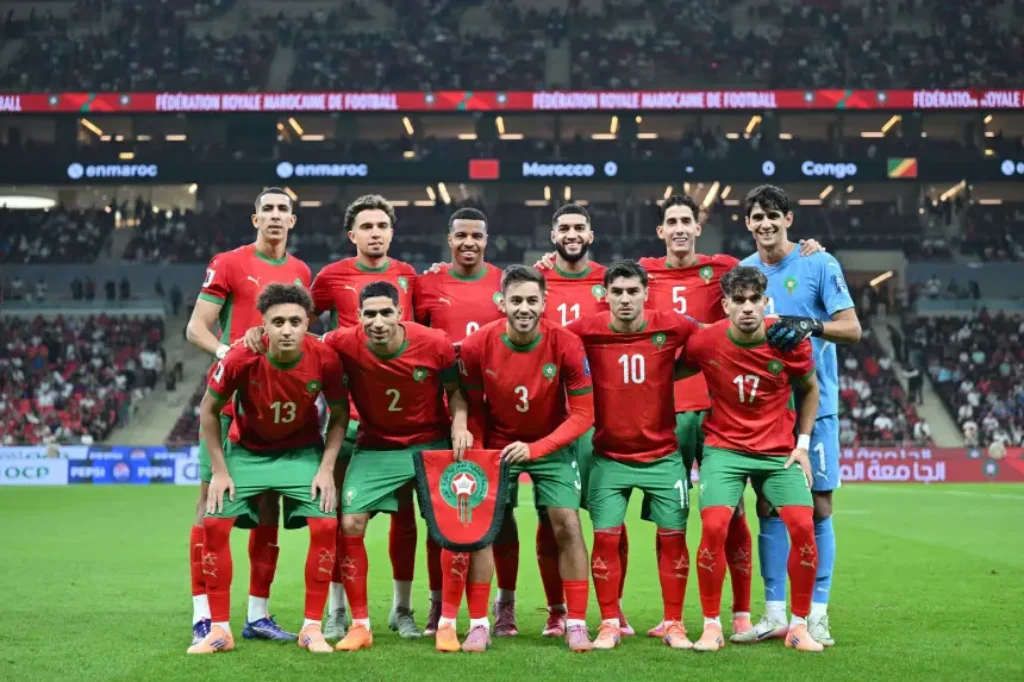
Moroccan national team, Photo credit: FRMF
Moroccan football is no longer discussed as a fleeting moment of enthusiasm or the result of a single successful tournament. This is how the Spanish press now reads the Moroccan football story.
In a detailed analysis, Spanish daily El Mundo describes Morocco as a genuine footballing power, built on a long-term project that goes far beyond simple competitiveness and now openly aims for leadership as the 2030 World Cup approaches.
The newspaper does not speak of miracles or fortunate coincidences. Instead, it highlights a patient and structured strategy launched nearly two decades ago, when Morocco decided to move football away from short-term management and into the realm of state-driven planning and national vision.
New stadiums, modern training centers and infrastructure designed according to international standards were not created to serve a single tournament, but to establish a complete and sustainable ecosystem. Over time, the results followed: a strong presence at the 2022 World Cup, a historic semi-final qualification, and the U20 national team’s world title, sending a clear message that the foundation is now as strong as the elite.
El Mundo insists on a key point: what Morocco is experiencing today is the outcome of strategic foresight, not a temporary reaction. A vision centered on youth development, professionalism and the reconnection with Moroccan talents abroad.
This approach reached a decisive phase under head coach Walid Regragui, who actively integrated a large number of dual-nationality players into the national team. The appeal was not financial, but based on clarity of purpose, transparency and a shared narrative: these players were invited to become part of a story in the making, not just names called up when needed.
The Moroccan national team, as described by the Spanish newspaper, is now a carefully balanced blend of players developed domestically and others shaped in the football academies of Spain, France, the Netherlands and Belgium.
This mix has allowed the Atlas Lions to compete at the highest level across all age categories, without hesitation or inferiority complex.
Behind the scenes, another engine has been working quietly and efficiently: the Mohammed VI Football Academy.
Since its inauguration in 2009, the academy has become the heart of the Moroccan football project, a steady production line of talent serving both men’s and women’s football, and supplying national teams with players who are technically refined and mentally prepared.