
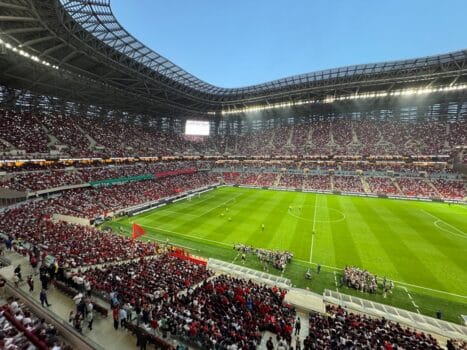
Photo by Earth Photart via Pexels
Modern football is no longer decided only by tactics, talent, and fitness. Increasingly, it is also shaped by technology hidden beneath the grass. In Morocco, where major stadiums host continental and international competitions under demanding climatic conditions, one system has become central to pitch reliability: SubAir technology.
Installed beneath natural and hybrid turf surfaces, SubAir is designed to control water, air, and temperature in the root zone of football pitches. Its growing use in Moroccan stadiums reflects a strategic shift toward elite pitch management, ensuring match readiness regardless of weather pressure or fixture congestion.
What Is SubAir Technology?
SubAir is a subsurface air and water management system connected to a stadium’s drainage infrastructure. Unlike traditional drainage, which relies mainly on gravity, SubAir actively controls the movement of air and moisture beneath the playing surface.
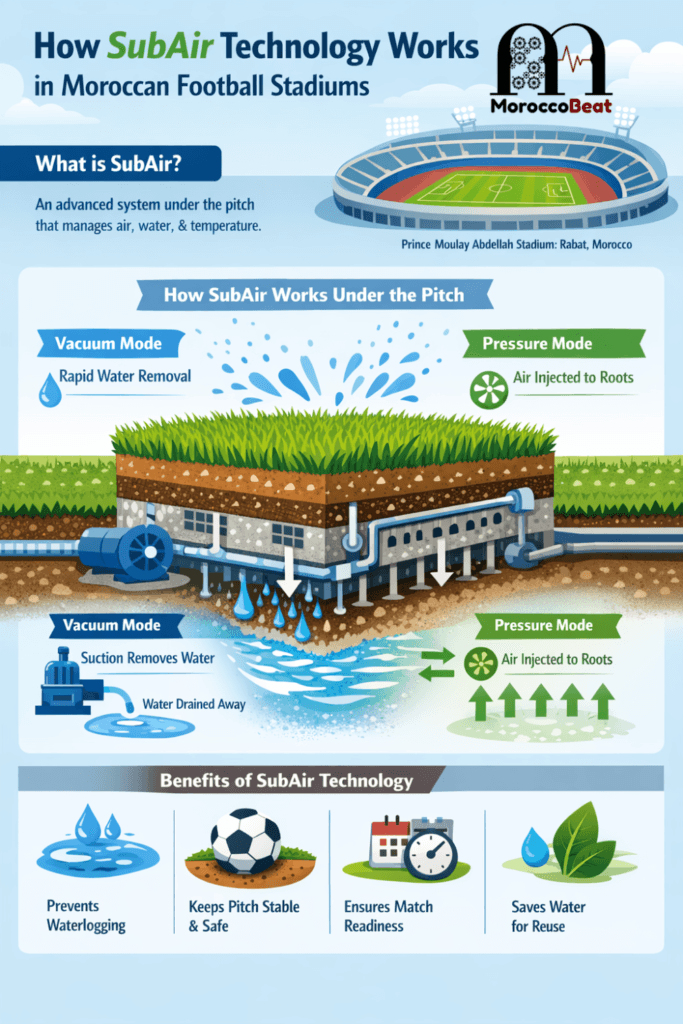
The system operates in two main modes:
- Vacuum mode, which rapidly removes excess water from the pitch profile
- Pressure mode, which pushes oxygen-rich air into the root zone to support grass health
By actively managing these variables, SubAir allows groundskeepers to fine-tune pitch conditions before, during, and after matches.
Related: Prince Moulay Abdellah Stadium: Morocco’s New Football Jewel
Why Modern Stadiums Need SubAir
Elite football stadiums face challenges that older pitch designs were never meant to handle. These include:
- Intense rainfall over short periods
- High match frequency with limited recovery time
- Broadcast-driven scheduling that leaves no room for postponements
- Strict safety and performance standards set by international bodies
In such environments, even well-designed traditional drainage can struggle. SubAir adds a controlled, responsive layer that stabilizes the pitch under pressure.
How SubAir Works Beneath the Pitch
To understand SubAir’s role, it helps to look at the structure of a modern football pitch.
Beneath the grass lies a layered system: root-zone sand, drainage aggregates, perforated pipes, and structural cavities. SubAir connects to this network and changes how it behaves.
Related: Tangier Grand Stadium: SubAir System Shows Global-Level Performance
Vacuum Mode: Rapid Water Extraction
When heavy rain hits, SubAir can create negative pressure beneath the surface. This pulls water downward, accelerating drainage far beyond what gravity alone can achieve. The result is a firmer surface, reduced pooling, and safer footing for players.
This function is especially critical during tournaments, where matches must proceed on schedule regardless of weather.
Pressure Mode: Oxygen and Recovery
After matches, pitches suffer from compaction. Pressure mode reverses airflow, pushing oxygen into the root zone. This improves root respiration, speeds recovery, and reduces turf stress.
For stadiums hosting multiple matches per week, this recovery window is essential.
Sensor-Based Control
In modern installations, SubAir systems are paired with sensors and automation. These monitor moisture levels, oxygen concentration, and temperature, allowing grounds teams to respond proactively rather than reactively.
Related: Rabat Olympic Stadium: Morocco’s New Benchmark for Global Sporting Events
SubAir and Hybrid Turf: A Combined System
In Morocco, SubAir is rarely used in isolation. It is typically combined with hybrid turf systems, where natural grass is reinforced with synthetic fibers.
This combination offers several advantages:
- Hybrid turf resists tearing and divoting
- SubAir stabilizes moisture and oxygen beneath the surface
- Together, they create a pitch that stays consistent across multiple matches
This integrated approach aligns with international best practices for high-usage stadiums.
Where SubAir Is Used in Moroccan Stadiums
While technical details are not always publicly disclosed, multiple Moroccan stadiums associated with major competitions have adopted advanced subsurface pitch systems.
These include flagship venues such as Prince Moulay Abdellah Stadium and Grand Stade de Tanger, both of which have undergone extensive pitch modernization to meet elite standards.
In these stadiums, underground structural modules allow for temporary water storage, controlled airflow, and thermal stability, creating a resilient foundation beneath the grass.
Related: Prince Moulay El Hassan Stadium: Rabat’s New Urban Football Landmark
Impact on Match Quality and Player Safety
From a footballing perspective, SubAir’s benefits translate directly onto the pitch.
- More predictable ball movement, without waterlogged zones
- Reduced slipping and uneven footing, improving safety
- Consistent surface firmness, regardless of weather
These factors influence not only performance but also injury risk, making pitch technology a competitive and medical consideration.
Scheduling Reliability and Broadcast Demands
Modern tournaments operate under tight global broadcasting windows. Matches cannot easily be delayed or postponed due to pitch conditions.
SubAir supports operational certainty. Stadium operators gain confidence that pitches will remain playable, even under adverse conditions. This reliability protects the tournament’s reputation and the host country’s image.
Water Management and Sustainability
SubAir also plays a role in responsible water management. Rather than simply discarding rainwater, some stadium designs integrate retention and reuse systems.
Collected water can be redirected toward irrigation or storage, reducing overall consumption and aligning with sustainability objectives increasingly required for international events.
Related: El Barid (Al Madina) Stadium: A Modern AFCON 2025 Venue in the Heart of Rabat
What SubAir Does Not Replace
Despite its sophistication, SubAir is not a miracle solution. It does not eliminate the need for:
- Proper pitch construction and leveling
- Skilled groundskeeping teams
- Regular aeration, mowing, and nutrition programs
Instead, it enhances an already professional turf management strategy. Moroccan stadiums that deploy SubAir do so as part of a system-wide upgrade, not a standalone fix.
Why SubAir Matters for Morocco’s Long-Term Strategy
The adoption of SubAir technology reflects more than short-term tournament needs. It signals a long-term investment in stadium credibility.
Once installed, these systems support:
- Year-round national and club competitions
- International friendlies and qualifiers
- Global tournaments with zero tolerance for infrastructure failure
For Morocco, pitch reliability is part of broader ambitions to remain a trusted host for top-level football.
Related:
A Technology That Stays Invisible but Decisive
Spectators rarely think about what lies beneath the grass. Yet systems like SubAir quietly shape the quality, safety, and rhythm of modern football.
In Moroccan stadiums, this hidden technology has become a silent ally, ensuring that when players step onto the pitch, the game is decided by footballing skill rather than the state of the surface.
As elite competitions continue to demand perfection, SubAir stands as a clear example of how technology and tradition meet beneath the grass in Morocco’s modern stadiums.
Frequently Asked Questions About SubAir Technology
What is SubAir technology in football stadiums?
SubAir technology is an underground pitch management system that controls water drainage, airflow, and root-zone conditions beneath natural or hybrid grass football pitches. It helps keep stadium surfaces stable, safe, and playable during heavy rain and intensive match schedules.
How does SubAir remove water from a football pitch?
SubAir uses a vacuum mode that creates negative pressure under the pitch, pulling excess water down through the soil layers and into the drainage system much faster than gravity alone. This prevents waterlogging and surface pooling.
Why do stadiums in Morocco use SubAir technology?
Football stadiums in Morocco use SubAir to ensure pitch reliability during high-profile tournaments, unpredictable weather, and tight match schedules. The system supports match readiness, player safety, and consistent playing conditions.
Does SubAir replace traditional pitch drainage systems?
No. SubAir works alongside traditional drainage. It enhances existing systems by actively managing airflow and moisture, but it does not replace proper pitch construction, drainage layers, or professional turf maintenance.
Is SubAir used with natural grass or artificial turf?
SubAir is designed for natural grass and hybrid turf systems. It is not intended for fully artificial pitches, as it focuses on managing soil, roots, and living grass conditions.
What are the main benefits of SubAir technology?
SubAir technology helps prevent waterlogging, improves grass health, speeds pitch recovery between matches, and ensures consistent surface quality even in challenging weather conditions.