The Tan-Tan Moussem guide offers travelers a structured way to experience one of Morocco’s most important cultural gatherings. Held in the southern city of Tan-Tan, this annual event celebrates Saharan nomadic heritage through music, poetry, equestrian displays, traditional markets, and tribal reunions. More than a festival, the moussem functions as a living platform where communities preserve customs linked to mobility, oral culture, and desert identity.
For visitors seeking a deeper understanding of Morocco beyond imperial cities and coastal resorts, Tan-Tan provides access to a different historical landscape. Once travelers understand the event’s timing, logistics, and cultural meaning, they can approach the moussem as both a travel experience and an encounter with intangible heritage.
What Is the Tan-Tan Moussem?
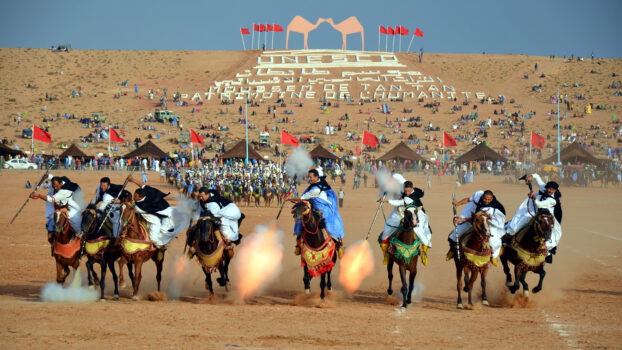
Photo: Wikimedia Commons, licensed under CC BY-SA 2.0. Source: Wikipedia Commons File Page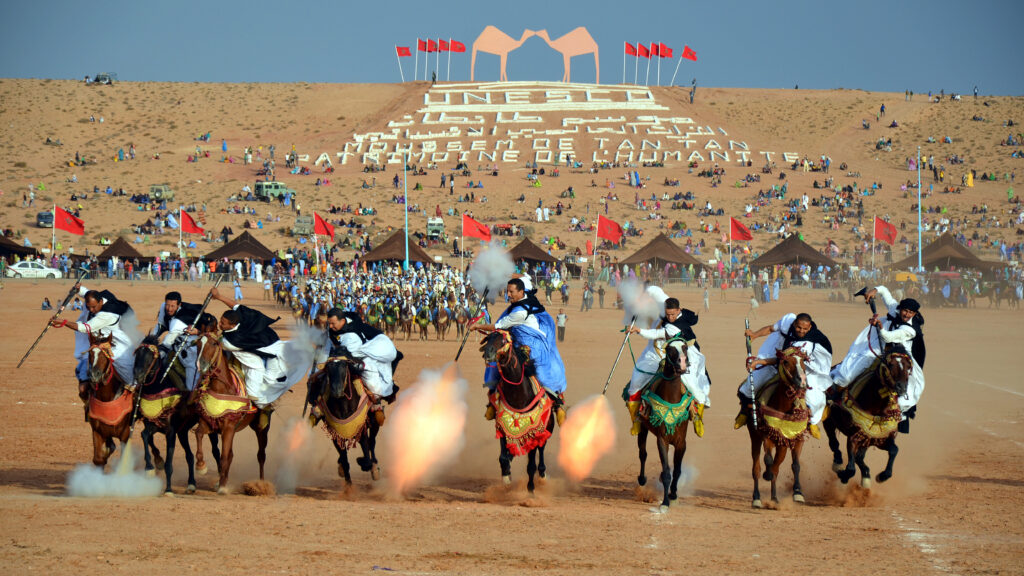
The Tan-Tan Moussem is a large annual gathering rooted in the traditions of Saharan tribes from southern Morocco and neighboring regions. Historically, these meetings served practical purposes. Tribes exchanged goods, arranged alliances, settled disputes, and renewed social ties while moving through desert trade networks.
Over time, the gathering evolved into a modern cultural event while preserving its original social role. Today, visitors can observe camel parades, traditional dress, oral poetry, music performances, handicraft exhibitions, and demonstrations of nomadic skills. This continuity explains why UNESCO recognized the Moussem of Tan-Tan as Intangible Cultural Heritage.
The event remains important because it protects traditions that developed in mobile societies where memory, music, and social codes carried knowledge across generations.
Where Is Tan-Tan?
Tan-Tan lies in southern Morocco between Agadir and Laayoune, close to the Atlantic coast and near the edge of Saharan landscapes. The city functions as a gateway between coastal Morocco and deeper desert regions.
By road, Tan-Tan sits approximately 330 kilometers south of Agadir, a journey of around five hours depending on traffic and stops. From Laayoune, the drive usually takes about four hours. Tan-Tan also has a domestic airport with limited connections, which can reduce travel time for visitors combining multiple destinations.
This location matters because it allows travelers to combine the moussem with Atlantic coast travel, desert routes, or longer southern itineraries.
When Does the Tan-Tan Moussem Take Place?
The Tan-Tan Moussem usually takes place in late spring or early summer, often during May or June. Exact dates can vary each year according to official scheduling and organizational planning.
Travelers should confirm the final calendar before booking transport and accommodation. Because the event draws domestic and international visitors, demand rises once dates are announced. This pattern makes early planning especially useful.
For broader planning context, readers can also consult the 2026 Morocco Festival Calendar, which places Tan-Tan within the national schedule of major events.
What to Expect at the Tan-Tan Moussem
Traditional Tents and Tribal Hospitality
One of the defining features of the moussem is the installation of traditional tents representing participating tribes and communities. These spaces often host tea ceremonies, storytelling, and cultural presentations.
For visitors, this format creates a more direct human experience than a standard stage festival. Guests can observe how hospitality remains central to nomadic social life.
Music, Poetry, and Oral Traditions
Music and poetry play a central role throughout the event. Performers present Hassani musical forms, percussion ensembles, and oral recitations that preserve historical memory.
These performances matter because oral culture served as an archive in nomadic societies. Through poetry and song, communities transmitted genealogy, ethics, and local history.
Camel Culture and Equestrian Displays
Camels remain powerful symbols of desert life, so parades and demonstrations often form a major part of the program. Some editions also include horse displays and traditional riding performances.
These elements help visitors understand mobility as a foundation of Saharan civilization rather than a romantic image detached from daily reality.
Craft Markets and Regional Products
Market areas typically feature leatherwork, woven goods, jewelry, desert clothing, and regional foods. Buying directly from artisans supports local economies while giving visitors access to products rooted in practical desert use.
Why the Tan-Tan Moussem Matters Today
The Tan-Tan Moussem guide is relevant not only for tourism but also for understanding cultural continuity in a rapidly changing world. Many nomadic traditions faced pressure from urbanization, borders, and economic transformation. Public gatherings such as this create space for communities to represent themselves on their own terms.
Morocco’s broader tourism strategy increasingly values heritage, regional diversity, and cultural routes. As a result, events like Tan-Tan support Vision 2030 style objectives centered on diversified tourism beyond major urban hubs.
This shift also benefits travelers who want experiences linked to place, identity, and living tradition rather than standardized tourism products.
How to Plan Your Visit
Best Route to Reach Tan-Tan
The most practical gateway for many international visitors is Agadir. Travelers can arrive by air, spend time on the coast, then continue south by rental car, private transfer, or long distance bus.
Driving offers the greatest flexibility because coastal stops and desert viewpoints can be added along the route. Bus travel costs less and remains widely used, though schedules require more structure.
Where to Stay
Accommodation in Tan-Tan ranges from basic hotels to guesthouses. Availability can tighten during the moussem, so booking early is recommended.
Some travelers also split their stay between Tan-Tan and nearby coastal areas such as El Ouatia, where beaches provide a calmer base outside festival hours.
How Many Days to Allow
Two to three days usually allows enough time to experience the main program, explore markets, and understand the atmosphere. Travelers combining the event with a southern itinerary may stay longer.
Weather and Seasonal Conditions
Late spring and early summer generally bring warm, dry weather to Tan-Tan. Daytime temperatures can become hot, while evenings may feel cooler due to Atlantic influence.
Light clothing, sun protection, and hydration are essential during daytime visits. Travelers wanting broader context on climate patterns can review the Sahara Desert Weather Morocco guide.
How to Combine Tan-Tan With Other Morocco Experiences
The Tan-Tan Moussem works well as part of a larger southern Morocco route. Travelers heading south from Agadir can combine coastal landscapes, anti Atlas scenery, and Saharan culture within one itinerary.
Those interested in oasis environments can continue eastward later in their trip and explore destinations such as Skoura Oasis.
Visitors interested in contemporary mobile lifestyles may also compare traditional nomadic heritage with modern remote work culture through resources such as the Digital Nomad Morocco Guide 2026 and Work Surf Repeat Morocco. This contrast shows how movement continues to shape Moroccan identity in new forms.
For another desert cultural perspective, readers can explore the International Nomads Festival in Mhamid.
Cultural Etiquette for Visitors
Respectful travel improves the experience for everyone. Ask permission before photographing individuals, especially inside tent areas or during personal interactions. Dress modestly and follow local guidance in ceremonial spaces.
Taking time to listen matters as much as taking photos. Because the moussem centers on living communities rather than staged spectacle, attention and courtesy create better exchanges.
Common Questions About the Tan-Tan Moussem
Is the Tan-Tan Moussem tourist friendly?
Yes. Visitors can attend and enjoy many public activities, especially performances and market areas. Some cultural spaces benefit from local guidance or translation.
Do I need a guide?
A guide is not mandatory, but it can add value by explaining tribal traditions, schedules, and cultural context.
Is Tan-Tan worth visiting outside the festival?
Yes. The region offers coastal scenery, desert transition landscapes, and a slower pace than larger tourist cities.
Conclusion
The Tan-Tan Moussem guide reveals why this gathering stands apart in Morocco’s cultural calendar. It preserves the heritage of Saharan nomadic communities through music, hospitality, poetry, and shared memory.
For travelers, the experience offers more than entertainment. It provides a rare opportunity to understand how mobility, identity, and tradition shaped life across the desert world. Once integrated into a southern Morocco itinerary, Tan-Tan becomes one of the country’s most meaningful cultural journeys.