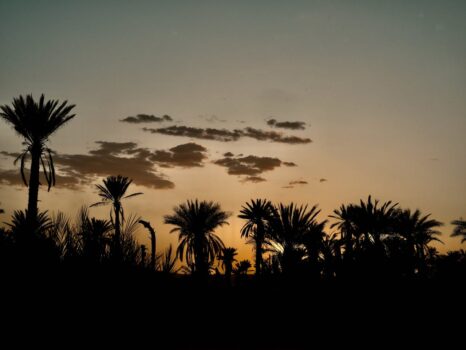
Skoura Oasis Morocco travel guide focuses on one of the most preserved palm groves in southern Morocco, located about 40 kilometers east of Ouarzazate. The oasis developed along historic caravan routes that linked the Sahara to the Atlas Mountains, which led to the concentration of fortified kasbahs and agricultural settlements across the region. Many travelers pass through on their way to desert destinations, yet Skoura reveals its value when explored gradually across its landscape rather than approached as a single stop.
The oasis extends across a broad plain shaped by seasonal rivers descending from the Atlas range. Local communities have sustained agriculture for centuries through khettara irrigation systems that channel underground water into cultivated zones. This system supports date palms, olive trees, and small crops, and it continues to structure both land use and daily routines across the oasis.
Geographic Position and Access
Skoura lies within the Drâa-Tafilalet region and connects directly to Morocco’s national road N10. The route from Ouarzazate takes about 45 minutes by car, which makes the oasis accessible for short stays or extended visits. From Marrakech, the journey takes between 4.5 and 5 hours through the Tizi n’Tichka pass, where altitude and weather conditions can affect travel time, especially during winter.
Public transport options include shared taxis and regional buses linking Ouarzazate to Skoura, although departures remain limited. Because the oasis spreads across a wide area, most visitors rely on rental cars or guided transport. This allows easier movement between kasbahs, villages, and agricultural zones.
Spatial Layout of the Oasis
Skoura does not form a compact town center. Instead, it unfolds across a network of villages, palm groves, and cultivated land. Movement through the oasis follows interconnected paths rather than direct urban routes. Visitors move along shaded tracks, narrow roads, and agricultural corridors that link residential areas to kasbahs and fields.
Dense palm vegetation creates a microclimate that reduces exposure to surrounding desert heat. This supports walking and cycling during much of the year, especially in spring and autumn. During summer, daytime temperatures often exceed 40°C, which shifts outdoor activity toward early morning and late afternoon.
Kasbah Amridil and Architectural Heritage
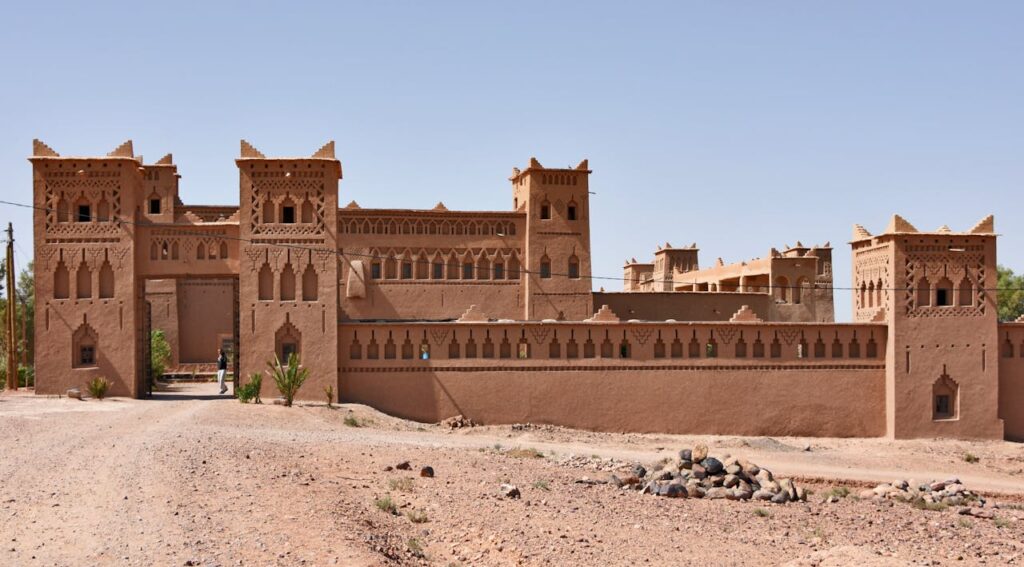
Kasbah Amridil stands as the most recognized structure in the oasis. Built in the 17th century, it represents one of the best preserved examples of southern Moroccan architecture. The structure uses rammed earth construction, with thick walls, corner towers, and internal courtyards designed for extended family living.
Storage rooms protect grain reserves, while elevated sections allow visibility across the surrounding landscape. Interior spaces remain cool due to wall thickness and limited openings, which reduce heat transfer. These features reflect direct responses to environmental and security conditions.
Entrance fees usually range between 20 and 30 Moroccan dirhams. Guided visits explain how each space operates within the overall structure and connect architectural design to everyday use.
Distributed Kasbahs and Changing Use
Beyond Kasbah Amridil, dozens of kasbahs extend across the oasis. Some remain occupied, while others show gradual decline linked to migration toward larger cities. This reflects long term shifts in economic activity, where traditional rural structures no longer serve their original function in all cases.
Many of these kasbahs lie outside main access routes. Visitors who move beyond central areas, either independently or with local guides, reach less visible sites and gain detailed explanations about ownership, restoration efforts, and historical transitions.
Exploring the Palm Grove on Foot or by Bike
The Skoura palm grove covers approximately 25 square kilometers. Walking allows close observation of farming activity, irrigation channels, and village life. Cycling extends this range and connects distant parts of the oasis within a single day.
Guesthouses provide bike rentals, usually priced between 80 and 150 dirhams per day. Routes pass through agricultural zones, irrigation channels, and residential clusters. This movement reveals how different elements of the oasis connect in daily practice.
As visitors move deeper into the grove, they observe how agriculture, housing, and infrastructure operate together. This interaction defines the experience more than isolated landmarks.
Agriculture and Water Management
Agriculture remains central to Skoura. Farmers cultivate dates, almonds, olives, and seasonal vegetables using khettara systems that transport water from underground sources. These channels rely on gravity, which supports consistent distribution without complex machinery.
Fields align with irrigation access, while villages develop near distribution points. This arrangement reflects long term adaptation to arid conditions, where resource management shapes both settlement patterns and land use.
Accommodation Inside the Oasis
Accommodation in Skoura consists mainly of guesthouses and eco lodges located داخل the palm grove. Many properties use adobe construction, interior courtyards, and shaded outdoor spaces based on local building methods. Prices generally range from 300 to 900 dirhams per night depending on comfort and services.
Staying within the grove improves access to walking routes and nearby kasbahs. Guests can explore directly from their accommodation, which reduces reliance on transport and allows better timing for outdoor activity.
Seasonal Conditions and Timing
Spring, from March to May, offers moderate temperatures and active vegetation across the oasis. Autumn provides similar conditions, which makes both seasons suitable for extended outdoor exploration.
Summer brings sustained heat that often exceeds 40°C during the day, which limits movement to shorter periods. Winter remains mild during the day but cooler at night due to proximity to the Atlas Mountains.
Integration with Regional Routes
Skoura fits naturally within travel routes across southern Morocco. Visitors often combine it with Aït Ben Haddou, the Dades Valley, and the Rose Valley. These destinations lie within reasonable driving distances, which supports multi day itineraries starting from Ouarzazate or Marrakech.
This position between mountain and desert regions creates a transition within travel plans. It introduces variation in landscape and pace, which balances longer travel segments with slower exploration.
Local Conditions and Travel Logistics
Mobile coverage exists across most parts of the oasis, although signal strength varies between villages. Internet access is available in many guesthouses, with performance depending on local infrastructure.
Cash remains the primary payment method in local businesses. While some accommodations accept cards, smaller services rely on cash transactions. ATMs are available in Ouarzazate.
Communication takes place in Moroccan Arabic, Amazigh dialects, and French. French remains widely used in tourism services.
What Defines the Skoura Experience
Skoura does not rely on a single landmark or concentrated attraction. Its value emerges through movement across a landscape where agriculture, architecture, and daily life remain closely connected.
As visitors move through the oasis, they observe how irrigation systems, building techniques, and settlement patterns operate together. This continuity defines Skoura and explains its distinct position within southern Morocco.
This Skoura Oasis Morocco travel guide highlights these connections because they form the foundation of the destination. Visitors who explore beyond main routes gain a clearer view of how the oasis functions across generations.
Related: