Estimated reading time: 7 minutes
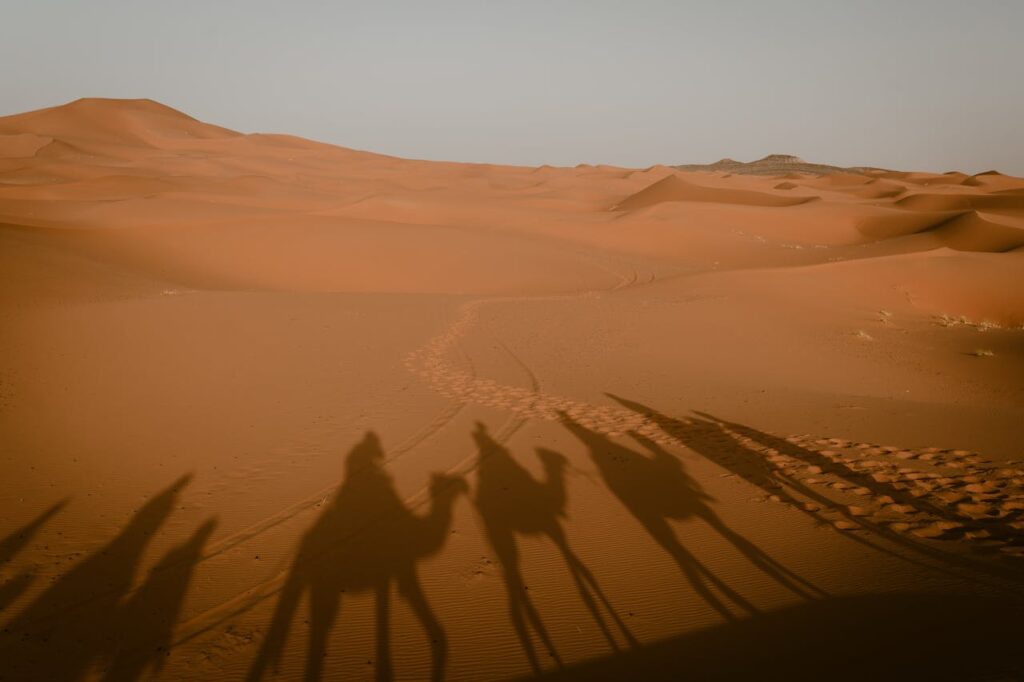
Shadows of a camel caravan stretch across the dunes of Merzouga as the Sahara awakens at sunrise. Photo by Ed Duvico via Pexels
The Sahara Desert in Morocco is one of the most breathtaking landscapes in the world. Endless golden dunes, vast horizons, and magical star-filled skies make this region a dream destination for travelers seeking adventure and unforgettable experiences.
Located in the southeast of Morocco, the Sahara offers unique activities such as camel trekking, desert camping, stargazing, and exploring massive sand dunes. However, before planning your trip, one important factor must be understood: the weather and temperature in the Sahara Desert.
The desert climate can be extreme, with scorching daytime temperatures and surprisingly cold nights. Knowing what to expect will help you plan your journey safely and comfortably.
- Where is the Sahara Desert in Morocco?
- What Makes the Sahara Climate Unique?
- General Weather Conditions
- Seasonal Weather in the Sahara
- Summer in the Sahara Desert
- Winter in the Sahara Desert
- Spring and Autumn in the Desert
- Day vs Night Temperature
- Rainfall in the Sahara
- Sandstorms and Winds
- Best Time to Visit the Sahara Desert
- What to Pack for the Desert
- Desert Wildlife and Culture
- Travel Tips for Visiting the Sahara
- FAQ
Where is the Sahara Desert in Morocco?
The Sahara Desert in Morocco begins in the southeastern part of the country. The main gateways to the desert are the towns of Merzouga, Zagora, and M’Hamid El Ghizlane.
These destinations provide access to some of the most famous sand dunes in Morocco:
- Erg Chebbi dunes near Merzouga
- Erg Chigaga dunes near M’Hamid
These massive dunes attract visitors from around the world who come to experience camel trekking, desert camps, and spectacular sunrise and sunset views.
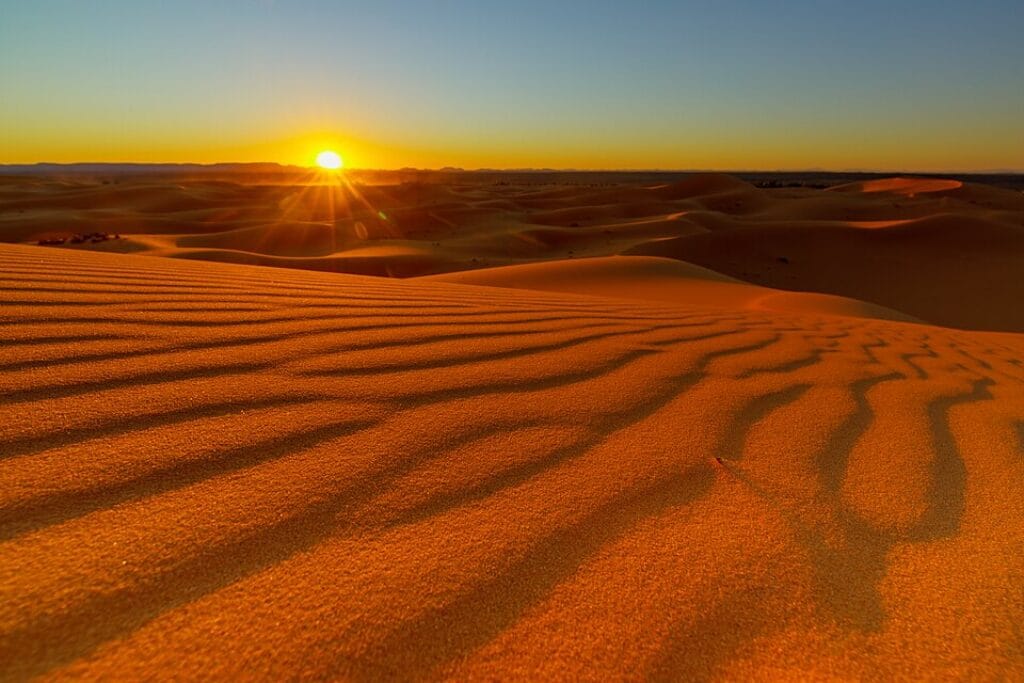
Erg Chebbi sunset Sahara Desert – taken in Morocco in 2021 – taken by Thomas Fuhrmann, SnowmanStudios – see more pictures on www.snowmanstudios.de
What Makes the Sahara Climate Unique?
The Sahara Desert has what scientists call a hyper-arid climate. This means the region receives extremely little rainfall and experiences very dry conditions throughout the year.
Main characteristics of the Sahara climate include:
- Very low rainfall – usually less than 100 mm per year
- Large temperature differences between day and night
- Intense sunlight with minimal cloud cover
- Extremely dry air and low humidity
Because of the dry atmosphere, heat escapes quickly after sunset, which explains why desert nights can feel surprisingly cold.
General Weather Conditions in the Sahara
The weather in Morocco’s Sahara Desert is known for its dramatic contrasts.
- Extremely hot days during summer
- Cool or cold nights even in warmer months
- Clear skies and sunshine almost all year
- Very little rainfall
This climate creates perfect conditions for stargazing and spectacular desert landscapes.
Seasonal Weather in the Sahara Desert
Although the Sahara may appear timeless, it does experience seasonal variations.
However, these seasons are very different from those in temperate climates.
- Summer (June – August) – extremely hot
- Winter (December – February) – mild days and cold nights
- Spring and Autumn – comfortable temperatures
Summer in the Sahara Desert
Summer in the Sahara Desert can be extremely intense.
- Daytime temperatures: often between 40°C and 50°C (104°F – 122°F)
- Night temperatures: around 25°C (77°F)
Because of the extreme heat, summer is generally considered the most challenging time to visit the desert.
Travelers who visit during summer often plan activities such as camel rides early in the morning or late in the evening.
Winter in the Sahara Desert
Winter brings cooler temperatures and is one of the most popular seasons for desert travel.
- Daytime temperatures: 18°C – 25°C (64°F – 77°F)
- Night temperatures: can drop to 0°C (32°F) or lower
While daytime conditions are comfortable, travelers should bring warm clothing for cold desert nights.
Spring and Autumn in the Desert
Spring and autumn are widely considered the best seasons to visit the Sahara Desert in Morocco.
- Daytime temperatures between 25°C and 35°C
- Cool but manageable nights
- Fewer sandstorms compared to summer
These seasons are ideal for activities such as trekking, camping, photography, and exploring desert landscapes.
Day vs Night Temperature in the Desert
One of the most fascinating aspects of desert weather is the dramatic difference between day and night temperatures.
During the day, the sun heats the sand quickly. But once the sun sets, the heat escapes rapidly into the atmosphere.
This happens because:
- The air is extremely dry
- There are almost no clouds to trap heat
- The sand cools very quickly
As a result, travelers may experience very hot afternoons and chilly nights on the same day.
Rainfall in the Sahara Desert
Rain in the Sahara Desert is extremely rare.
Some areas may only experience rainfall once or twice a year. When rain does occur, it can sometimes lead to temporary flooding in dry riverbeds known as wadis.
Because of this unpredictability, travelers should always stay informed about weather conditions before heading deep into the desert.
Sandstorms and Desert Winds
Sandstorms, often called “Chergui winds”, can occur in the Sahara Desert.
These storms are more common during late spring and summer.
- Visibility may drop dramatically
- Strong winds move large amounts of sand
- Storms usually last a short time but can be intense
Wearing sunglasses and a scarf or desert turban can help protect your face from blowing sand.
Best Time to Visit the Sahara Desert
The best months to visit the Sahara Desert in Morocco are:
- March to May
- September to November
During these periods, temperatures are pleasant and ideal for exploring the desert without extreme heat.
These seasons also offer perfect conditions for desert camping, photography, and camel trekking.
What to Pack for the Sahara Desert
Packing for a desert trip requires preparation for both hot days and cold nights.
For Hot Days
- Lightweight breathable clothing
- Wide-brim hat
- Sunglasses
- High SPF sunscreen
For Cold Nights
- Warm jacket or fleece
- Long pants
- Thermal layers
- Comfortable sleeping bag for camping
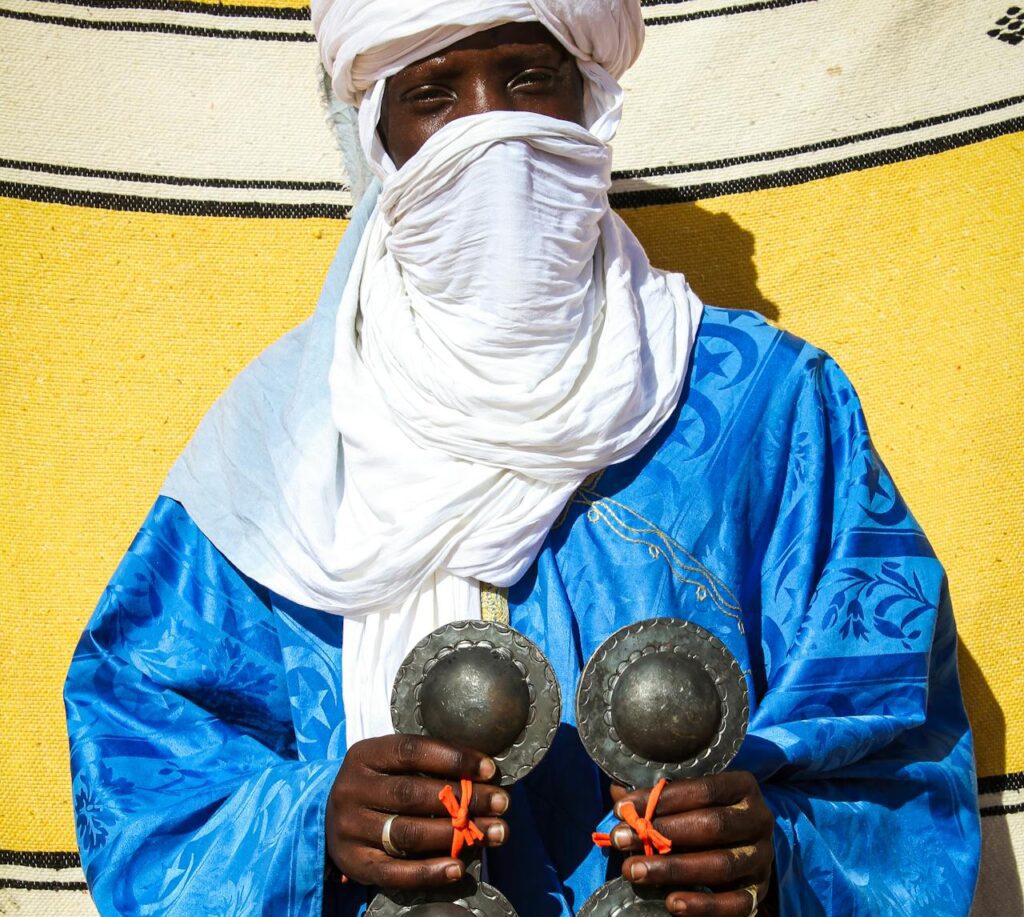
A Saharan musician holding traditional metal castanets, reflecting the living musical heritage celebrated at Festival Zamane in M’Hamid El Ghizlane.
Photo by Smail Zouak from Pexels
Desert Wildlife and Culture
Despite its harsh climate, the Sahara Desert supports a surprising variety of life.
Animals such as desert foxes, camels, reptiles, and birds have adapted to survive in these extreme conditions.
The region is also home to Berber and nomadic communities who have lived in the desert for centuries.
These communities have developed deep knowledge of the environment and can read subtle signs in the sky and wind to predict weather changes.
Travel Tips for Visiting the Sahara
- Always travel with experienced local guides.
- Drink plenty of water to stay hydrated.
- Protect yourself from the sun with hats and sunscreen.
- Bring warm clothing for nighttime temperatures.
- Plan activities early morning or evening during hot months.
Conclusion: Weather and Temperature in the Sahara Desert
The Sahara Desert in Morocco is one of the most extraordinary landscapes on Earth. Its vast dunes, starry skies, and unique culture create unforgettable travel experiences.
However, the desert climate can be extreme and unpredictable. Understanding the weather patterns and temperature variations is essential for planning a safe and enjoyable journey.
Whether you visit during spring, autumn, or winter, being prepared for both heat and cold will help you fully enjoy the magic of the Moroccan Sahara.
FAQ About Sahara Desert Weather in Morocco
What is the hottest time in the Sahara Desert?
The hottest months are June to August, when daytime temperatures can reach 50°C (122°F).
Can you visit the Sahara Desert in winter?
Yes. Winter is actually one of the best times to visit because daytime temperatures are mild.
Does it ever snow in the Moroccan Sahara?
Snow is extremely rare in the desert itself but may occur in nearby mountain areas.
Why is the desert cold at night?
Because the desert has very low humidity and little cloud cover, heat escapes quickly after sunset.
How do local people adapt to desert temperatures?
They wear loose layered clothing, rest during the hottest hours of the day, and always carry sufficient water.
Related desert guides:
- Dragon Island in Dakhla: The Ultimate Travel Guide to Morocco’s Wild Lagoon Paradise
- How to Get to Dakhla in 2026: Flights, Road Trips & Complete Travel Guide
- Hiking Adventures in Morocco 2026: Trails from the Atlas to the Moroccan Sahara
- Discover Merzouga: Your Gateway to the Magical Sahara Desert in Morocco