Photo by Abdou Faiz via Unsplash
Introduction
Ahwach in Morocco represents one of the most structured forms of Amazigh collective performance in the High Atlas and southern regions. This traditional dance combines poetry, rhythm, and coordinated group movement into a unified cultural expression. For travelers seeking to understand Morocco beyond its urban centers, observing Ahwach provides direct access to community based traditions that continue to shape social life in rural areas.
Understanding how Ahwach functions requires more than watching a performance. Once visitors recognize its musical structure, social role, and geographic distribution, they can integrate it into a broader cultural itinerary that connects festivals, rural travel, and Morocco’s long term cultural preservation strategy.
What Is Ahwach in Morocco?
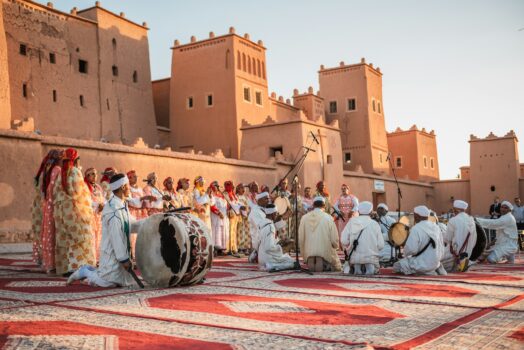
Ahwach is a collective Amazigh performance that blends chanting, percussion, and synchronized dance. It typically involves groups of men and women who stand in lines or semi circles while responding to poetic verses. Drummers maintain rhythm using traditional instruments such as bendir drums, while vocalists lead the performance through call and response patterns.
This structure matters because it reflects a coordinated system rather than a spontaneous dance. Each participant plays a defined role, and the performance evolves through interaction between rhythm, voice, and movement. As a result, Ahwach functions as both artistic expression and social communication.
Geographic Origins and Cultural Context
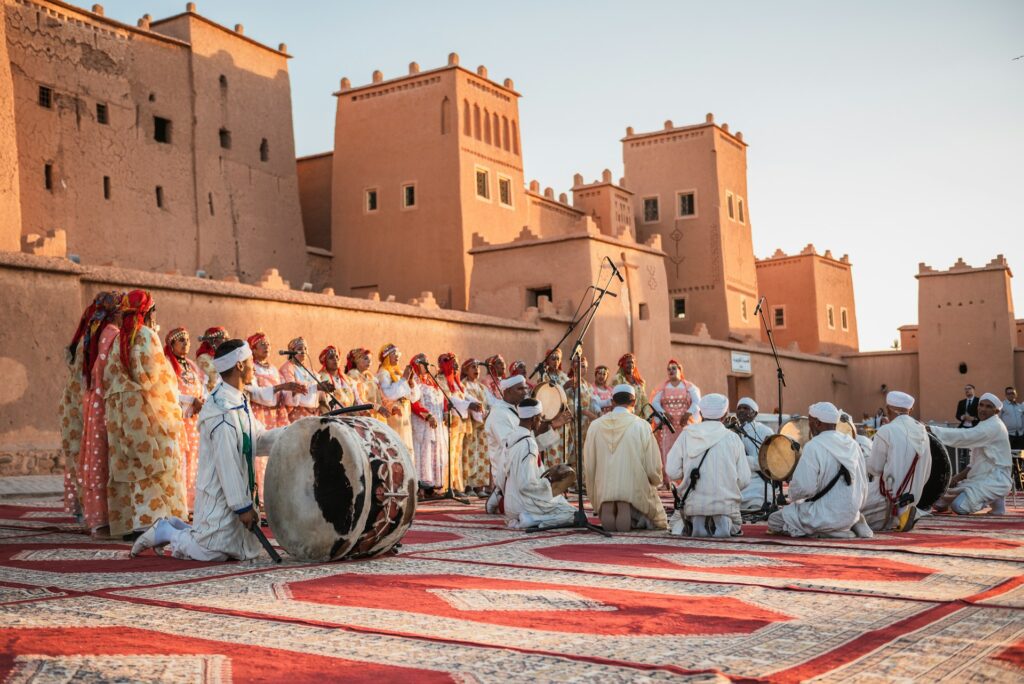
Ahwach in Morocco originates primarily in the High Atlas, Anti Atlas, and Souss regions. Villages near Ouarzazate, Taroudant, and Taliouine maintain strong traditions of this performance. These areas lie within a few hours of major cities such as Marrakech, which makes them accessible for travelers planning cultural excursions.
The geographic distribution of Ahwach reflects historical Amazigh settlement patterns. Communities in these regions developed distinct musical and poetic traditions that continue to shape regional identity. Observing Ahwach in its original setting helps visitors understand how landscape, language, and culture connect.
Structure of an Ahwach Performance
Group Formation and Roles
An Ahwach performance begins with the formation of two opposing groups, often separated by gender. Men typically lead percussion, while women contribute vocal responses and coordinated movements. This arrangement creates a balanced interaction that defines the rhythm of the performance.
Once the groups align, a lead poet or singer initiates the sequence. This individual introduces verses that often address themes such as love, community, or local events. The opposing group responds, creating a dialogue that unfolds throughout the performance.
Music and Instruments
Percussion plays a central role in Ahwach. Musicians use bendir drums to establish a steady rhythm that guides dancers and singers. In some regions, additional instruments such as flutes or hand clapping complement the percussion.
The rhythm evolves gradually, which allows participants to adjust movement and vocal intensity. This progression ensures that the performance maintains cohesion while building energy over time.
Dance and Movement
Movement in Ahwach remains synchronized and measured. Participants step forward and backward in unison, often accompanied by subtle hand gestures. This coordination reflects the collective nature of the performance rather than individual expression.
Understanding this aspect helps visitors interpret the dance correctly. The emphasis lies on unity and rhythm rather than complex choreography.
When and Where to See Ahwach in Morocco
Travelers can experience Ahwach during festivals, weddings, and community gatherings. Festivals provide the most accessible entry point because they organize performances for public audiences.
Events listed in the 2026 Morocco festival calendar often include Ahwach performances, particularly in southern regions. Similarly, broader guides such as the Morocco festivals travel guide highlight opportunities to observe traditional dances across different regions.
One notable context includes desert festivals such as Festival Zamane in Mhamid El Ghizlane, where Ahwach performances appear alongside other musical traditions. These events allow visitors to observe how traditional forms interact with contemporary festival formats.
Outside festivals, rural villages host performances during weddings and seasonal celebrations. Accessing these events requires local connections or guided tours, which can arrange visits to communities where Ahwach remains part of daily life.
Travel Logistics for Experiencing Ahwach
Planning a trip to experience Ahwach in Morocco requires aligning travel routes with regional locations. Marrakech serves as the primary gateway to the High Atlas and southern regions. From Marrakech, travelers can reach Ouarzazate in approximately four hours by car via the Tizi n Tichka pass.
Similarly, reaching Taroudant from Agadir takes about one hour and thirty minutes by road. These routes connect visitors to regions where Ahwach performances remain active.
Accommodation options include guesthouses and eco lodges located within villages or nearby towns. Staying in these locations allows travelers to participate in local cultural activities and observe performances in their original context.
Ahwach and Morocco’s Cultural Preservation Strategy
Ahwach in Morocco plays a role in broader cultural preservation efforts linked to tourism development and Vision 2030 initiatives. Morocco continues to position cultural heritage as a key component of its tourism strategy, which includes promoting traditional music and dance as part of regional identity.
Programs that support festivals, artisan communities, and rural tourism contribute to maintaining practices such as Ahwach. These initiatives also align with broader efforts to highlight Morocco’s UNESCO cultural heritage treasures and intangible traditions.
For travelers, this connection means that attending an Ahwach performance supports local economies while reinforcing cultural continuity.
How to Engage Respectfully With Ahwach Performances
Observing Ahwach requires an understanding of its social context. Performances often carry cultural and communal significance, which means visitors should approach them with respect.
In practice, asking for permission before taking photographs and following local guidance ensures appropriate behavior. Participating as an observer rather than interrupting the performance helps maintain its integrity.
When invited, visitors may join in basic movements. Accepting such invitations respectfully creates meaningful interaction without disrupting the structure of the dance.
Common Questions About Ahwach in Morocco
Is Ahwach performed year round?
Ahwach occurs throughout the year, but public performances are more frequent during festivals and cultural events, especially in spring and summer.
Can tourists easily attend an Ahwach performance?
Yes, particularly during festivals or organized tours. Rural performances require additional planning but offer a more authentic experience.
Is Ahwach similar to other Moroccan dances?
Ahwach differs from urban musical traditions because it emphasizes collective participation and poetic dialogue rather than individual performance.
Conclusion
Ahwach in Morocco provides a structured entry point into Amazigh cultural traditions. By understanding its musical structure, geographic context, and role in community life, travelers can move beyond surface level observation and engage with a living cultural practice.
Once integrated into a broader itinerary that includes festivals, rural travel, and heritage sites, Ahwach becomes part of a deeper exploration of Morocco’s cultural landscape. This approach aligns with the country’s ongoing efforts to preserve and promote its intangible heritage while expanding cultural tourism across regions.