Estimated reading time: 4 minutes
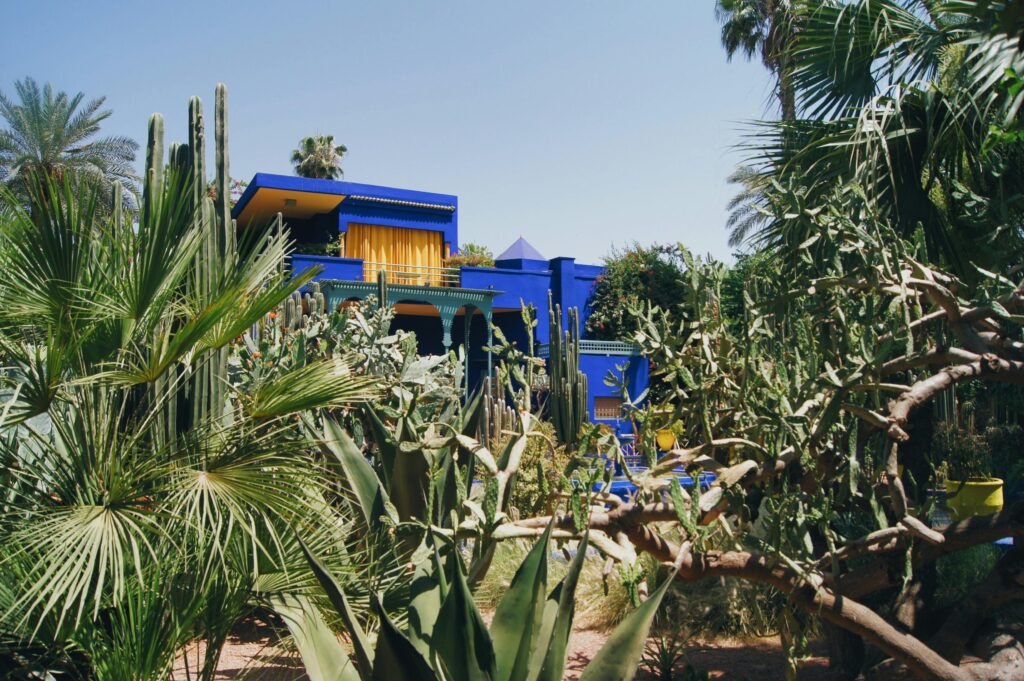
A Garden Full of Cactus Plants Near a Blue House Of Majorelle Garden. Marrakech. Image Credit: Nicole Ashley Rahayu Densmoor/ Pexels
In the heart of the Ochre City lies an explosion of color: Le Jardin Majorelle (Majorelle Garden). This botanical sanctuary is not merely a park but a historical masterpiece where the intense “Majorelle Blue” of the architecture creates a stunning contrast against a backdrop of emerald greenery and golden Moroccan sunlight.
Created by French painter Jacques Majorelle and later restored by fashion icon Yves Saint Laurent and Pierre Bergé, the garden is today a global symbol of Moroccan elegance and artistic heritage.
Table of Contents
- 1. The Story Behind Majorelle Garden
- 2. The Birth of Majorelle Blue
- 3. A Botanical Journey Around the World
- 4. Yves Saint Laurent and the Garden’s Revival
- 5. The Berber Museum & Memorial
- 6. Practical Information & Ticket Prices
- 7. FAQ – Visiting Majorelle Garden
1. The Story Behind Majorelle Garden
French painter Jacques Majorelle purchased the property in 1923 and gradually transformed it into an artistic sanctuary. Passionate about botany, he collected rare plants from across the globe.
In 1947, the garden opened to the public and quickly became one of Marrakech’s most beloved landmarks. However, after Majorelle’s death, the property fell into decline.
2. The Birth of Majorelle Blue
In 1937, Jacques Majorelle introduced a vibrant cobalt shade that would later be known worldwide as “Majorelle Blue.”
The villa, pergolas, ceramic pots, fountains, and gates are painted in this electric blue tone, contrasting beautifully with lush green foliage and the ochre tones of Marrakech.
Today, Majorelle Blue remains one of the most photographed colors in Morocco.
3. A Botanical Journey Around the World
As you stroll through the shaded pathways, you encounter more than 300 plant species, including:
- Palms and coconut trees
- Bamboo forests
- Agaves and cacti
- Water lilies and jasmine
- Bougainvillea and cypress
The sound of flowing fountains and birdsong creates a serene atmosphere that contrasts with the lively streets of Marrakech.
4. Yves Saint Laurent and the Garden’s Revival
In 1966, Yves Saint Laurent and Pierre Bergé discovered the garden during their first visit to Marrakech.
When they learned a hotel project threatened the property, they purchased it in 1980 and began restoring it. They modernized the irrigation system and expanded the plant collection from 135 species to over 300.
The garden became an endless source of inspiration for Yves Saint Laurent. After his passing in 2008, his ashes were scattered in the Villa Oasis garden, where a memorial now stands.
5. The Berber Museum & Memorial
Jacques Majorelle’s former studio now houses the Berber Museum, showcasing Pierre Bergé and Yves Saint Laurent’s personal collection of Berber art.
Photography inside the museum is not permitted.
6. Practical Information & Ticket Prices (2026)
Opening Hours
- October 1 – April 30: 8:00 AM – 5:30 PM
- May 1 – September 30: 8:00 AM – 6:00 PM
- During Ramadan: 9:00 AM – 5:00 PM
Public Ticket Prices
- Garden: 70 MAD
- Museum: 30 MAD
Moroccan Citizens & Residents
- Garden: 40 MAD
- Museum: 10 MAD
Students
- Moroccan students: Garden 25 MAD | Museum 5 MAD
- International students: Garden 35 MAD | Museum 25 MAD
Free Entry
- Children under 12 (accompanied)
Official website and ticketing: jardinmajorelle.com
7. FAQ – Visiting Majorelle Garden
Why is Majorelle Garden famous?
It is famous for its iconic Majorelle Blue color, exotic plant collection, and its connection to Yves Saint Laurent.
How long does a visit take?
Most visitors spend 1 to 2 hours exploring the garden and museum.
Is it worth visiting in summer?
Yes, but early morning visits are recommended due to Marrakech’s heat.
Can you take photos?
Yes in the garden, but photography is not allowed inside the Berber Museum.
Final Thought: Majorelle Garden is more than a tourist attraction, it is a living artwork where color, culture, and calm coexist in perfect harmony.