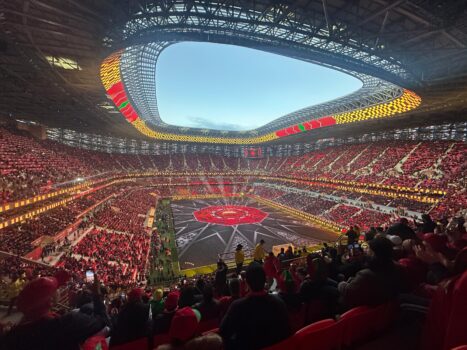
Moroccan authorities have announced the results of an innovative judicial experiment implemented during the 2025 Africa Cup of Nations. Temporary judicial offices were set up inside stadiums to process match-related offenses in real time, a move framed as part of Morocco’s broader preparations for the 2030 FIFA World Cup, which the country will co-host with Spain and Portugal.
A joint statement from the Ministry of Justice, the Public Prosecution Office and the General Directorate of National Security detailed that the offices handled 152 cases involving 202 individuals during the tournament. Prosecutors initiated legal proceedings in the majority of cases, while others were resolved through settlement fines. A smaller number of files remain under investigation.
Crackdown on Black Market Ticket Sales
Authorities reported the arrest of 396 individuals suspected of reselling match tickets on the black market or through social media platforms. Illegal entry attempts also represented a significant share of recorded violations, alongside cases involving forged tickets.
Security services carried out 529 interventions across tournament venues, including hundreds of identity checks. Additional incidents included possession or use of narcotics, fireworks-related violations and the seizure of prohibited items such as bladed weapons and tear gas canisters.
Majority of Cases Involved Local Nationals
Data released by authorities show that Moroccan nationals accounted for just under four-fifths of the individuals brought before the judicial offices, while the remainder were foreign nationals from African and European countries.
Officials described the initiative as a practical test of rapid-response legal mechanisms for major sporting events. By integrating judicial processing directly within stadium infrastructure, Morocco aims to enhance security management, deter misconduct and streamline case handling during high-profile competitions.
The experience during AFCON 2025 now serves as a rehearsal model for future international tournaments, with authorities positioning the system as a key component of operational readiness ahead of 2030.
source: aljazeera
Related: