Getting around Morocco is one of the biggest questions travelers ask before visiting the country — and for good reason. Distances between cities can be long, transport options vary widely, and choosing the right way to travel can completely change your experience. Whether you’re exploring the vibrant streets of Marrakech, heading north to Chefchaouen, or planning a Sahara Desert adventure, understanding Morocco’s transportation system helps you save time, money and stress.
This updated 2026 guide explains exactly how to get around Morocco using trains, buses, taxis, rental cars and domestic flights. Based on local travel experience and current transportation services, this article includes practical advice, estimated costs, safety tips and insider recommendations for tourists visiting Morocco for the first time.
Best Ways to Travel Around Morocco
Morocco offers several transportation options depending on your budget, itinerary and travel style. Most visitors combine multiple methods during their trip.
- Train: Best for comfort and major cities
- Bus: Cheapest and most extensive network
- Taxis: Essential for local transportation
- Rental car: Ideal for freedom and remote areas
- Domestic flights: Fastest option for long distances
For most travelers, the smartest strategy is combining trains for major routes and taxis or buses for local exploration.
Traveling by Train in Morocco
Morocco has one of the most modern railway systems in Africa. Operated by ONCF, the national rail company, trains are reliable, affordable and comfortable for long-distance travel between major cities.
Main Train Routes in Morocco
- Tangier – Casablanca via Al Boraq high-speed train
- Casablanca – Marrakech
- Rabat – Fès
- Tangier – Rabat
- Casablanca – Meknes
The Al Boraq high-speed train between Tangier and Casablanca significantly reduced travel times and became one of Morocco’s most popular transport options for tourists and business travelers alike.
Why Trains Are Recommended in Morocco
- Air-conditioned coaches
- Good safety standards
- Comfortable first-class seating
- Affordable ticket prices
- Easy online booking
Travel Tip: First class is highly recommended for journeys longer than three hours, especially during summer and holiday periods.
Official booking website: ONCF Voyages
Bus Travel in Morocco
Buses remain the backbone of transportation in Morocco and connect nearly every city, town and rural destination across the country. For routes not covered by trains, buses are often the best option.
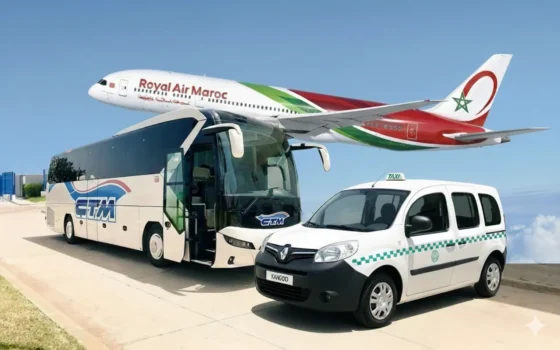
Companies like CTM and Supratours offer modern coaches with air conditioning, assigned seating and luggage storage.
Advantages of Bus Travel
- Very affordable prices
- Large national network
- Access to smaller towns
- Online reservations available
Things to Know Before Taking Buses
- Travel times can be long
- Road conditions vary in mountain areas
- Delays are possible during busy periods
Buses are especially useful for reaching destinations like Chefchaouen, Essaouira or the Sahara Desert region where train connections do not exist.
Understanding Taxis in Morocco
Taxis are an essential part of everyday transportation in Morocco. Visitors quickly discover that there are two main types of taxis operating throughout the country.
Petit Taxis
- Used inside cities
- Short-distance rides
- Usually inexpensive
- Shared rides can happen
Grand Taxis
- Travel between cities
- Often older vehicles
- Usually leave when full
- Popular among locals
Important: Always confirm the price before starting the trip if the driver does not use the meter.
Read also: Petit Taxi vs Grand Taxi in Morocco
Renting a Car in Morocco
Renting a car gives travelers maximum flexibility, especially for exploring regions beyond major tourist routes. Morocco’s highway infrastructure has improved significantly in recent years, making road trips easier than ever.
A rental car is particularly useful for visiting:
- Atlas Mountains
- Sahara Desert gateways
- Berber villages
- Atlantic coastline routes
- Remote natural landscapes
Driving Tips in Morocco
- Highways between major cities are generally excellent
- Mountain roads require caution
- Police checkpoints are common and normal
- Carry your passport and driving license
- Avoid driving at night outside cities
International visitors can usually drive using their home country license for short tourist stays.
Domestic Flights in Morocco
Domestic flights are useful for travelers with limited time who want to avoid long road or train journeys. Flights are especially practical for routes connecting northern and southern Morocco.
- Casablanca – Agadir
- Casablanca – Dakhla
- Marrakech – Tangier
- Fès – Agadir
Royal Air Maroc and Air Arabia Maroc operate most domestic routes.
Budget airlines occasionally offer low-cost domestic connections, especially during tourism seasons.
Urban Transport in Moroccan Cities
Casablanca and Rabat have modern tramway systems that are clean, efficient and affordable for tourists.
- Easy ticketing systems
- Good safety standards
- Useful for avoiding traffic congestion
In cities like Marrakech, Fès and Tangier, taxis remain the main form of local transportation.
Average Transportation Costs in Morocco
| Transport Type | Average Cost |
|---|---|
| Train | $10 – $30 |
| Bus | $5 – $20 |
| Petit Taxi | $1 – $5 |
| Grand Taxi | $5 – $20 |
| Car Rental | $25 – $60/day |
| Domestic Flight | $50 – $150 |
Best Transport Options by Travel Style
- Backpackers: buses and trains
- Families: rental cars
- Luxury travelers: flights and private transfers
- Solo travelers: trains and petit taxis
- Adventure travelers: rental cars and grand taxis
Common Mistakes Tourists Should Avoid
- Underestimating travel distances
- Not booking train tickets early during peak season
- Taking unofficial taxis
- Driving long distances at night
- Overpacking for public transportation
Expert Travel Tips for Morocco
- Travel during daytime for scenic views
- Keep small cash for taxis and local transport
- Use trains whenever possible between major cities
- Stay flexible with schedules
- Download offline maps before road trips
Related guide: How to Plan an International Trip to Morocco
FAQ: Transportation in Morocco
What is the best way to travel around Morocco?
Trains are generally the best option for traveling between major cities, while rental cars are ideal for remote areas.
Is transportation safe in Morocco?
Yes. Morocco’s transportation system is generally safe for tourists, especially trains and official bus companies.
Should tourists rent a car in Morocco?
Renting a car is recommended for travelers wanting flexibility or planning to visit rural regions and mountain areas.
Are taxis expensive in Morocco?
No. Compared to Europe and North America, taxis in Morocco remain relatively affordable.
Conclusion
Getting around Morocco is part of the travel experience itself. From high-speed trains and colorful taxis to scenic road trips through the Atlas Mountains, every transportation option offers a different perspective on the country.
The key to a successful Morocco trip is combining flexibility, preparation and local knowledge. Choose the transport methods that fit your itinerary, budget and travel style — and enjoy the journey as much as the destination.