
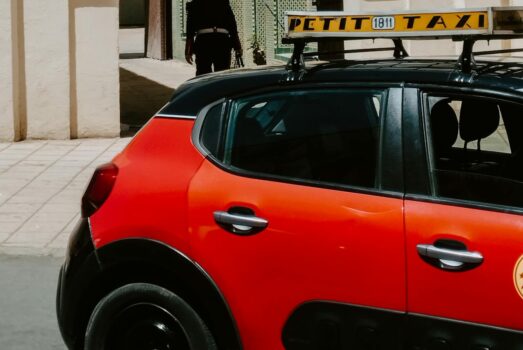
Understanding the difference between petit taxi and grand taxi services plays a central role in navigating Moroccan cities efficiently. For first time visitors, these two transport systems often appear similar because both operate as taxis. In practice, however, they serve different purposes, operate under different rules, and function within distinct geographic areas. Once travelers understand how each system works, they can move between neighborhoods, suburbs, and nearby towns with far greater confidence.
This guide explains how the petit taxi vs grand taxi system operates in Morocco. It also provides practical guidance on when to use each service, how fares are calculated, and how travelers can integrate taxis into a broader urban transport plan that includes trains, buses, and walking routes.
Understanding the Two Taxi Systems
Morocco operates two parallel taxi systems designed to serve different travel distances. Petit taxis function primarily inside city limits, while grand taxis connect suburbs, neighboring towns, and regional destinations. Once this distinction becomes clear, choosing the correct vehicle becomes straightforward.
City authorities regulate both systems through licensing structures that define vehicle type, passenger capacity, and operational zones. As a result, drivers must follow specific rules depending on the taxi category. Travelers who recognize these operational differences can avoid confusion when moving between urban districts and intercity transport hubs.
Petit Taxis: The Urban Transport Backbone
Petit taxis form the backbone of everyday urban mobility in Morocco. These vehicles operate exclusively within city boundaries and carry a maximum of three passengers. In most cities they appear as small compact cars, although the exact model may vary depending on the municipality.
Each major city uses a specific color to identify its petit taxi fleet. In Casablanca, for example, petit taxis are typically red. Marrakech operates beige colored vehicles, while Fes uses red cars similar to Casablanca. This color coding helps residents and visitors quickly recognize licensed taxis.
Once a passenger enters the vehicle, the driver should activate the meter. Metered fares remain relatively affordable compared with European or North American taxi systems. In many cities the starting fare ranges between 1.40 and 2 Moroccan dirhams, while short trips across central districts often cost between 10 and 20 dirhams depending on distance and traffic.
This pricing structure makes petit taxis particularly useful for short trips that would otherwise require long walks through busy urban areas. Travelers often use them to move between train stations, medinas, modern neighborhoods, and hotels.
Grand Taxis: Connecting Cities and Suburbs
While petit taxis serve urban districts, grand taxis operate on longer routes that extend beyond city limits. These vehicles usually consist of larger sedans or vans capable of carrying up to six passengers. Historically, many grand taxis used older Mercedes vehicles, although newer models increasingly appear in several regions.
Grand taxis function more like shared transport services than traditional taxis. Drivers typically depart once the vehicle reaches full passenger capacity. Each passenger pays for one seat rather than the entire car, which keeps individual fares relatively low.
Travelers can also hire the entire vehicle by paying for all seats. This option becomes practical when traveling with luggage or when immediate departure becomes necessary.
Grand taxi stations usually sit near bus terminals or major intersections. In Marrakech, for example, the main grand taxi station near Bab Doukkala connects the city with surrounding towns such as Essaouira and smaller Atlas villages. In Fes, grand taxis depart from stations near the main bus terminal toward destinations like Sefrou and Moulay Yacoub.
When to Use Petit Taxi vs Grand Taxi
Choosing between petit taxi vs grand taxi depends primarily on distance and destination. Inside cities such as Rabat, Tangier, or Marrakech, petit taxis remain the most efficient option. They move quickly through traffic and allow passengers to travel directly to specific addresses.
Once travelers need to move between towns or suburbs, grand taxis become the more appropriate choice. For example, a traveler staying in Rabat who wishes to visit the coastal town of Temara may use a grand taxi departing from a designated station. Similarly, travelers heading from Fes to the nearby town of Sefrou commonly rely on grand taxis for frequent departures.
Understanding this distinction prevents common mistakes. Visitors sometimes attempt to use petit taxis for intercity trips, which drivers are not legally permitted to accept. Recognizing operational boundaries ensures smoother negotiations and avoids unnecessary delays.
Fare Negotiation and Pricing Practices
Pricing practices differ between the two taxi categories. Petit taxis usually operate with meters, although drivers may occasionally propose a fixed price instead. In practice, confirming that the meter will be used before departure helps avoid misunderstandings.
Grand taxi fares typically follow fixed per seat rates determined by the distance between cities. These prices are often posted informally at taxi stations or known by local passengers. For example, a shared grand taxi ride between Rabat and Temara may cost around 10 to 15 dirhams per seat, depending on the route.
If travelers choose to hire the entire grand taxi, they should calculate the total seat cost and confirm the final price before departure. This step ensures transparency and prevents confusion once the journey begins.
Safety and Practical Considerations
Both taxi systems remain widely used by local residents and generally provide safe transport within Morocco. However, travelers should still apply standard urban safety practices when using taxis.
Choosing clearly marked vehicles with official taxi signage helps confirm that the driver holds a valid operating license. Licensed taxis typically display identification numbers and municipal markings on the exterior.
Similarly, travelers should avoid accepting rides from unofficial drivers waiting near airports or tourist attractions. Official taxi ranks provide a safer and more reliable starting point.
Night travel requires additional awareness. In larger cities, taxis remain available throughout the evening, although metered fares may increase slightly during nighttime hours.
Integrating Taxis With Other Transport Options
Morocco’s transport network functions most efficiently when taxis complement other systems rather than replace them. For example, travelers arriving by train at Casablanca Voyageurs station often take a petit taxi for the final segment to their hotel.
Similarly, travelers arriving at intercity bus stations frequently use petit taxis to reach nearby medinas or residential districts. Once travelers need to move beyond city limits, grand taxis provide connections to smaller towns that trains and buses do not always serve.
This layered transport structure allows visitors to combine trains for long distances, buses for regional routes, and taxis for local mobility. Understanding how each component fits together significantly improves travel planning.
Seasonal and Urban Factors That Affect Taxi Use
Seasonal travel patterns also influence taxi availability. During peak tourist seasons, including spring and autumn, demand for petit taxis increases in cities such as Marrakech and Fes. As a result, travelers may experience slightly longer wait times during busy hours.
Urban congestion also affects travel times. Historic medinas often restrict vehicle access, which means taxis can only reach certain entry points. In these cases, travelers must complete the final portion of the journey on foot.
Recognizing these practical limitations helps visitors plan routes more effectively and avoid unnecessary delays.
Conclusion
Understanding the difference between petit taxi vs grand taxi systems allows travelers to navigate Moroccan cities with greater efficiency. Petit taxis provide fast and affordable transport within urban areas, while grand taxis connect nearby towns and suburban destinations.
Once visitors learn how these systems operate, they can integrate taxis into a broader transport strategy that includes trains, buses, and walking routes. This approach simplifies mobility across Morocco’s diverse urban landscapes and allows travelers to move through cities in a way that closely mirrors everyday local life.
FAQ: Petit Taxi vs Grand Taxi in Morocco
What is the main difference between petit taxi and grand taxi?
The main difference lies in distance and function. Petit taxis operate within cities and carry up to three passengers, while grand taxis connect cities, suburbs, and nearby towns and usually carry up to six passengers in shared rides.
Do petit taxis always use a meter?
In most Moroccan cities, petit taxis are required to use a meter. However, some drivers may suggest a fixed fare instead. Confirming meter use before starting the trip ensures a transparent price.
How much does a petit taxi cost in Morocco?
Short trips within cities typically cost between 10 and 20 Moroccan dirhams depending on distance and traffic. The base fare usually starts around 1.40 to 2 dirhams.
How do grand taxis charge passengers?
Grand taxis charge per seat rather than per trip. Each passenger pays a fixed rate based on distance. Travelers can also pay for all seats to hire the vehicle privately.
Where can I find grand taxis?
Grand taxis usually operate from designated taxi stations located near bus terminals, train stations, or major city exits. Each station serves specific routes to nearby towns or regions.
Is it safe to use taxis in Morocco?
Licensed petit and grand taxis are generally safe and widely used by locals. Choosing official taxis, agreeing on fares in advance when needed, and avoiding unofficial drivers improve safety.
Can petit taxis travel between cities?
No. Petit taxis are restricted to operating within city limits. For intercity travel, travelers must use grand taxis, buses, or trains.
Can I book taxis through apps in Morocco?
In major cities such as Casablanca and Rabat, ride hailing apps operate alongside traditional taxis. However, availability varies, so street taxis remain the most common option.
Do taxis run at night in Morocco?
Yes, taxis operate at night in most major cities. Availability remains good in urban areas, although fares may increase slightly after certain hours.
Which option is better for tourists?
Both systems serve different needs. Petit taxis work best for short city trips, while grand taxis provide affordable transport between cities and rural areas. Using both allows travelers to move efficiently like locals.
Related: