Photo by Achraf Borkadi via Pexels
Between architecture, rituals, and heartfelt warmth, why Moroccan riads redefine the meaning of home
When travelers think of Morocco, they often picture the golden dunes of Merzouga, the blue alleys of Chefchaouen, or the humming souks of Marrakech. Yet, beyond the postcard scenes, there’s an experience that captures the soul of the country more deeply than any landscape, the stay inside a traditional riad.
These centuries-old homes, hidden behind plain walls and wooden doors, are Morocco’s most intimate expression of hospitality and art de vivre. Staying in a riad is not merely accommodation; it’s an immersion into a world where architecture, ritual, and kindness meet to tell a timeless story.
What Exactly Is a Riad?
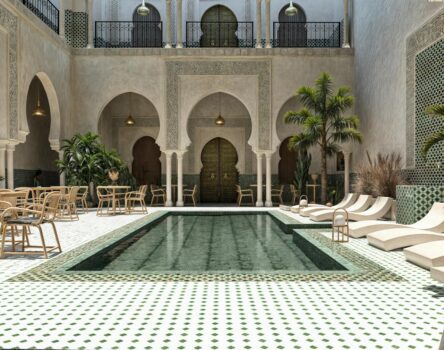
The word riad comes from the Arabic “ryad”, meaning garden. Traditionally, it describes a house built around an interior courtyard, often centered with a fountain, a few orange trees, and an open sky above.
Originating from Andalusian and Arab architectural traditions, the riad became a hallmark of Moroccan cities like Fez, Marrakech, and Meknes. It offered both privacy and serenity in the heart of crowded medinas, a small oasis hidden within labyrinthine streets.
A typical riad features:
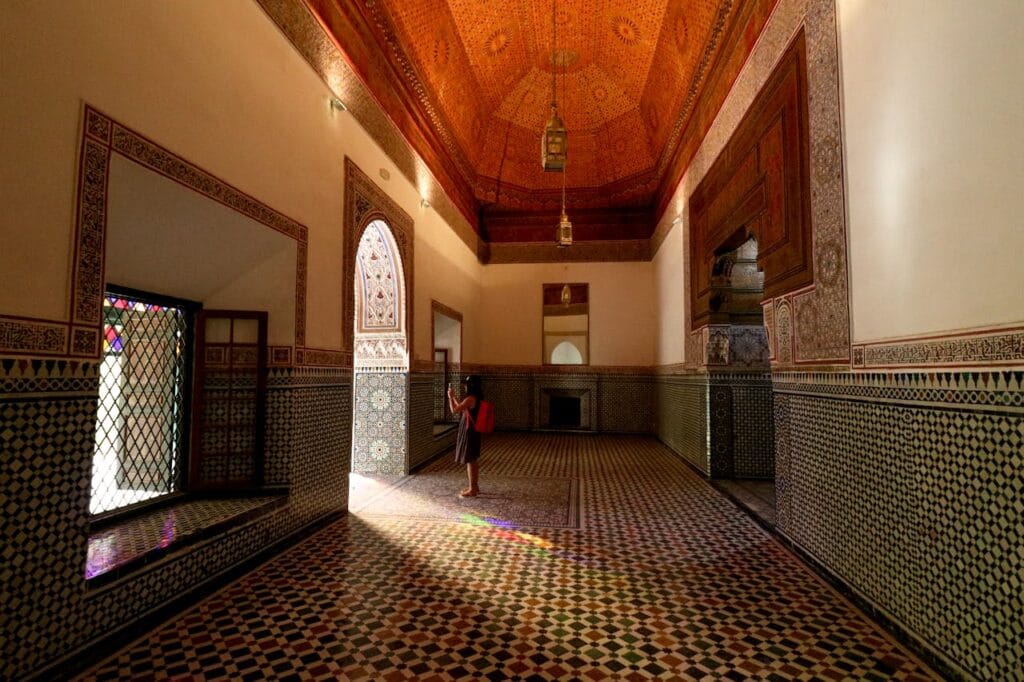
- Zellige tiles in hypnotic geometric patterns, crafted by artisans whose skills trace back generations.
- Stucco and carved cedar adorning arches and ceilings.
- A central patio designed to channel light and cool air, a natural climate control long before air conditioning.
- Rooftop terraces that open to the hum of the medina below, often where guests gather at sunset.
The design follows a philosophy rooted in Moroccan spirituality: beauty should be inward. What’s modest from the outside reveals wonder within, just like the Moroccan spirit itself.
Hospitality as a Sacred Tradition
Moroccan hospitality isn’t performative. It’s a living tradition, deeply tied to religion, culture, and community. The Prophet’s saying, “Whoever believes in God and the Last Day should honor his guest,” is part of daily life here.
In a riad, this ethos becomes tangible:
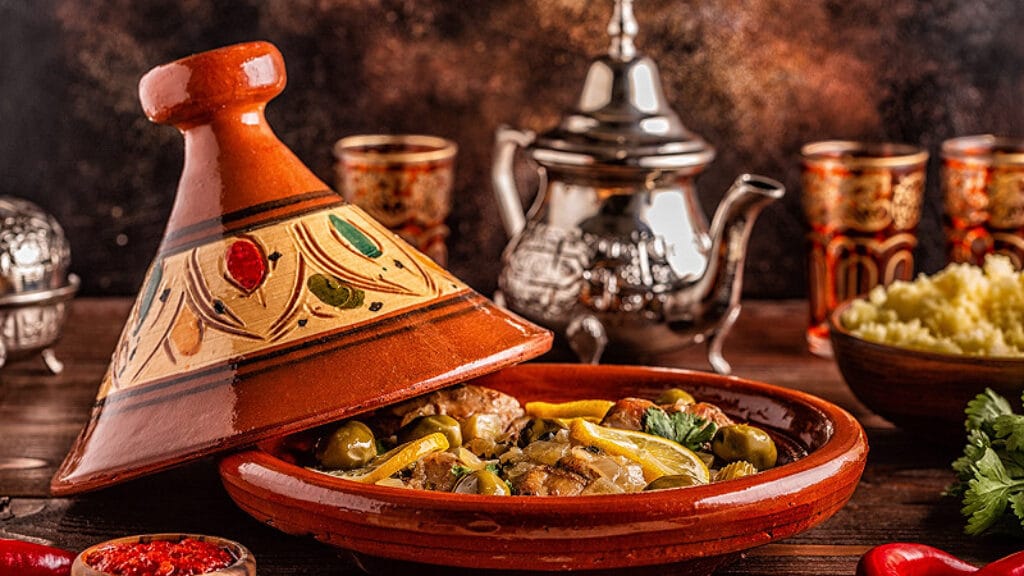
- Guests are welcomed with mint tea, poured high to create a frothy crown, a gesture of respect and generosity.
- Every meal, whether simple or grand, is shared; no one leaves the table hungry.
- The hosts, often families or long-time caretakers, treat visitors not as clients but as temporary members of the household.
This warmth, often described as “Moroccan hospitality magic”, is not scripted for tourism. It’s the continuation of an ancient rhythm, where welcoming strangers was an act of faith and pride.
Inside the Experience: A Day in a Riad
Waking up in a riad feels like stepping out of time. Sunlight filters through the courtyard’s arches, and the scent of orange blossom and freshly baked msemen (Moroccan pancakes) fills the air.
Breakfasts are long and layered, a tray of honey, olives, local cheese, and strong coffee. There’s no rush. Time moves slower here, tuned to the flow of conversation and the whisper of fountains.
As afternoon heat rises, the riad turns into a cocoon of shade. Some read under the carved arcades; others head to the hammam, often built within the riad itself, where steam and black soap renew the body.
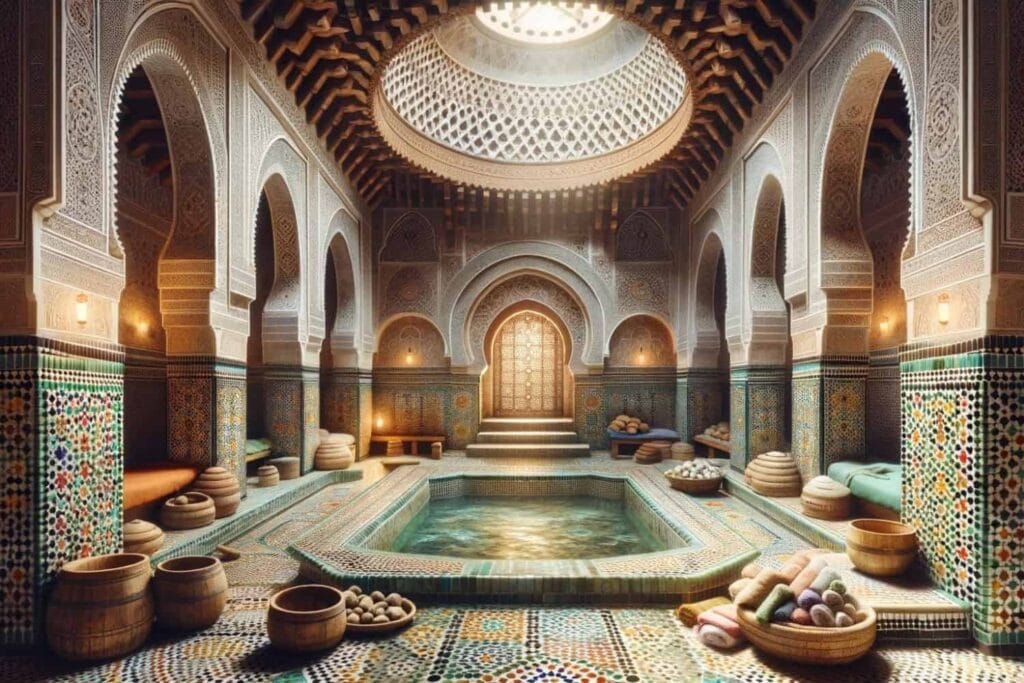
When evening falls, the terrace becomes the heart of the house. Lanterns flicker, the call to prayer echoes from distant minarets, and travelers share stories over tagines that have simmered for hours.
The Revival of Riads in Modern Morocco
Many riads had fallen into disrepair during the mid-20th century, as Moroccan families moved to modern apartments. In the late 1990s, however, a wave of restoration began, led by Moroccan entrepreneurs and architects, soon joined by global enthusiasts enchanted by medina life.
Cities like Marrakech and Fez now count hundreds of restored riads, ranging from modest guesthouses to boutique luxury retreats. Yet the essence remains: intimate scale, personalized service, and cultural authenticity.
Some riads have become living museums, blending old craftsmanship with contemporary Moroccan design. Handwoven rugs meet minimalist lighting; antique doors coexist with modern art.
These spaces don’t just preserve heritage, they revitalize it, creating jobs for artisans, guides, and cooks, while promoting sustainable urban tourism.
Architecture That Breathes
One of the most fascinating aspects of a riad is its bioclimatic intelligence. Long before “eco-design” became a global trend, Moroccan builders mastered the art of natural ventilation and thermal comfort.
Thick adobe walls retain coolness in summer and warmth in winter. The open patio draws hot air upward, while shaded galleries keep rooms temperate. The courtyard, with its water and greenery, functions as both a microclimate and a spiritual heart.
Every element is designed to harmonize human life with nature, a principle modern architecture often rediscovers too late.
Beyond Comfort: The Emotional Connection
A riad stay resonates because it’s emotional. It’s about connection, to people, to place, to time. You’re not just staying in a building; you’re becoming part of a story.
You’ll meet the cook who still uses her grandmother’s spice blend, or the caretaker who remembers when the courtyard was filled with laughter during Ramadan nights.
Each conversation, each smile, becomes a thread in a larger tapestry of Moroccan identity.
As one traveler once put it: “A riad doesn’t just host you; it teaches you how to slow down and feel again.”
The Soul of Moroccan Luxury
In a world where travel often means convenience and speed, Morocco offers something different, a luxury of meaning.
A night in a riad is a lesson in cultural refinement, patience, and genuine connection. It’s where every detail, from the mosaic tiles to the mint tea, carries an invisible story, one shaped by centuries of hospitality.
Whether in Marrakech’s Medina, Fez el-Bali, or Essaouira’s white lanes, staying in a riad reminds you why Moroccan culture continues to enchant the world: it turns hosting into an art form, and every guest into a friend.
Related: