Photo by Marcia Salido via Pexels.
Between Marrakech and the Sahara, where the Draa Valley fades into arid plateaus, rises a vision so timeless that it seems carved from the earth itself. Aït Ben Haddou, Morocco’s most legendary ksar (fortified village), has stood for centuries as both a guardian of desert trade and a symbol of Morocco’s enduring spirit. Time, wind, and modernity have all passed, yet the fortress village still holds firm.
A Living Monument in Clay and Silence
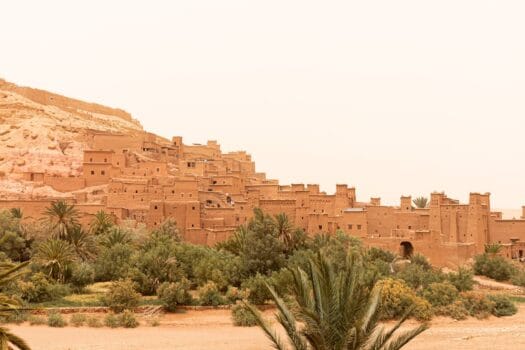
Built from sun-baked mud bricks and reddish clay, Aït Ben Haddou looks less like a human creation and more like a sculpture shaped by nature. The stacked houses, watchtowers, and narrow lanes rise in perfect harmony with the ochre cliffs. This UNESCO World Heritage site is not just a relic, it’s a living village where a handful of families continue to call home.
Each wall whispers of caravan routes that once connected Timbuktu to Marrakech. Traders carrying salt, gold, and spices would stop here for rest and protection before crossing the Atlas. The ksar’s strategic position made it a crossroad of worlds, Saharan, Berber, and Mediterranean.
Related: Ouarzazate: The City of Oases, Kasbahs, and Cinema Magic
The Architecture That Outlived Empires
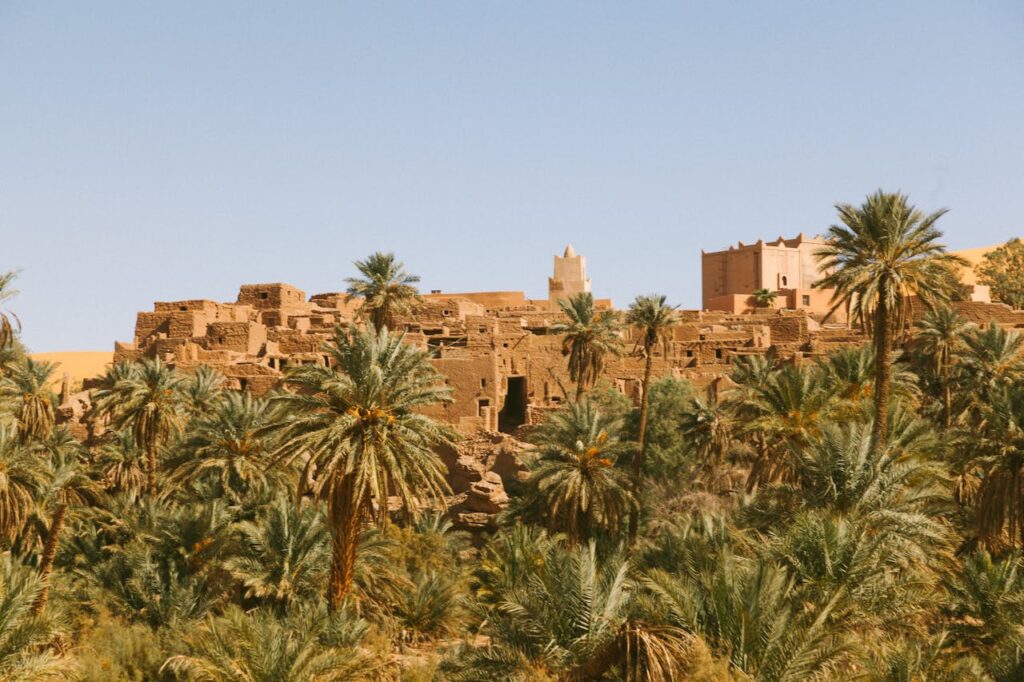
The architecture of Aït Ben Haddou is pure southern Moroccan ingenuity. The pisé technique (rammed earth mixed with straw) keeps interiors cool in the blazing desert heat and warm in winter. The fortified design, complete with a communal granary and watchtowers, once defended against raids, sandstorms, and time itself.
Even today, craftsmen maintain the walls using traditional methods. Every few years, villagers gather to repair cracks and reshape eroded surfaces. It’s a living example of community architecture, not museum conservation, a culture sustained by care, not fences.
A Stage for the World’s Imagination
Aït Ben Haddou’s dramatic beauty has not gone unnoticed by the world. Hollywood discovered the ksar in the 1960s, and since then, it has appeared in dozens of films: Lawrence of Arabia, Gladiator, The Mummy, Game of Thrones, and Prince of Persia, among others.
For filmmakers, it’s the perfect stage: a real-life setting that requires no CGI. For travelers, walking through its gates feels like stepping into cinematic history. The mix of authenticity and myth makes it one of Morocco’s most photographed destinations.
Crossing the River to the Past
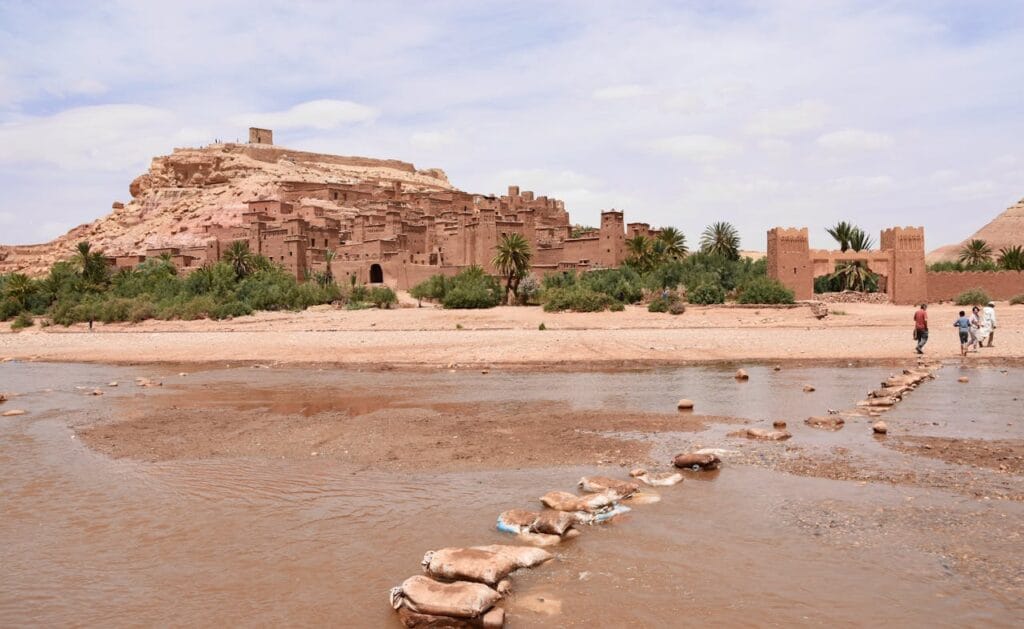
To reach the old ksar, visitors must cross the shallow Ounila River, often on foot or via a simple wooden bridge. On the opposite bank, the new village of Aït Ben Haddou grows quietly, offering guesthouses, cafes, and panoramic terraces. Yet as soon as you enter the old fortress, silence takes over.
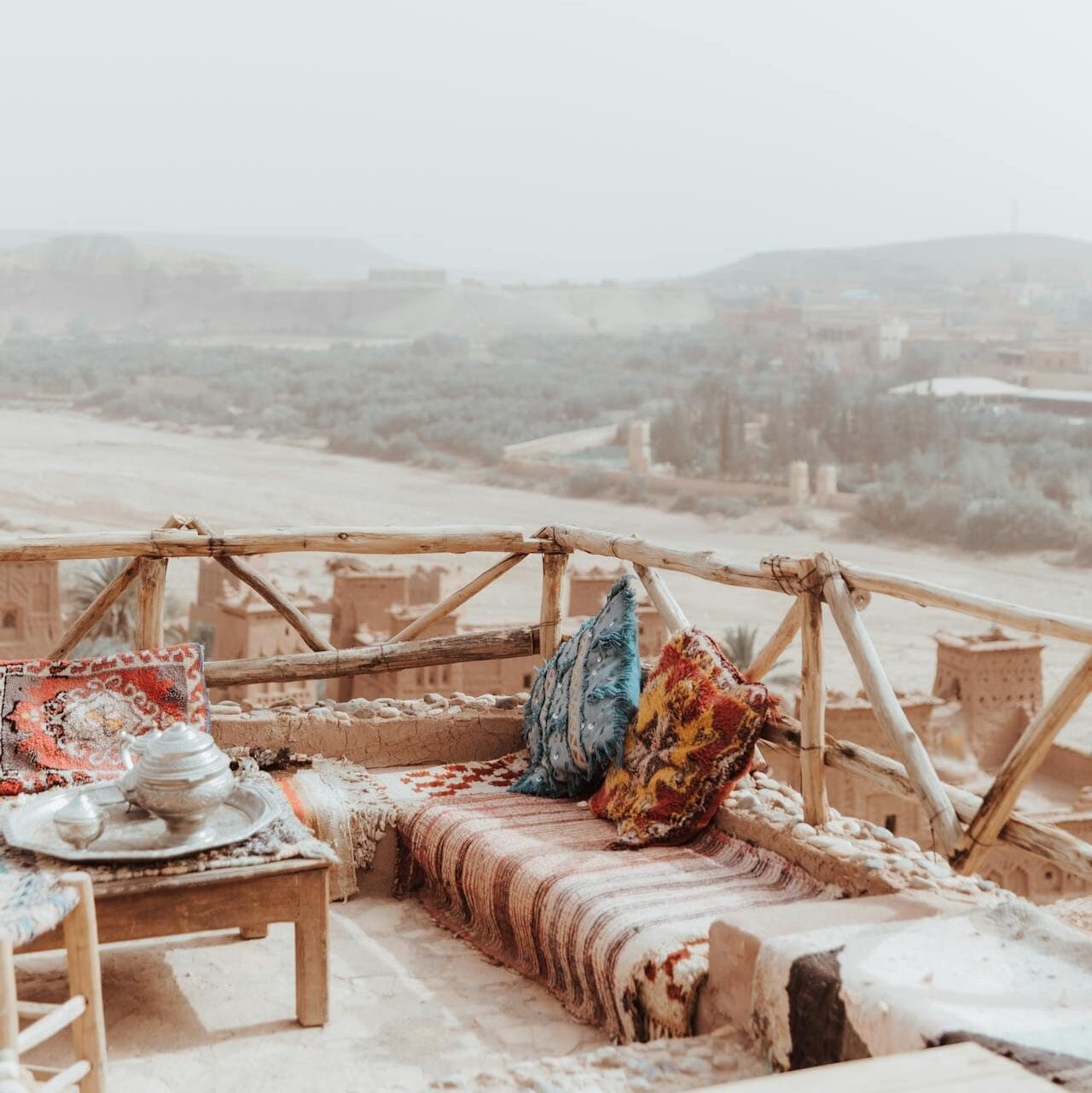
No cars. No concrete. Just the crunch of sand underfoot and the echo of history bouncing between earthen walls.
Climb to the top, and the view reveals why this site was never forgotten. From here, the desert stretches endlessly, framed by the snow-capped High Atlas. Sunset turns the entire ksar into liquid gold, a vision few places on earth can rival.
Related: Inside Marrakech’s Medina: The Streets That Still Whisper History
Between Preservation and Modern Life
Aït Ben Haddou’s challenge today is survival, not from invaders, but from neglect and modern erosion. UNESCO and Morocco’s Ministry of Culture have supported restoration projects, yet much depends on local will. Some families remain; others have moved to the new village where water and electricity are reliable.
Still, every visitor who stays in a local guesthouse, buys a Berber carpet, or hires a guide helps sustain this living heritage.
Why You Should Visit
As Morocco prepares for CAN 2025 and the World Cup 2030, many travelers will cross the Atlas on new roads linking Marrakech to Ouarzazate. Aït Ben Haddou will stand along that route, inviting visitors to pause, not for selfies, but for perspective.
It reminds us that progress and preservation are not opposites. Morocco’s future, like its clay walls, is strongest when it’s shaped by the hands of its people.