Photo by Tomas Malik / Pexels
The Agafay Desert has become one of the most requested excursions for travelers visiting Marrakech. Located about 35 kilometers southwest of the city, this rocky desert landscape stretches across nearly 400 square kilometers of rolling hills, dry plateaus, and pale mineral valleys. Visitors can reach the Agafay Desert in roughly 45 minutes to one hour by car from central Marrakech, which explains why the area has quickly emerged as a practical alternative to the distant Sahara for travelers with limited time. Although the terrain contains no large sand dunes, the wide stone plains and undulating ridges create a visual landscape that resembles desert dunes when sunlight reflects across the surface.
Travelers usually approach the Agafay Desert by following the road toward Lalla Takerkoust, a small town located near an artificial lake at the foothills of the High Atlas Mountains. As the road leaves the dense neighborhoods of Marrakech behind, the scenery gradually shifts from agricultural fields to rocky plateaus and dry hills. This transition explains why the Agafay Desert functions as a transitional zone between the urban environment of Marrakech and the more rugged landscapes of the Atlas region.
Where the Agafay Desert Is Located
The Agafay Desert lies within the Marrakech-Safi region, roughly 30 to 40 kilometers from the city center depending on the entry point used by tour operators. Unlike the Sahara Desert, which requires long travel across southern Morocco, Agafay sits close enough to Marrakech to allow half-day or evening excursions. Because of this proximity, many hotels and riads organize transportation that collects visitors directly from their accommodation and drives them toward the desert plains.
The geological formation of the Agafay Desert consists mainly of limestone and compact earth rather than sand. Over time wind erosion and seasonal rainfall carved shallow valleys and rounded hills that mimic the shapes of dunes. In practice this rocky terrain produces wide open views across the landscape, especially during sunset when the mineral surface reflects warm golden tones.
Several small Berber villages remain scattered around the outskirts of the desert, where families continue agricultural activities adapted to semi-arid conditions. Olive groves, barley fields, and small livestock farms appear near seasonal water sources. These rural communities provide an important reminder that the Agafay region supported traditional livelihoods long before tourism activities expanded.
Why the Agafay Desert Became Marrakech’s Most Popular Excursion
The rapid rise of the Agafay Desert as a tourism destination results largely from its accessibility. Visitors traveling to Morocco often stay in Marrakech for only a few days, which makes long journeys toward the Sahara impractical. Because Agafay sits less than an hour away, tour operators began developing experiences that replicate elements of desert travel within a short distance of the city.
Once tourism companies recognized this logistical advantage, they created organized programs that combine transportation, outdoor activities, and traditional meals. Most excursions begin with pickup from riads or hotels in the historic center of Marrakech. Visitors often spend the morning exploring the city’s cultural sites before leaving for the desert during the afternoon.
Travelers frequently start their day in the historic center, where narrow alleyways reveal centuries of commercial and cultural activity. Guides often encourage visitors to explore the historic neighborhoods described in Marrakech Medina Streets History, which explains how the city’s traditional urban layout developed over time. Once visitors experience the medina’s atmosphere, the journey toward the open desert landscapes of Agafay creates a striking contrast.
Activities and Experiences in the Agafay Desert
Tour operators organize several outdoor activities designed to help visitors experience the landscape directly. Quad biking remains one of the most common options. After a short safety briefing, guides lead small groups along designated routes that cross rocky plains and dry riverbeds. These excursions typically last between one and two hours depending on the selected package.
Buggy tours follow a similar structure but use larger off-road vehicles designed for two passengers. The rugged terrain of the Agafay Desert allows operators to create adventure routes that climb low hills and descend into shallow valleys. Because the terrain contains compact earth rather than loose sand, vehicles maintain stable traction during these rides.
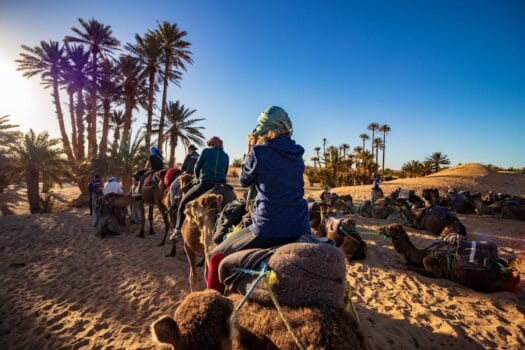
Camel rides remain another popular activity, particularly during sunset excursions. Guides lead visitors slowly across the hills while the Atlas Mountains appear along the southern horizon. Operators usually provide traditional blue robes and scarves to protect riders from dust and sunlight. Although these rides usually last less than one hour, they create the visual experience many travelers associate with desert landscapes.
Another aerial perspective of the region becomes possible through balloon flights departing from the outskirts of Marrakech. Early morning departures allow passengers to observe the plains surrounding the city and the distant outlines of the Agafay hills. Travelers interested in this experience can learn more about routes and logistics through guides such as Hot Air Balloon Marrakech, which explains how these flights operate across the wider Marrakech region.
Luxury Camps and Desert Dining
Over the past decade tourism investment introduced numerous desert camps across the Agafay region. These camps typically consist of canvas tents arranged around a central courtyard or dining terrace. Inside the tents operators install beds, carpets, and lighting systems designed to replicate the atmosphere of traditional desert bivouacs while providing modern comfort.
Evening excursions often include dinner served outdoors beneath open skies. Moroccan menus typically feature tagine, grilled meats, salads, and traditional bread accompanied by mint tea. Some camps organize live music performances where musicians play Amazigh rhythms or Gnawa percussion around small fires.
Prices vary depending on the level of comfort and services offered. Basic sunset excursions including dinner generally range between 60 and 120 euros per person. Luxury overnight stays with private tents and full meals may exceed 200 euros depending on the camp’s facilities and seasonal demand.
Understanding the Changing Landscape
The popularity of the Agafay Desert has transformed the region rapidly. Along the access roads visitors often notice newly paved routes, electricity lines, and terraces built to accommodate tourism infrastructure. Activity bases display rows of quad bikes and buggies waiting for visitors arriving from Marrakech.
This development allows operators to host large numbers of guests while maintaining easy access from the city. However, it also raises questions about how tourism growth affects the perception of a desert environment. The Agafay region now functions as a managed tourism zone where camps, restaurants, and adventure activities operate within close proximity.
Some visitors prefer camps located deeper within the hills where fewer vehicles pass during the evening. Choosing smaller camps or traveling during quieter seasons often provides a calmer experience while still remaining close to Marrakech.
Best Time to Visit the Agafay Desert
The Agafay Desert remains accessible throughout the year, yet seasonal climate conditions influence the visitor experience. Spring and autumn usually provide the most comfortable temperatures. During these months daytime conditions generally range between 20 and 28 degrees Celsius, which allows visitors to participate in outdoor activities without extreme heat.
Summer temperatures in the Marrakech region frequently exceed 40 degrees Celsius during July and August. Tour operators therefore schedule most desert excursions during late afternoon hours so visitors can enjoy sunset views while avoiding the strongest heat.
Winter evenings can become cool once the sun sets behind the Atlas Mountains. Travelers planning overnight stays should bring warm clothing even when daytime temperatures remain mild.
Combining Agafay with Marrakech’s Cultural Experiences
Many travelers combine a desert excursion with cultural exploration inside Marrakech itself. A typical itinerary might begin with a morning visit to the famous Jardin Majorelle, where botanical gardens and Art Deco architecture create one of the city’s most recognizable attractions.
Later in the day visitors often explore the traditional craft markets of the medina. Workshops inside the historic souks reveal how artisans continue to produce leather goods, lanterns, and metalwork using traditional techniques. For example, the workshops described in Souk Cherratine Marrakech illustrate how craftsmen preserve centuries-old tanning and leatherworking practices.
Once visitors return from the Agafay Desert after sunset, many continue their evening in Marrakech’s lively public spaces. The sounds of street musicians, storytellers, and tea vendors fill the medina’s squares long after dark. Travelers who want to understand this nighttime atmosphere can explore experiences described in Night in Marrakech: Sounds, Street Performers, and Tea Rituals.
The Future of the Agafay Desert
The Agafay Desert continues to evolve as one of the most accessible desert landscapes near Marrakech. Tourism operators expand camps and activities each year in response to increasing visitor demand. At the same time local authorities and tourism professionals increasingly discuss sustainable management practices designed to protect the fragile environment.
Balancing tourism development with environmental preservation will determine how the region evolves in the coming years. If carefully managed, the Agafay Desert can continue providing visitors with a desert landscape experience while preserving the natural character of its rocky hills and open horizons.
For travelers planning a visit to Marrakech in 2026, the Agafay Desert remains one of the easiest ways to experience desert scenery without traveling far from the city. Its proximity, panoramic views of the Atlas Mountains, and growing range of activities ensure that it will remain one of the most requested excursions connected to Morocco’s most visited destination.