Where the City Lets Its Second Soul Appear
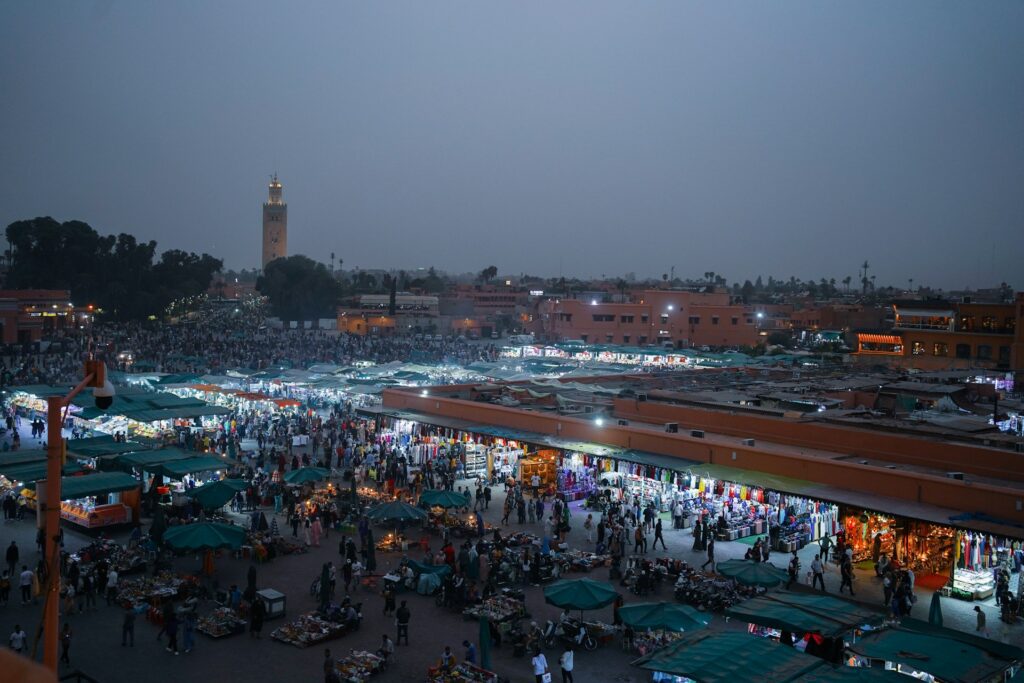
Night enters Marrakech in its own way. It doesn’t fall quickly from the sky or rush over the rooftops. It warms up from the stone alleys first, then moves upward with a calm confidence. As the last sunrays slide behind the palm trees, something quieter begins to take shape. The medina drops its daytime urgency and embraces a softer rhythm, almost like a memory returning after a long absence.
The transformation never feels forced. The noise of bargaining softens. Colours lose their sharpness. Lanterns glow with warm, amber tones. The air carries the scent of spices, mixed with the light sweetness of the evening breeze. Marrakech shifts into the part of itself that daylight rarely reveals, a part built on movement, voices, music and the comfort of gathering.
The night invites you into streets that look familiar yet behave differently. Stone passages echo gently under footsteps. Conversations become slower. Every door, every terrace, every shadow seems to carry a subtle pulse. Marrakech breathes more quietly now, but with a deeper, steadier beat.
Rhythms That Guide You Through the Medina
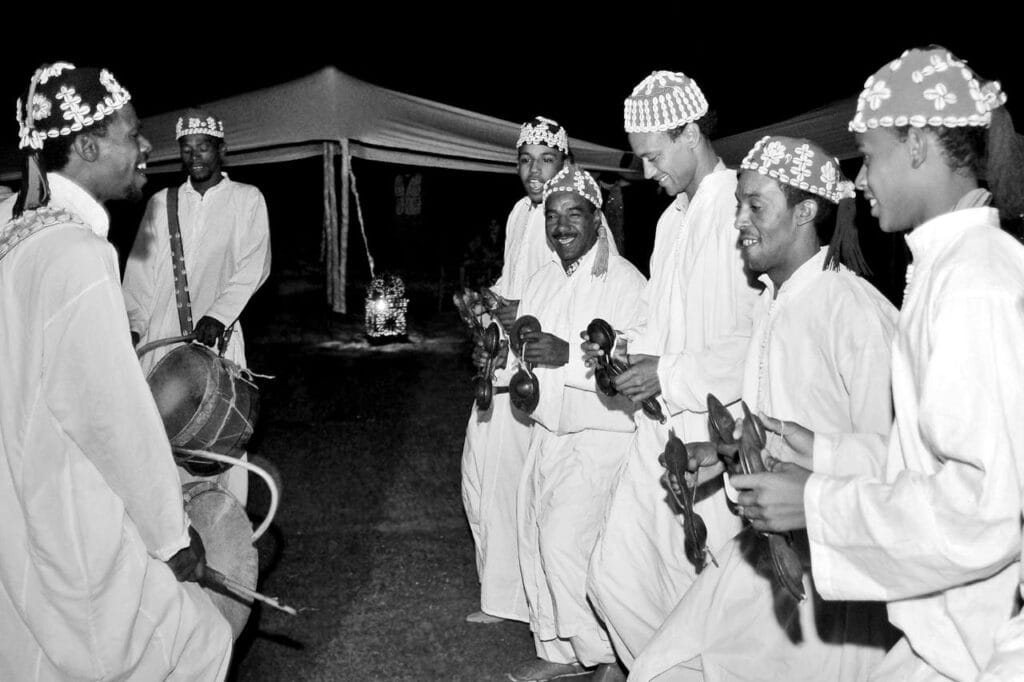
As darkness settles, sound becomes a compass. A single drumbeat often appears first, slow, rounded, confident. Another beat answers from a nearby alley. Soon, the medina fills with rhythms that feel older than the city walls. Metal castanets click in energetic patterns, blending with the deeper vibration of a guembri, while a flute sends out soft notes that float above the rooftops.
The beauty of these sounds lies in how naturally they blend. No stage. No schedule. No separation between performer and listener. Someone plays, another voice rises, and suddenly a whole street has its own musical character.
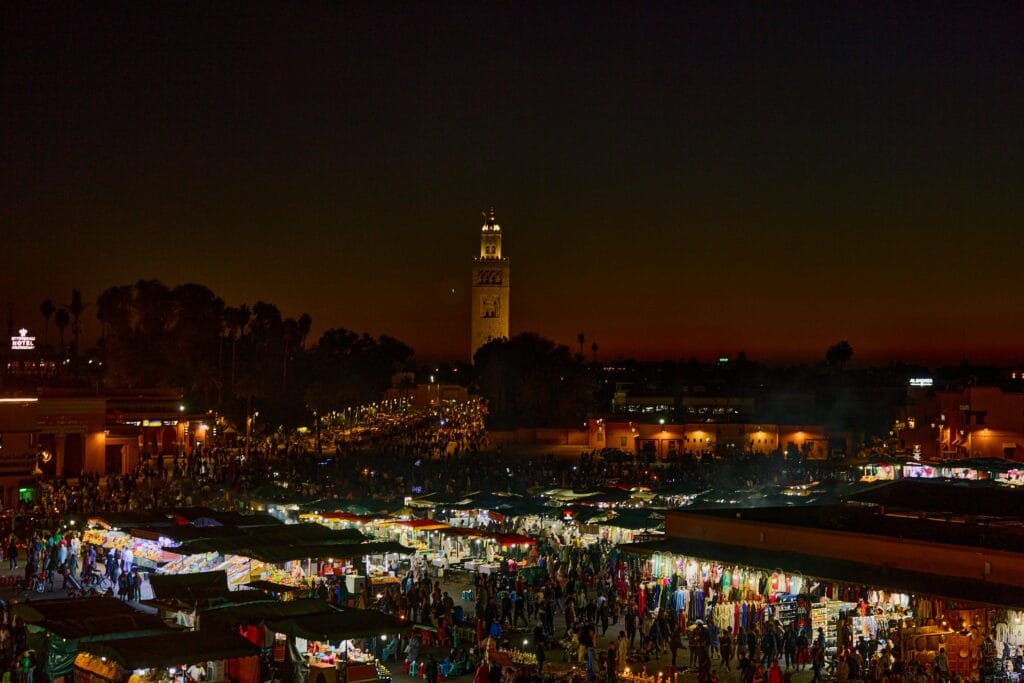
Follow the sound and you eventually reach Jemaa el-Fna, the square that becomes a theater each night. Storytellers gather circles of strangers. Musicians tune their instruments by instinct more than formula. Gnawa performers set the tempo for the crowds drifting in and out of the square. The music doesn’t attempt to impress; it communicates. It holds history, movement and belonging.
Street performers give the square its heartbeat. Fire artists draw arcs of light that flash briefly against the night. Dancers move with fluid ease, echoing patterns that feel learned not through training, but through living. Acrobats land lightly on rugs worn by hundreds of evenings. Each performer plays a small role in shaping the atmosphere that Marrakech protects so naturally.
A Medina That Softens and Deepens After Dark
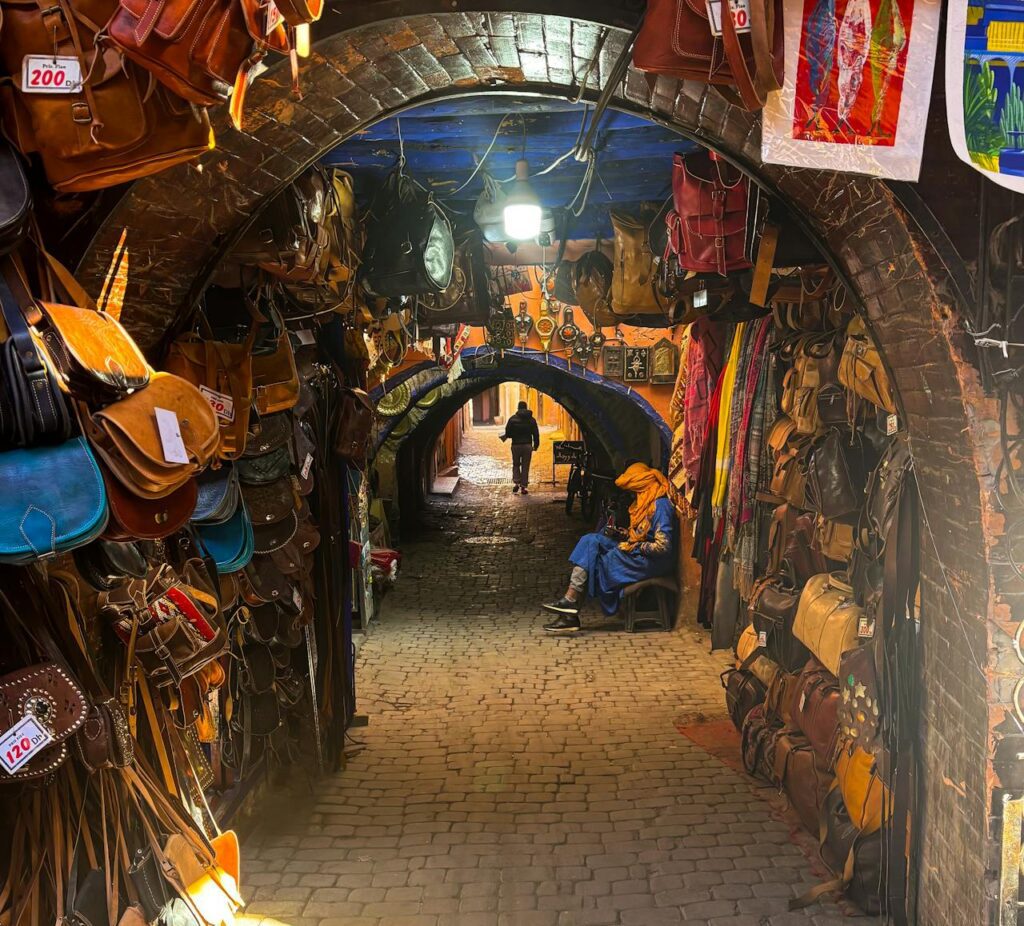
Move away from the square and the night becomes more intimate. The alleys narrow, guided by the soft glow of lanterns hanging from wooden beams. Shops close, but remain slightly open as if still whispering stories through their doorframes. The smell of cumin and baked bread lingers. Fabrics hung during the day now rest in shadows. Copper lamps give off delicate patterns of light that dance against the walls.
The medina at night does not demand attention. It offers space. The pace slows. A vendor greets a neighbour. A child runs past with effortless joy. Two friends share a quiet conversation in front of a closed stall.
This part of the city feels like an interior chapter, a place where Marrakech lets you walk without guiding you toward anything specific. You wander, and the alleys decide how much they want to reveal.
Rooftops and Riads: Night’s Quiet Shelters
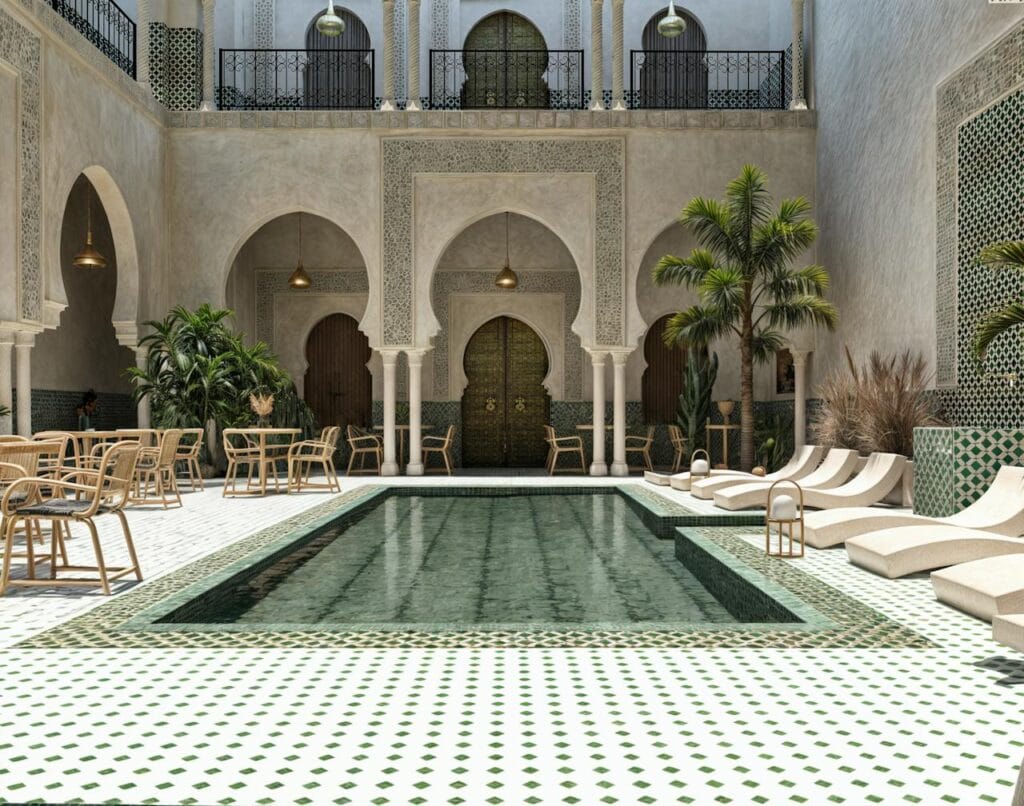
Photo by Achraf Borkadi via Pexels
Behind heavy wooden doors, riads open like hidden worlds. Their courtyards glow with candlelight. Orange blossom and jasmine drift in the air. Water trickles from fountains, creating a steady rhythm that calms everything around it.
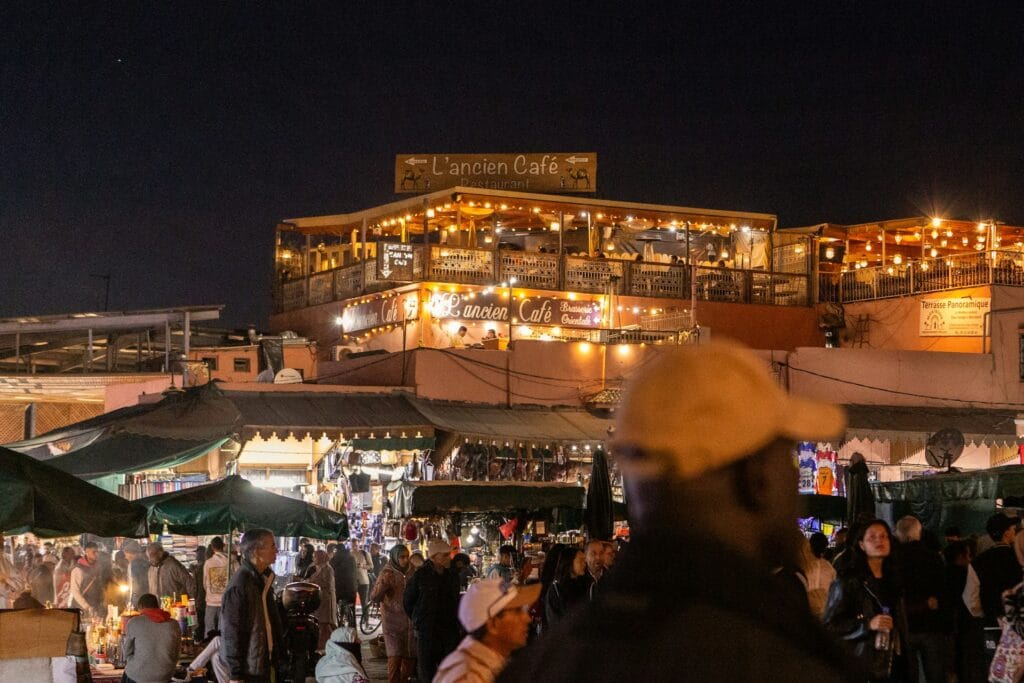
Rooftops offer the city from a different angle. From up there, the layers of Marrakech become clear. The distant beat of drums, the faint voices from a café terrace, the hum of scooters navigating dimly lit streets, all merge into a textured soundscape.
Visitors gather with locals on terraces to share conversations that wander from football to family stories, from travel memories to plans that stretch into the night. The city feels both close and wide at the same time.
Midnight Tea: The Ritual That Defines the Night
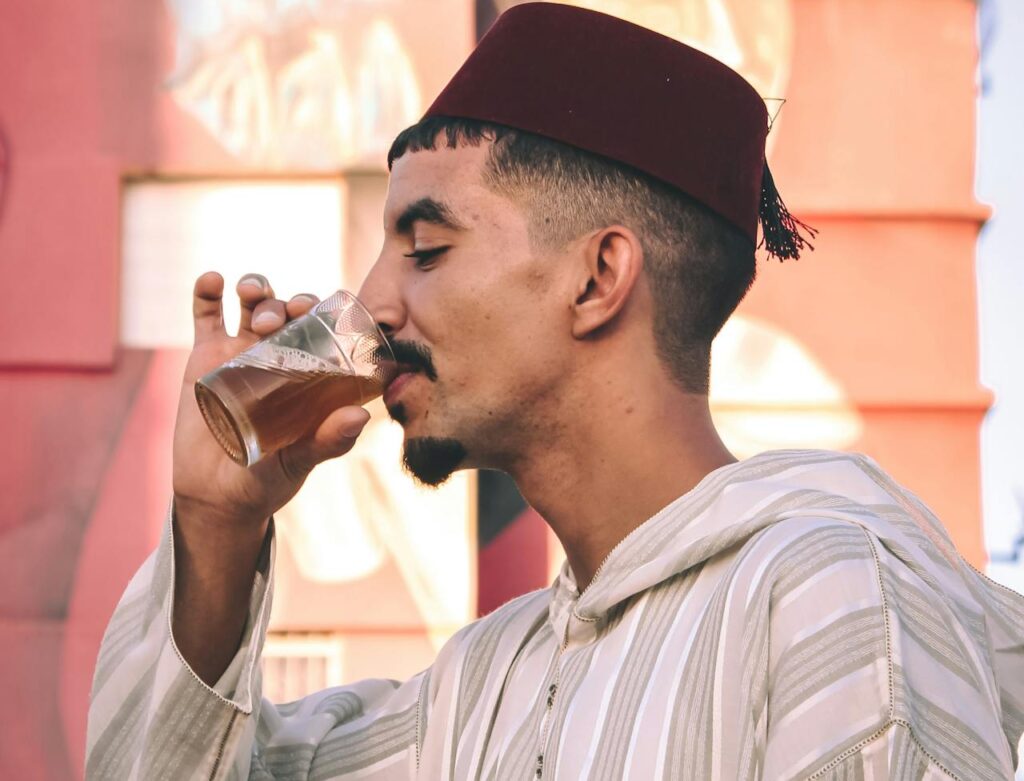
When midnight arrives, Marrakech enters one of its most cherished rituals. Tea becomes the center of the moment. A pot warms over a small flame. Mint leaves release their fragrance. Sugar melts. The glass warms between your fingers.
The waiter pours the tea from high above, creating a long, elegant stream. The sound of tea hitting the glass is subtle but unmistakable, a soft signal that the night has entered its gentlest phase.
Tea at this hour slows everything down. It encourages honesty. It invites reflection. It gives people permission to stay a little longer, speak a little more, or simply enjoy the silence. The ritual belongs to everyone: families, street workers finishing their shift, friends heading home, travellers absorbing their last impressions of the day.
Midnight tea carries the spirit of Marrakech better than any guided explanation: warm, generous, unhurried and full of small details that stay with you long after you leave.
Music That Finds You, Not the Other Way Around
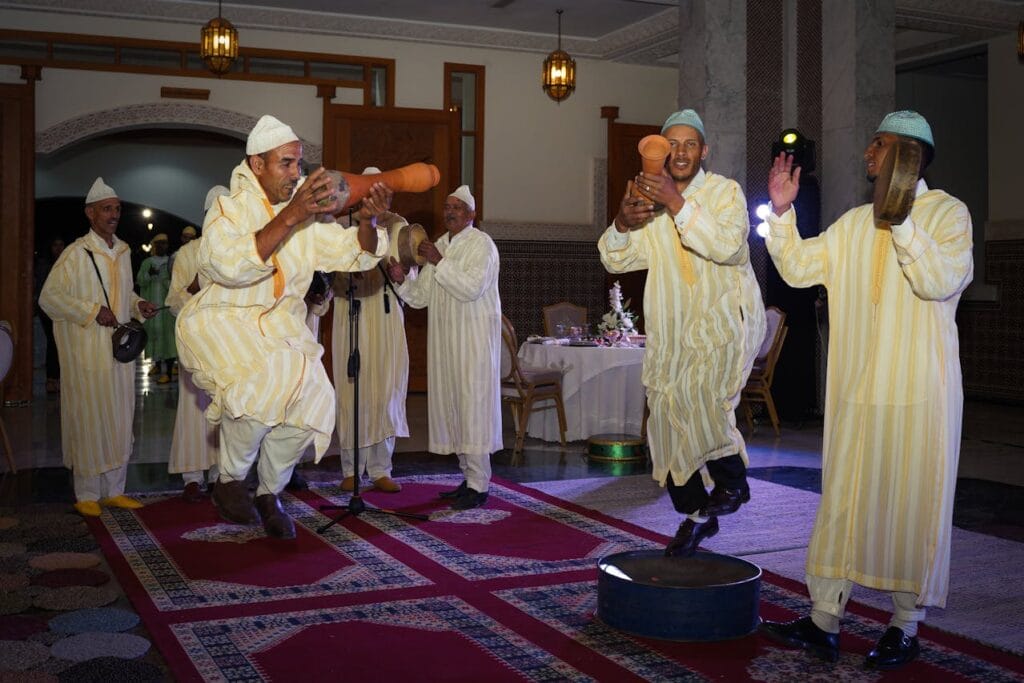
Some nights, a melody rises from a rooftop across the medina. Sometimes it comes from a traveller carrying a guitar, other times from a local musician who prefers the open sky to any stage. The music floats above the houses, carried by the quiet of the late hours.
There is something distinctive about these rooftop notes. They don’t demand applause. They exist for the moment itself, for the people who happen to hear them, and for the city that embraces them without interference.
Marrakech makes room for this kind of spontaneity. Music moves through the city like a companion, sometimes energetic, sometimes introspective, always present.
A City That Lives Many Lives in a Single Night
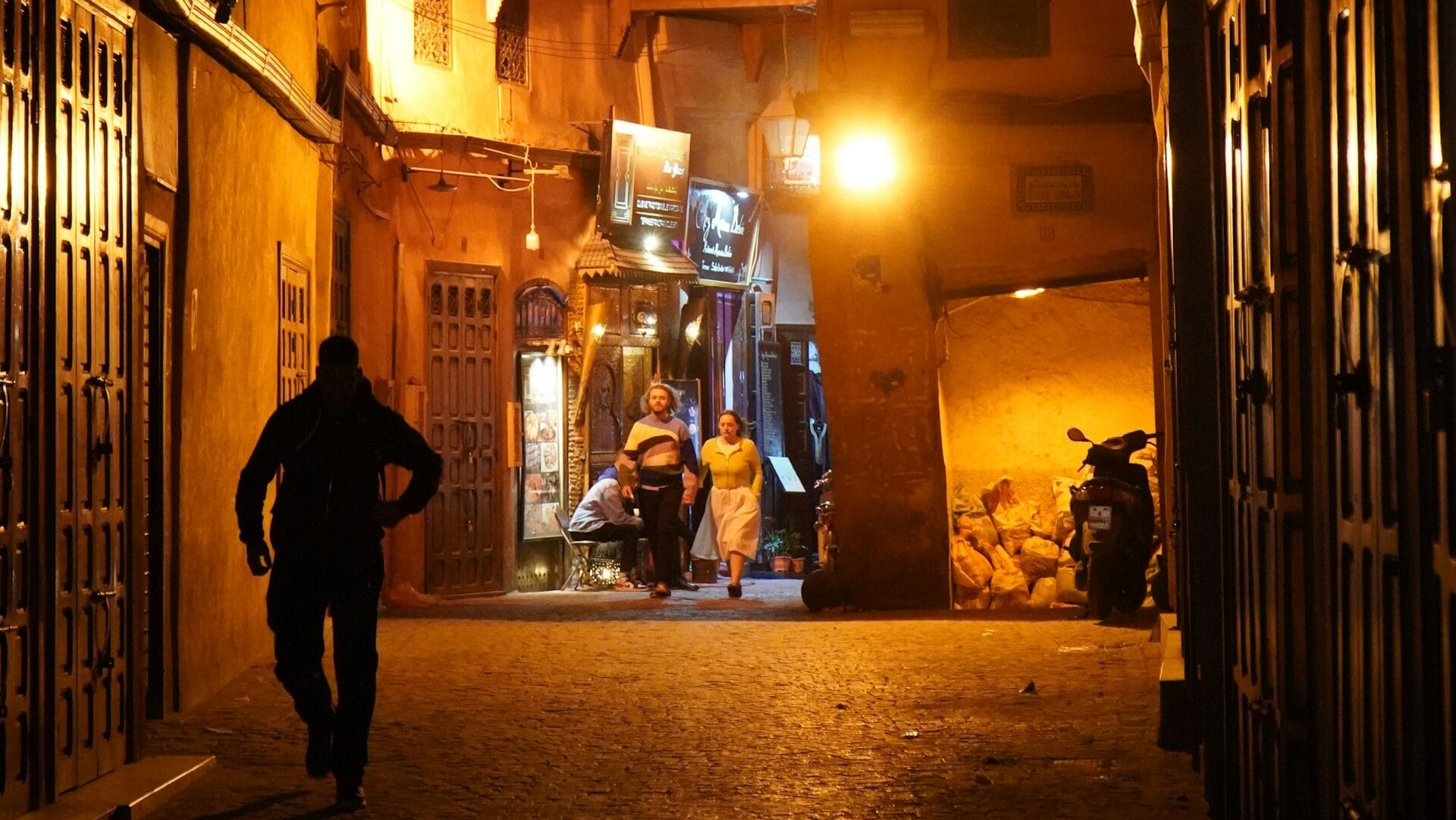
Night reveals stories that daylight leaves hidden. A vendor closing his last stall before sharing tea with friends. A family sitting on a terrace, watching the medina lights from above. Two teenagers practicing freestyle football moves in a quiet corner. A grandmother telling a story to her grandson while the rest of the house sleeps.
These small moments create Marrakech’s nocturnal identity. Every individual adds a thread to the larger fabric of the night. Every corner holds a memory waiting to be found.
When Dawn Approaches
As the night nears its end, the air cools. Drums slow down. Street performers return to familiar alleys. Lanterns fade into early light. The city doesn’t shift abruptly; it stretches gently, preparing itself for another day filled with colour and movement.
The night leaves a trace, not a dramatic impression, but something softer. A sense of closeness, a rhythm that stays in your steps, and the memory of moments that felt entirely unplanned yet naturally meaningful.
The Last Impression
Night in Marrakech doesn’t try to enchant you. It simply reveals what lives beneath the surface: humanity, community, rhythm and warmth.
No single scene defines it.
It’s the combination that shapes a night unlike any other.
In Marrakech, night acts as a companion. It lets the city speak with its true voice.
And if you follow it long enough, you understand one final truth:
Marrakech doesn’t sleep; it transforms.
Related articles: