A Living Tapestry of Time
Step through the ochre gates of Marrakech’s Medina and time bends. The city hums with an old melody, voices of traders, scholars, and desert wanderers weaving through the present. Every step inside the Medina becomes a walk along Morocco’s layered soul.
From the scent of cumin and leather to the hammer-song of copper artisans, the old city behaves like a living organism, breathing memory through courtyards, arches, and narrow passages. History speaks here, not from a glass case, but face to face.
The Heartbeat of Marrakech
Founded in the 11th century by the Almoravid dynasty, the Medina remains a landmark of medieval Islamic urban design. Beyond UNESCO status, true power flows from the way daily life links to centuries of tradition.
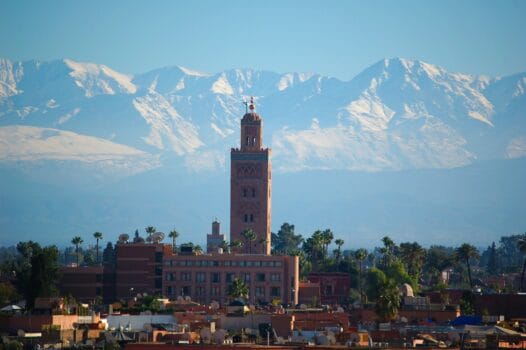
Stand in Jemaa el-Fna at dusk. Drummers answer one another, storytellers gather circles of listeners, and the Koutoubia’s silhouette stretches across the square. These scenes carry forward oral traditions that families have guarded for generations. Continuity defines the square; spectacle takes a back seat to memory.
Say hello to the Red city (VisitMorocco)
Streets That Tell Stories
Each alley has a personality. Some lead to quiet mosques or riads behind modest doors; others burst into markets with an energy that feels like sunrise.
- Souk Semmarine lines up rainbow slippers and brass lamps, echoing caravan days when traders crossed the Sahara with salt and silk.
- Souk des Teinturiers hangs skeins of silk above a trickling stream, releasing clouds of saffron, indigo, and cochineal, colors that seem to stain the air.
- Souk Cherratine showcases hides, satchels, and hand-stitched belts, carrying forward techniques learned in courtyards where tanners once worked from dawn.
Craft knowledge moves hand to hand. A woodcarver in cedar explains that his father and grandfather taught the same motifs. A spice merchant grinds ras el hanout and smiles about a blend perfected over decades. Stories fill the lanes faster than footsteps.
Architecture That Speaks in Silence
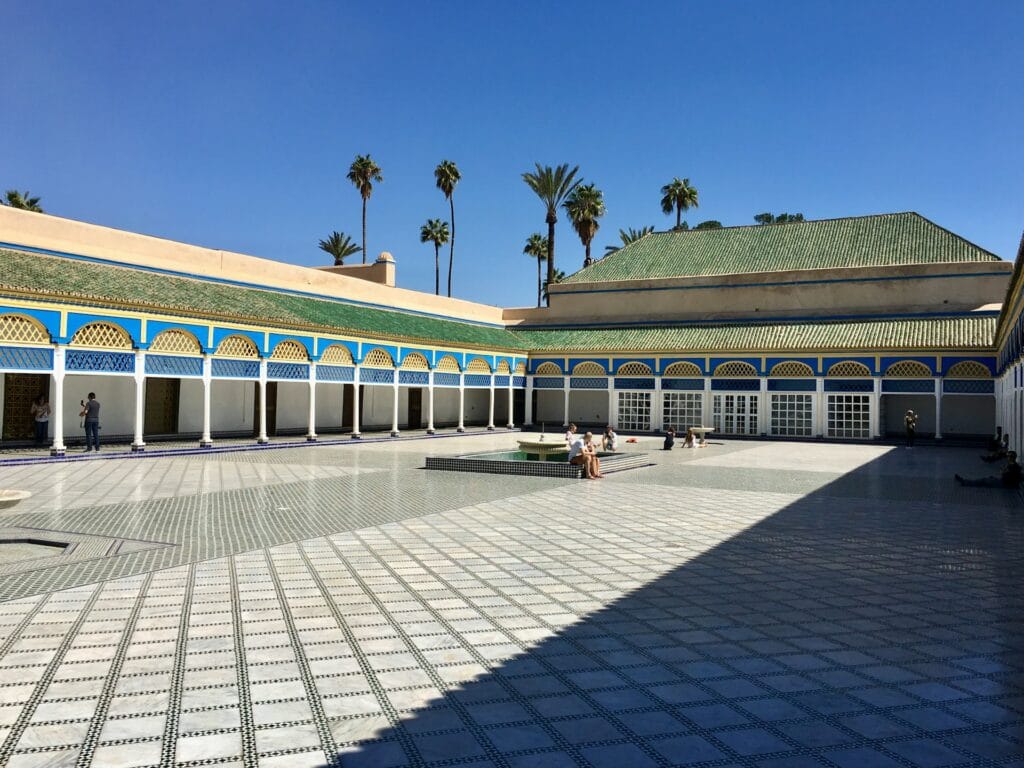
The Medina teaches climate wisdom with every turn. Narrow corridors cast shade; buildings draw air through inner courtyards; thick walls made from local red clay hold coolness through midday heat. The “Red City” earns its hue from this very earth.
Inside the Ben Youssef Madrasa, geometric zellij climbs from floor to wall, cedar ceilings bloom with carved rosettes, and light pools in a calm courtyard. The former Quranic school once hosted students from across the Maghreb. Knowledge and craft grew together here.
Walk on to Bahia Palace, a 19th-century masterpiece created by a grand vizier with an obsession for detail. Stained glass throws mosaics of light, marble floors chill the air, and stucco tracery draws the eye high, then higher. Elegance rises from patience; patience rises from craft; craft rises from pride.
Every Door a Secret
Slow your pace and doors begin to speak. Many glow in turquoise or deep green; others wear the privacy of sun-faded wood. Brass knockers, sometimes shaped like hands, offer a quiet promise of hospitality and protection.
Behind those doors, riads cradle life around fountains and orange trees. Morning birds chatter in courtyards, and mint tea perfumes the air at first light. Many riads host guests today, yet the architecture keeps faith with tradition: a modest exterior, a cool interior, a heart of water and shade.
The Medina by Night
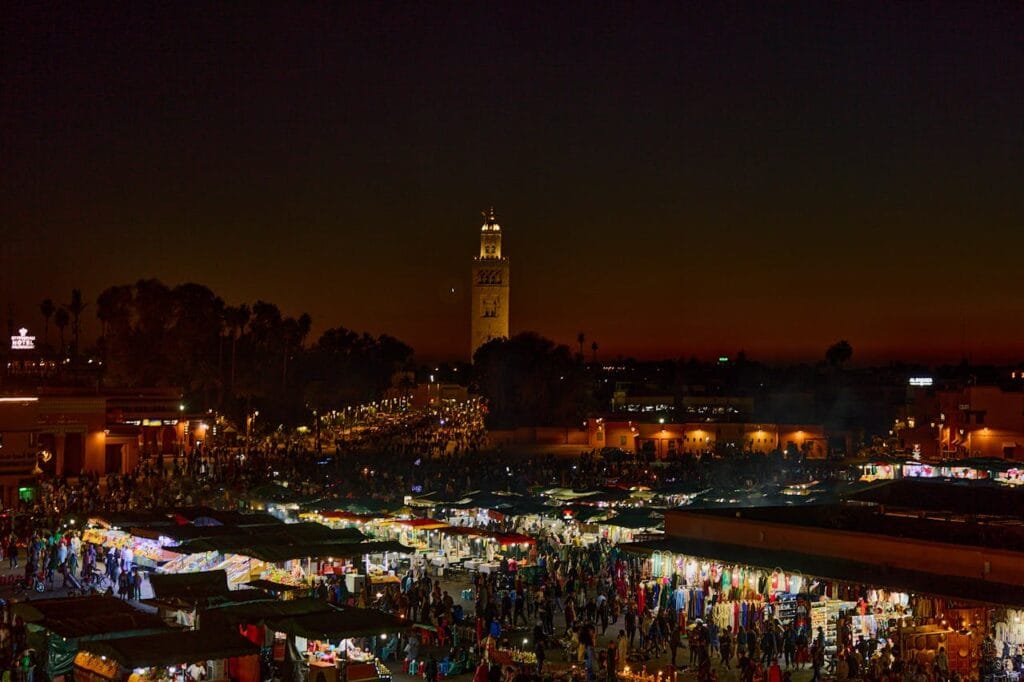
With sunset, rhythm changes. Lanterns flicker, alleys soften, and a chorus rises from prayer time. Jemaa el-Fna glows under a wide sky while food stalls send up ribbons of smoke. Harira bubbles in steel pots; lamb skewers hiss above charcoal; baskets of dates catch the lamplight.
Musicians gather in circles, hands clapping, flutes calling, drums answering. Visitors lean in; locals guide the beat. Borders feel thin in these moments. Joy belongs to whoever shows up.
Preserving a Heritage While Moving Forward
Marrakech faces a delicate balancing act: welcome visitors, protect heritage, and support residents who keep the old city alive. Restoration teams repair fountains, caravanserais, and segments of the old walls. Cooperatives help artisans adapt to modern markets while guarding design integrity.
Walk long enough and careful stewardship becomes visible, fresh limewash on an alley, restored cedar lintels above a door, a caravanserai reborn as a center for craft workshops. Tradition and innovation work side by side, like two hands in one craft.
How to Experience the Medina Authentically
Start early
Morning light washes the red walls in rose and gold while souks wake slowly. A quiet hour invites serendipity.
Let the city lead
Keep one landmark in mind (the Koutoubia, Ben Youssef, or Jemaa el-Fna) and then wander. The Medina rewards curiosity.
Climb for perspective
Rooftop cafés around the square deliver mint tea, skyline views, and a cool breeze.
Step into museums with intention
- Dar Si Said Museum displays woodwork, jewelry, and textiles that map Morocco’s regional identities.
- Maison de la Photographie presents archival images that freeze everyday moments from a century ago. Faces and streets feel familiar, even across decades.
Buy from makers
Speak with the brass hammerer, the leather cutter, the weaver at a handloom. A direct purchase keeps skills alive and feeds families who anchor the Medina.
Learn a few words of Darija
To feel truly connected to locals, pick up some basic Moroccan Arabic phrases. You can find a full guide in our article “100 Essential Darija Words to Learn Before Visiting Morocco”.
- Shukran: thank you
- Bslama: goodbye
- Smah liya: excuse me / sorry
- Marhba: welcome
Respect opens doors faster than any key. A simple greeting turns bargaining into conversation and conversation into friendship.
Pace yourself
Heat climbs at midday. Rest in a riad courtyard, sip tea, and return to the lanes when shadows lengthen.
Eat with curiosity
Try tanjia Marrakchia, a slow-cooked dish famous in the city; sample msemen with honey; finish with orange juice fresh-pressed on the square.
The Sound of Continuity
A place that breathes memory cannot fade. Calls to prayer ripple through the air; children race across tiny squares; a copper bowl rings under a hammer and turns into a vessel that will pour water for years. Small acts keep the city alive.
Marrakech’s Medina stands as a mirror of Morocco: complex, poetic, and endlessly resourceful. The walls may carry centuries of dust, yet the spirit walks forward, one trade passed down, one recipe learned by a new pair of hands, one story told to a new circle at dusk.
Walk slowly. Breathe deeply. Listen well. The streets still whisper history for anyone willing to hear.
Related: