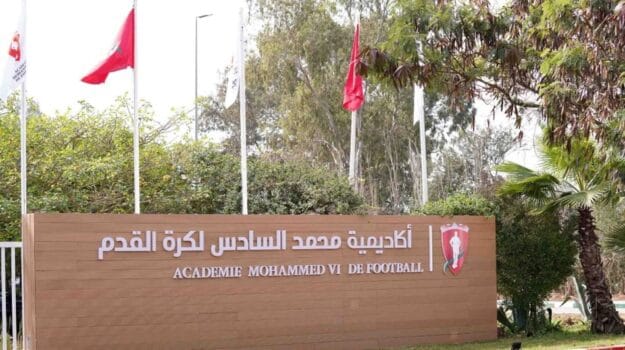
Photo By Rizko abdelmjid From MAP
A Vision That Reshaped a Generation
In recent reflections by Spanish media, particularly El Español, one idea stands out clearly: the transformation of Moroccan football did not happen by chance. For them, the Mohammed VI Football Academy represents the quiet force behind this evolution, the place where a generation was shaped, not discovered.
The academy’s philosophy moves far beyond training grounds and match preparation. It offers a complete pathway, where young players grow through technical development, education, and psychological support woven into a single, coherent structure. This holistic approach is what foreign observers consider the foundation of Morocco’s current football identity, confident, disciplined and deeply rooted in a sense of purpose.
At the academy, values such as discipline, responsibility and belonging are not abstract concepts. They are lived daily, forming a mindset that players carry with them long after they leave the campus. This is why Spanish writers describe the academy as the heart of Morocco’s “golden era”, a quiet but steady project that prepared young talents to face the world with maturity, talent and a collective spirit.
A Football Culture Ready for the Future
The influence of this work is visible across every level of Moroccan football. The men’s national team reaching the 2022 World Cup semi-final, the Olympic team securing bronze in 2024, the U-20s lifting a world title, and the U-17s advancing into the knockout stages, all of these achievements form part of a broader ecosystem built on long-term thinking rather than fleeting success.
Spanish media also point to Morocco’s infrastructure: modern stadiums, high-level training centres and a domestic league that continues to grow in competitiveness. These elements, combined with the academy’s approach, create a football environment capable of preparing players for both continental and global stages.
With the 2030 World Cup approaching, Morocco stands not only as a co-host, but as a nation whose football identity has matured. The Mohammed VI Academy remains the backbone of this journey — a place where talent meets structure, and where young players understand that representing Morocco begins long before they step onto the pitch.
Related:
- How the Mohammed VI Football Academy Shaped Morocco’s Rise to Global Football Power
- From Dream to Glory: Morocco’s Football Rise Under King Mohammed VI
- AS: Morocco Challenges Spain Stadiums with New Mega Venues
- Morocco Dominates the CAF Awards Shortlist With Two National Teams in the Final Three
- Tangier Grand Stadium Renovation – FIFA 2030 World Cup Ready