Photo credit: FRMF
A Senior Team That Reflects a Mature Football Vision
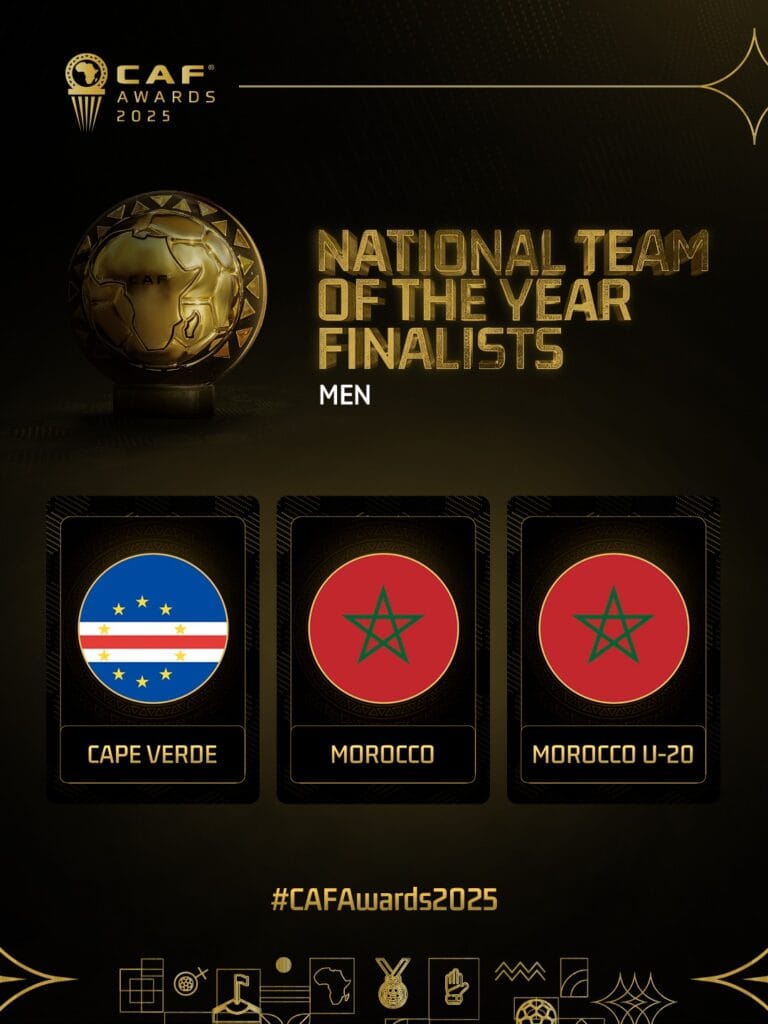
CAF’s announcement of the finalists for National Team of the Year (Men) at the 2025 Awards revealed a remarkable reality: Morocco’s senior national team continues to anchor African football with authority. This nomination is not only a recognition of results but also an acknowledgment of a football culture that matured steadily over the past decade.
The Atlas Lions now play with technical refinement, tactical clarity and a sense of belonging that comes from deep national pride. Their presence in the final three highlights a cycle of consistency rather than isolated success. Morocco’s senior squad feels rooted in a long-term identity, one shaped by the country’s academies, its diaspora networks and a fan culture that treats football as a shared inheritance.
A U-20 Generation That Confirms a Strong Development System
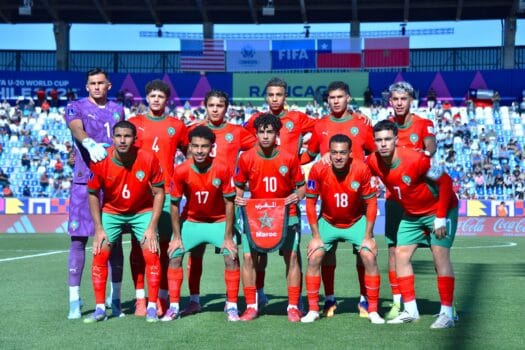
Alongside the senior team, Morocco’s U-20 squad (world champions) also appears among the finalists, a rare achievement that reinforces the strength of the entire national ecosystem. Their nomination reflects a generation that competes with structure, patience and creativity, all developed through a pathway that now stretches from neighbourhood games to high-level youth competitions.
This group represents the outcome of an organised system rather than a burst of individual talent. Regional academies, professional clubs and national training centres now move in the same direction, allowing Morocco’s youth teams to arrive at major tournaments with confidence and intention. Their recent performances showed that Moroccan football no longer relies on a single standout age group; it renews itself continuously.
Morocco’s double nomination sits beside Cape Verde in the trio of finalists, yet the presence of two Moroccan teams sends a clear message. The country’s football rise is structural, cultural and sustained. As the CAF Awards approach, Morocco already celebrates a meaningful victory: recognition that its football identity is strong across generations, from the present to the future.
Related: