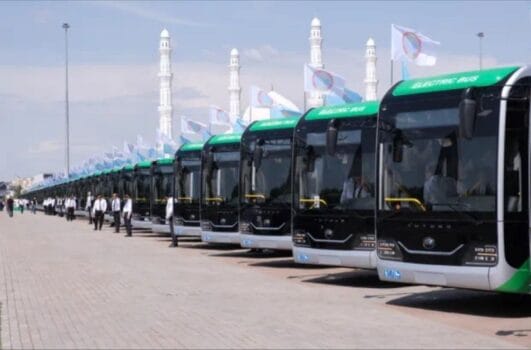
New Chinese Buses Transform Mobility in Tangier, Tetouan and Assilah Ahead of AFCON 2025
Northern Morocco is accelerating into a new era of public transport. With hundreds of modern buses entering service, Tangier, Tetouan and Assilah are redefining urban mobility while preparing for major international events like AFCON 2025 and the 2030 FIFA World Cup.
A New Mobility Pulse in Northern Morocco
In the north of the Kingdom, cities like Tangier, Tetouan, and Assilah are experiencing a significant upgrade in public transportation. A new fleet of modern Chinese-built buses is being deployed to improve daily travel conditions and support Morocco’s growing infrastructure ambitions.
Far from being a temporary solution, these buses represent a long-term transformation toward more efficient, comfortable, and reliable urban mobility systems across one of Morocco’s most dynamic regions.
According to Le360, a total of 348 brand-new buses are being introduced:
- 280 buses allocated to Tangier and Assilah
- 68 buses dedicated to Tetouan
This large-scale deployment highlights Morocco’s commitment to modernizing public transport at both regional and national levels.
Modern Features Designed for Comfort and Efficiency
The new buses are equipped with advanced features that significantly improve passenger experience and operational efficiency:
- Air conditioning for year-round comfort
- Digital passenger information systems
- Improved seating and accessibility
- Onboard security and surveillance systems
These upgrades bring Moroccan urban transport closer to international standards, offering both residents and visitors a smoother and more predictable travel experience.
Beyond AFCON 2025: A Long-Term Mobility Vision
While the rollout aligns with preparations for the AFCON 2025 tournament, the impact goes far beyond the event itself.
Morocco is building a sustainable mobility ecosystem that supports:
- Daily commuting for residents
- Tourism growth in key regions
- Efficient transport during global events
- Urban expansion and connectivity
As Morocco looks ahead to the 2030 FIFA World Cup, these investments form part of a broader strategy to position the country as a global benchmark in infrastructure and mobility.
Connecting Cities, Coastlines and Communities
The new fleet enhances connectivity between:
- City centers and residential districts
- Coastal areas and tourism zones
- Transport hubs and stadium infrastructure
For residents, this means shorter travel times and improved daily comfort. For visitors, it creates a seamless travel experience that reflects Morocco’s evolving urban landscape.
This transformation also contributes to social inclusion by making transportation more accessible and reliable for a broader population.
Northern Morocco’s Momentum Toward 2030
The deployment of these buses is part of a wider national movement. Across Morocco, cities are investing in:
- Modern public transport systems
- Sustainable mobility solutions
- Smart urban infrastructure
From high-speed rail to green energy and stadium development, Morocco is aligning its infrastructure with long-term economic and environmental goals.
In the north, each new route and upgraded vehicle contributes to a larger vision of connected, future-ready cities.
Frequently Asked Questions (FAQ)
How many new buses are being introduced in northern Morocco?
A total of 348 buses are being deployed, with 280 for Tangier and Assilah and 68 for Tetouan.
Why is Morocco upgrading its bus network?
The upgrade supports AFCON 2025 preparations and long-term improvements in urban mobility and infrastructure.
What features do the new buses offer?
They include air conditioning, digital screens, improved seating, and onboard security systems.
Will these buses remain after AFCON 2025?
Yes, they are part of a long-term transport strategy designed to benefit cities beyond the tournament.
How does this impact tourism?
Improved transport makes cities more accessible, enhancing the travel experience for visitors and supporting tourism growth.
Related MoroccoBeat Coverage
- Fès welcomes new urban buses
- Agadir on the Move: New Buses
- Morocco Introduces New Buses
- Yutong’s Next Buses
- Morocco Receives Chinese Yutong Buses
- Morocco Plans 78 Billion MAD for Transport
MoroccoBeat – Inspiring Stories, Positive Energy, Proudly Moroccan.