
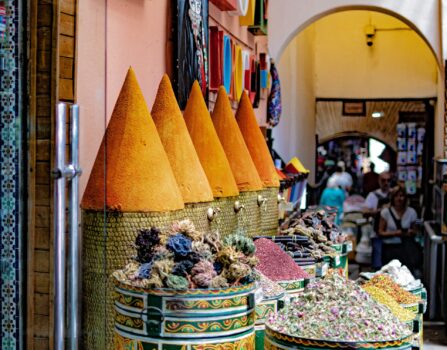
Among the maze-like alleys of Marrakech’s old city, one passage stands out for its color, rhythm, and history, Souk Semmarine. This main artery of the Medina begins near Jemaa el-Fna Square, guiding visitors into a world of craftsmanship and scent, where centuries of trade continue under arches of ochre and light.
A Gateway into the Old Soul of Marrakech
Souk Semmarine forms the grand entrance to the labyrinth of markets that define Marrakech’s identity. Merchants have gathered here since the 11th century, when caravans crossed the desert from Timbuktu loaded with salt, gold, and fabrics. The name Semmarine comes from “saddlemakers,” recalling the artisans who once crafted saddles and leather goods for travelers and soldiers.
Today, the souk remains one of the most active areas of the Medina. Locals walk side by side with travelers, bargaining for slippers, spices, and silver jewelry. The hum of voices, the metallic rhythm of hammering, and the faint fragrance of cedar wood blend into a soundtrack that belongs only to Marrakech.
Where Color Never Sleeps
A stroll through Souk Semmarine feels like walking through a living painting. Sunlight filters through wooden slats overhead, casting shifting patterns on piles of wool, silk scarves, and woven rugs. Brass lamps hang from stalls like captured stars. Each corner hides a surprise, a calligrapher painting names in Arabic script, a perfume seller blending oils, a tailor measuring cloth by instinct.
This sensory richness defines the souk’s charm. The display may appear chaotic, yet every stall carries its rhythm and story. Sellers know their craft deeply, often inheriting their trade from parents and grandparents. A carpet vendor can explain patterns that tell tribal origins, while a spice merchant might mix an old family blend of ras el hanout, a signature Moroccan seasoning with more than twenty ingredients.
Related: Inside Marrakech’s Medina: The Streets That Still Whisper History
Tradition Woven with Adaptation
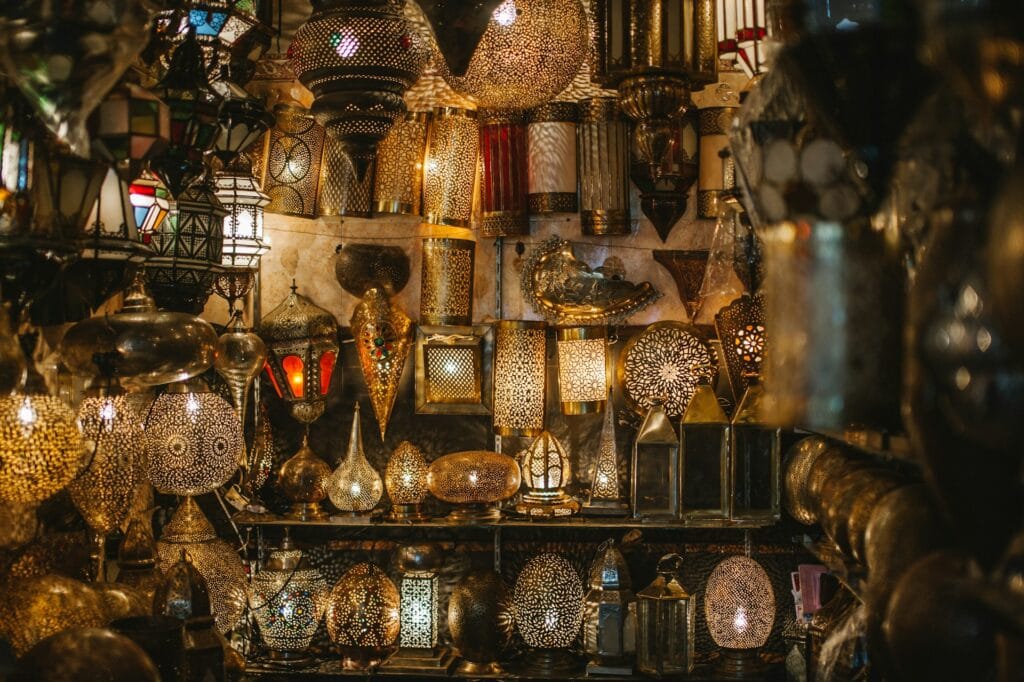
Despite centuries of change, Souk Semmarine remains loyal to its roots. The structure of the market, with its covered lanes and narrow layout, still follows medieval city design. However, adaptation breathes quietly within its walls. Some stalls now display handcrafted handbags or modern jewelry aimed at international visitors, while others stay dedicated to time-honored trades such as brasswork, ceramics, and embroidered textiles.
This balance between old and new defines Marrakech’s enduring success as a cultural crossroads. The souk never freezes in time, it evolves, guided by the same creativity that shaped it long ago.
Voices of the Market
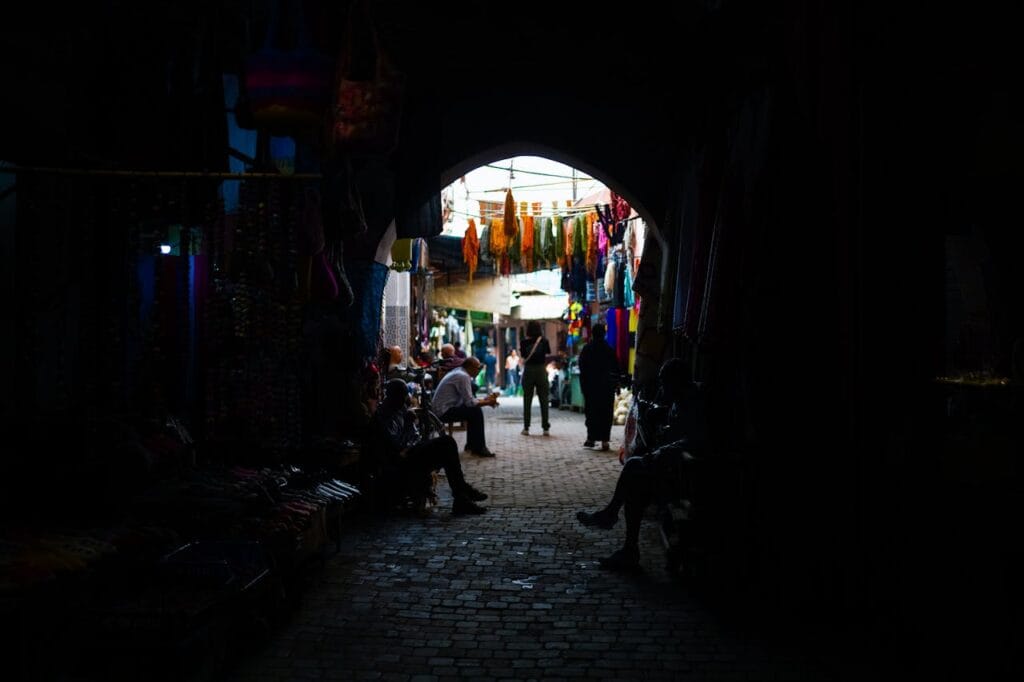
Beyond the goods and colors, the human element gives Souk Semmarine its pulse. Vendors greet customers with warm humor and theatrical enthusiasm. Bargaining becomes conversation rather than conflict; smiles and patience carry more power than numbers. Many merchants take pride in explaining the stories behind their products, transforming a simple purchase into a connection between cultures.
Visitors often find that buying something small (a pair of babouches, a pouch of saffron, or a brass trinket) brings home more than a souvenir. It carries the memory of exchange, sound, and shared laughter beneath the sun-dappled roof of the souk.
A Journey Worth Taking Slowly
To experience Souk Semmarine fully, slow down. Let the crowd flow around you. Observe how light changes through the day, how the aroma of grilled meat drifts from nearby food stalls as evening arrives. Walk beyond the main path toward smaller alleys where craftsmen still work by hand. Every direction offers another layer of discovery.
Related: