Photo by Henrik Le-Botos via Pexels
Before the sun rises high enough to command the desert, Merzouga exists in a rare state of calm. The air is cool, the silence profound, and the vast expanse of sand seems to hold its breath. In these early hours, at the edge of the Sahara Desert, the world slows down to a pace set by nature alone.
Merzouga mornings are not loud or dramatic. They unfold gently, almost shyly, as light begins to touch the dunes. It is a moment reserved for those willing to wake early, step outside, and observe rather than rush.
The First Light Over Erg Chebbi
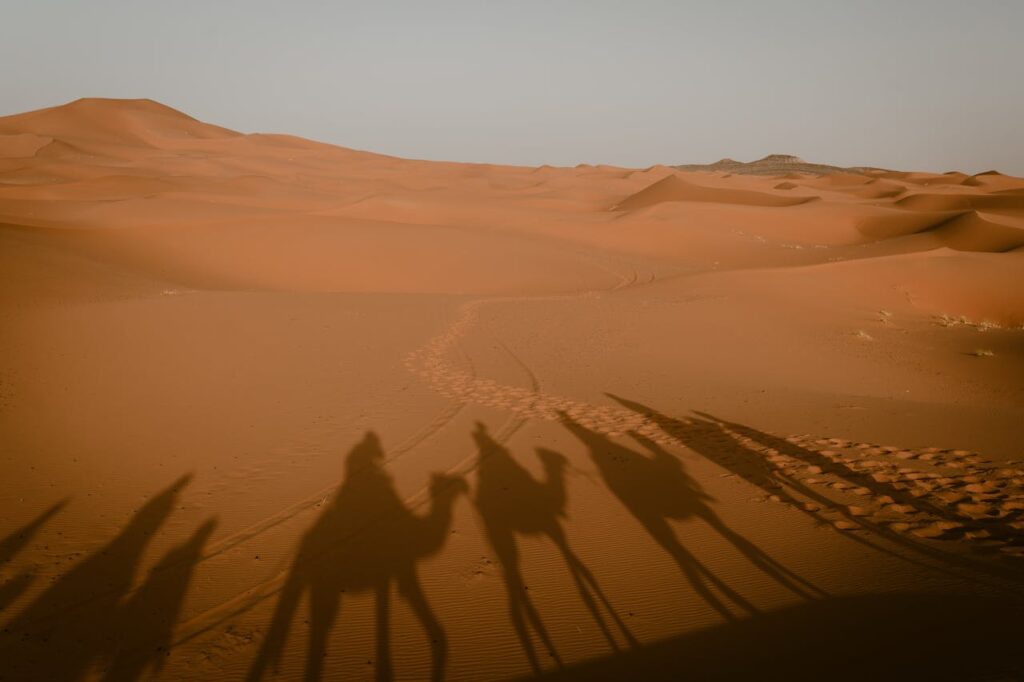
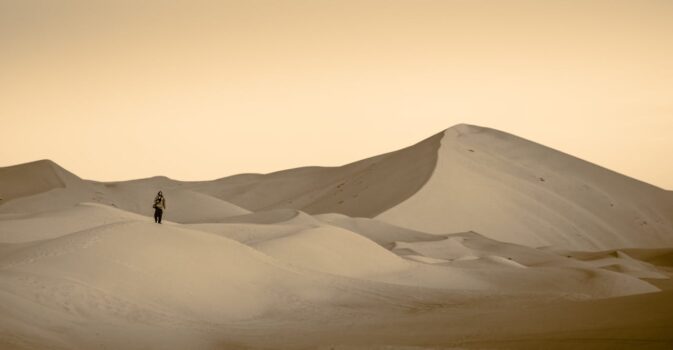
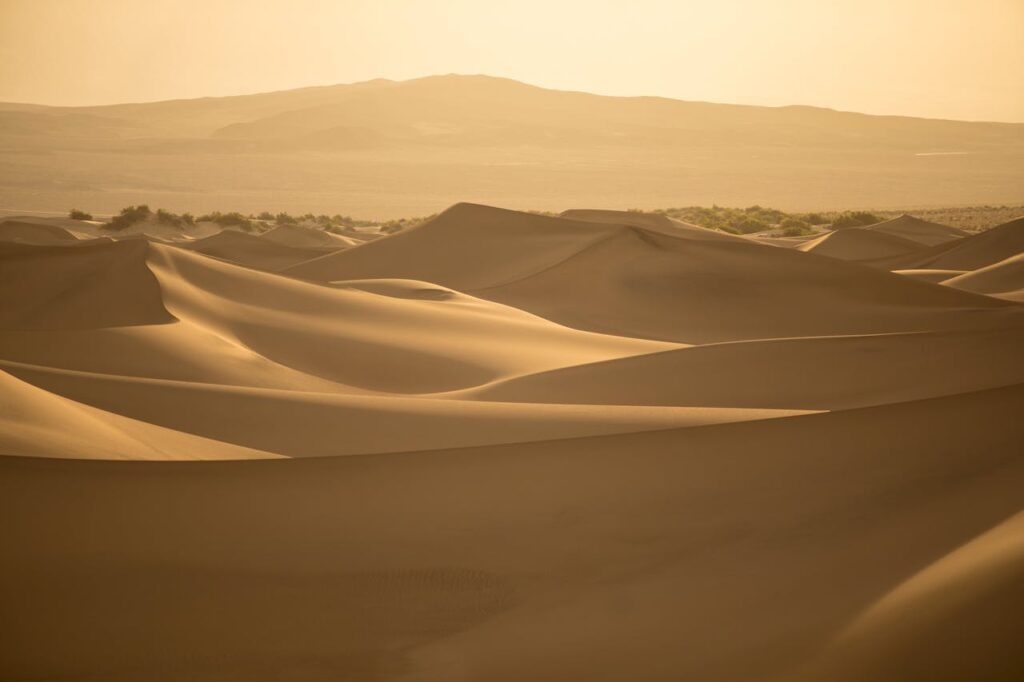
Merzouga’s magic lies in its proximity to Erg Chebbi, one of Morocco’s most iconic dune systems. Before sunrise, the dunes appear cool and sculptural, their curves defined by moonlight and shadow. As the sun emerges, the sand transforms—deep browns soften into copper, then into glowing gold.
The desert does not change all at once. Light creeps across the dunes in waves, revealing textures shaped overnight by the wind. Each ridge casts a long shadow, creating a landscape that feels both infinite and intimate. Standing atop a dune at this hour offers a perspective that feels almost unreal, as if the Sahara itself is slowly revealing a secret.
Silence as an Experience
What defines Merzouga mornings most is silence. Not the absence of sound, but a quiet so complete that even the smallest noise becomes noticeable. The soft crunch of sand beneath your feet, a distant call from a desert bird, the faint rustle of wind—these are the sounds of the Sahara at rest.
In a world saturated with constant noise, this silence feels almost sacred. Visitors often find themselves instinctively lowering their voices, as though speaking too loudly would disturb the balance of the moment. It is not uncommon for travelers to sit alone on a dune, doing nothing more than watching the sun rise, fully present in the stillness.
A Different Rhythm of Life
As daylight strengthens, life in and around Merzouga begins to stir. Desert camps awaken slowly. There is no rush, no alarms, no traffic. Breakfasts are simple and unhurried, often enjoyed outdoors with views stretching endlessly across the dunes.
Local nomads may be seen guiding their camels or livestock along familiar paths, silhouettes moving steadily against the sand. These quiet routines are part of a rhythm that has existed long before tourism arrived, shaped by the realities of desert life rather than the clock.
Unlike the evenings, when camel treks, music, and campfires bring energy to the dunes, mornings belong to contemplation. They invite observation rather than activity.
A Photographer’s Golden Hour
For photographers, Merzouga mornings are a gift. The low-angle light creates depth, contrast, and warmth that is impossible to replicate later in the day. The dunes become living forms, constantly shifting in color and shape as the sun rises.
But even without a camera, the visual impact is striking. The Sahara in the morning feels raw and untouched, stripped of distractions. It is easy to understand why artists, writers, and filmmakers have long been drawn to this landscape.
The Emotional Pull of the Desert
Beyond its beauty, Merzouga mornings leave a lasting emotional impression. There is something grounding about the desert at dawn. Its vastness puts things into perspective, reminding visitors how small individual concerns can feel in the face of something so ancient and enduring.
Many travelers describe a sense of clarity during these early hours—a mental stillness that mirrors the physical calm of the dunes. The Sahara does not demand attention; it simply exists, allowing those who visit to reflect, reset, and breathe.
Why Merzouga Mornings Stay With You
Long after the sun climbs higher and the heat begins to rise, the memory of Merzouga’s mornings lingers. It is not just the colors or the silence, but the feeling of being fully present in a place that operates on its own terms.
Whether experienced from a remote desert camp or the edge of the village, mornings in Merzouga reveal a side of Morocco that is elemental and timeless. When the Sahara glows gold and still, it offers something increasingly rare in modern travel: space to slow down, listen, and simply be.
Related:
- Discover Merzouga: Your Gateway to the Magical Sahara Desert in Morocco
- 5 Snow Destinations to Visit in Morocco: Discover the Country’s Winter Side
- Marrakech and Merzouga Fully Booked for New Year’s Eve as Reservations Hit Record Levels
- Morocco Strengthens Its Position on the Indian Tourism Market at OTM 2026