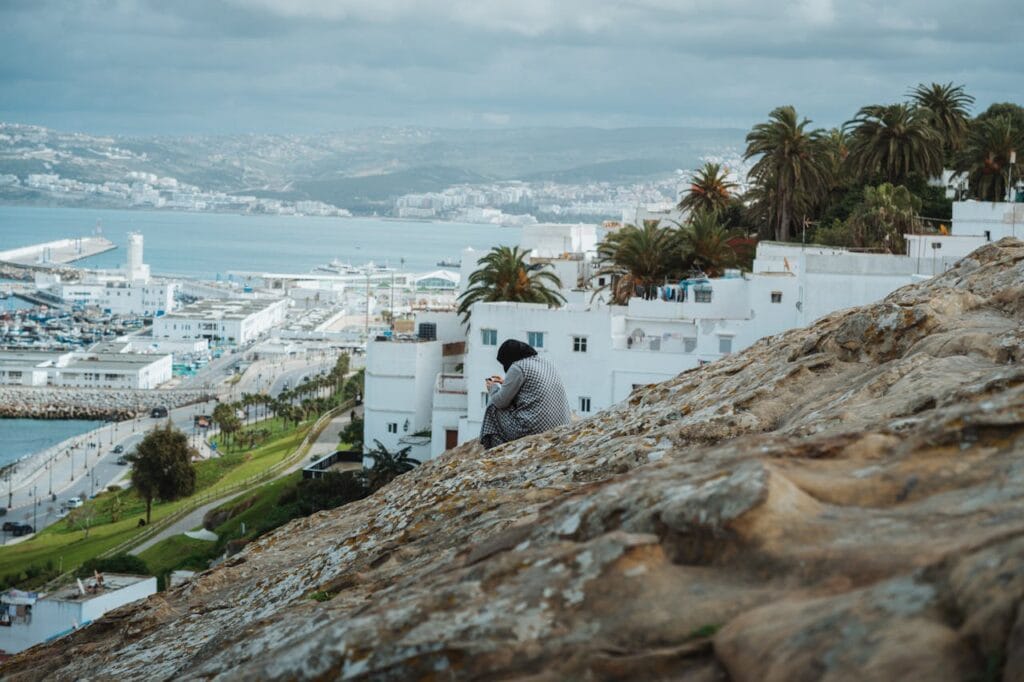
Photo by Hamza Yaich, via Pexels
A Fortress Above the Blue
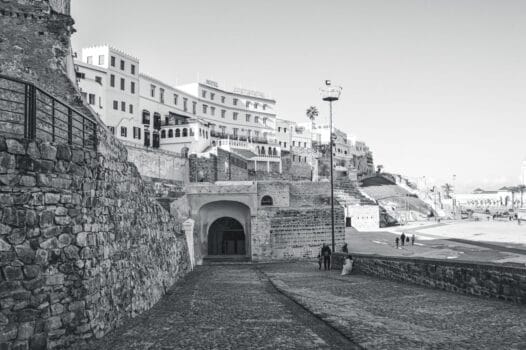
High above Tangier’s port, where the Mediterranean meets the Atlantic, the Kasbah stands like a crown of white stone. It has watched centuries unfold, Phoenicians, Portuguese, sultans, and spies, yet its calm remains. Step through its arched gate near the Place du Méchouar and you feel an instant change: the noise of the lower medina fades, replaced by gulls, sea wind, and the slow rhythm of old walls that have seen everything.
The Kasbah stands as more than the city’s historic core, it embodies Tangier’s soul itself. Every turn unveils a view that artists and photographers have pursued for decades: sunlit alleys, carved wooden doors, and the shimmering line of the Strait of Gibraltar where two continents nearly meet.
A Muse for Generations
For more than a century, Tangier’s Kasbah has magnetized artists like a compass to the north. The painter Henri Matisse arrived in 1912 and filled his sketchbooks with pastel facades and blue shadows. He later wrote that the city’s light “had no equal.” Years later, Delacroix, Paul Bowles, Tennessee Williams, and even Barbara Hutton found the same inspiration in this hilltop world between myth and reality.
Their fascination was simple yet deep, nowhere else in Morocco does light behave this way. The sea reflects onto whitewashed walls, tinting them in shades that shift with each hour: pearl in the morning, gold at noon, indigo at dusk. Every corner feels composed for a canvas. Even travelers who have never held a brush find themselves reaching for a camera, trying to catch what refuses to stay still, that floating Tangier light.
Streets That Whisper Stories
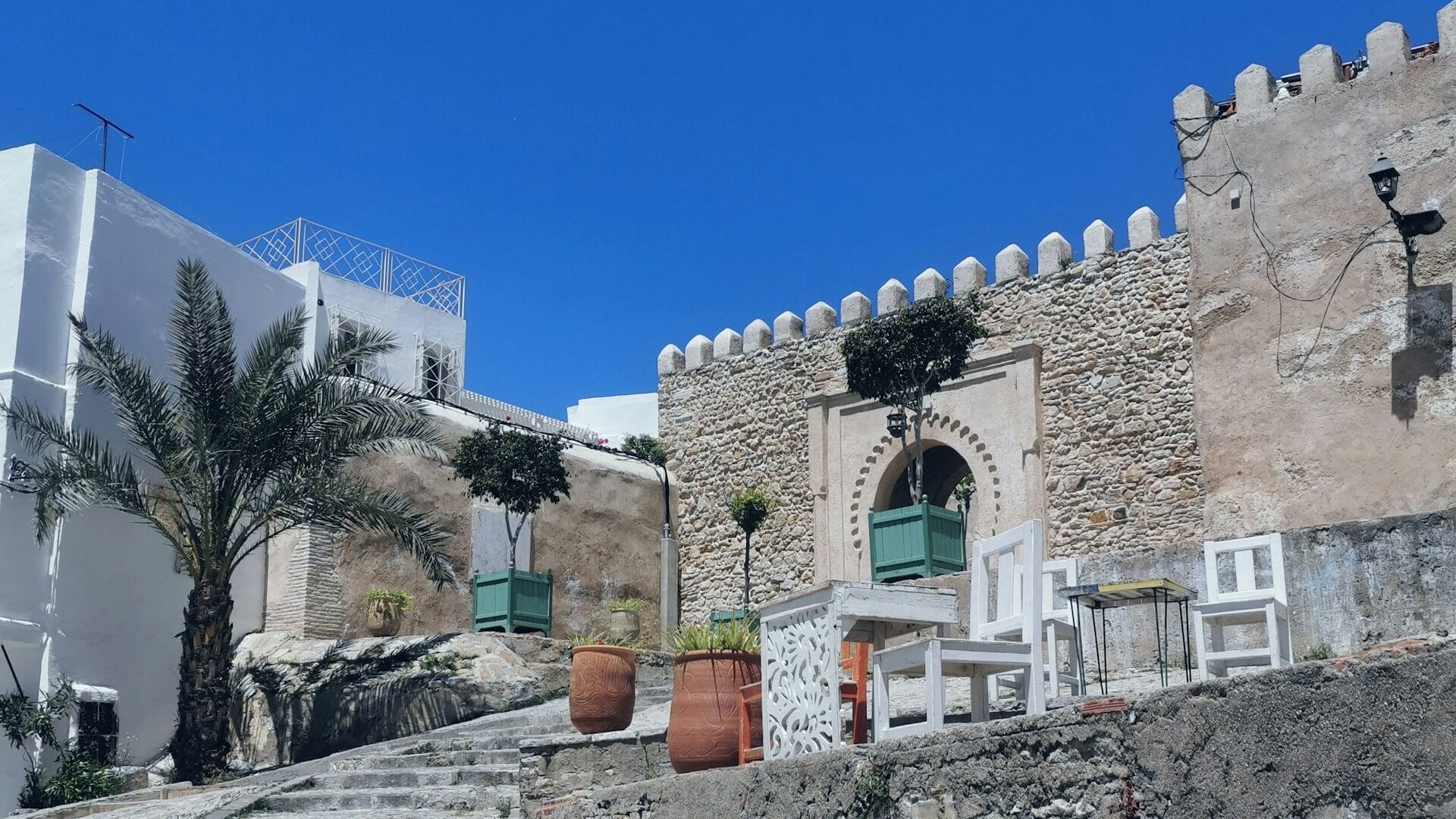
Inside the Kasbah, time bends. Narrow lanes climb and twist toward Dar el-Makhzen, the former sultan’s palace turned museum. Along the way, cats nap on stone steps while artisans sell ceramics and woven rugs beneath vine-draped arches. From terraces, the air carries the scent of mint tea and sea salt.
Locals move at a pace that feels protective, not slow, but deliberate. They live with the awareness that every sound echoes off walls older than memory. Sit at a small café overlooking the Strait, and you’ll see why writers called Tangier a “city of beginnings.” Ships cross below, gulls wheel above, and the world seems both near and far.
The Kasbah Today: Living Heritage
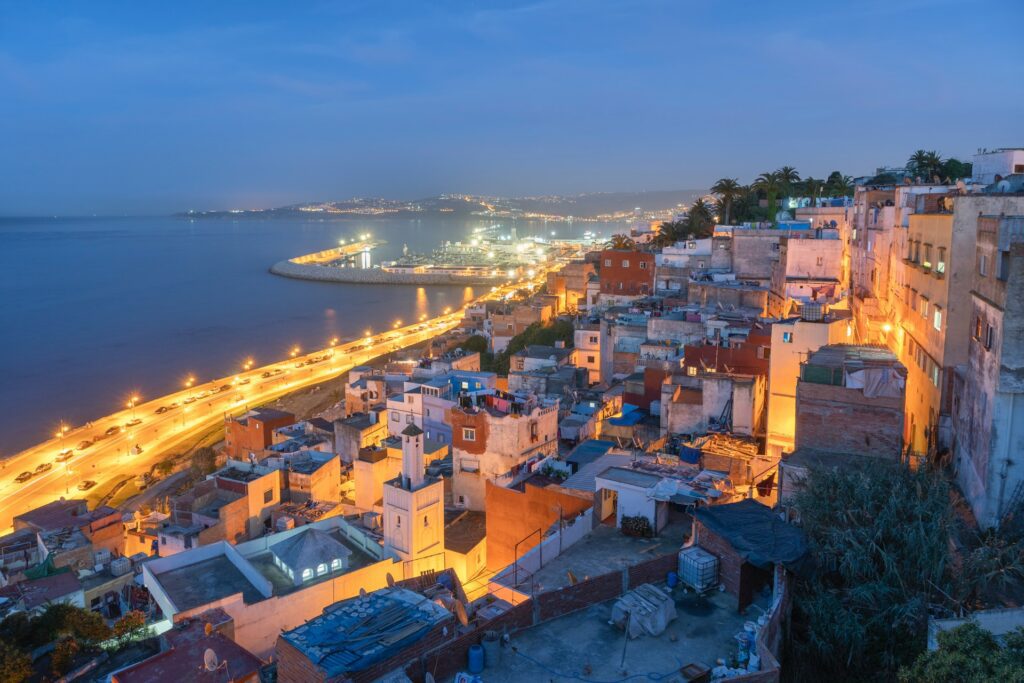
While parts of the Kasbah have become tourist landmarks, much of it remains a living neighborhood. Families hang laundry between balconies, children play soccer in tiny squares, and neighbors greet each other in Darija and Spanish. Some of the old riads have been restored into guesthouses, their terraces offering the same panoramic views that once inspired legends.
Artists still come, but now they carry tablets and drones instead of sketchbooks. The new generation finds in Tangier’s old quarter the same eternal balance of chaos and calm, a creative space shaped by geography and emotion alike.
Where to Find the Best Views
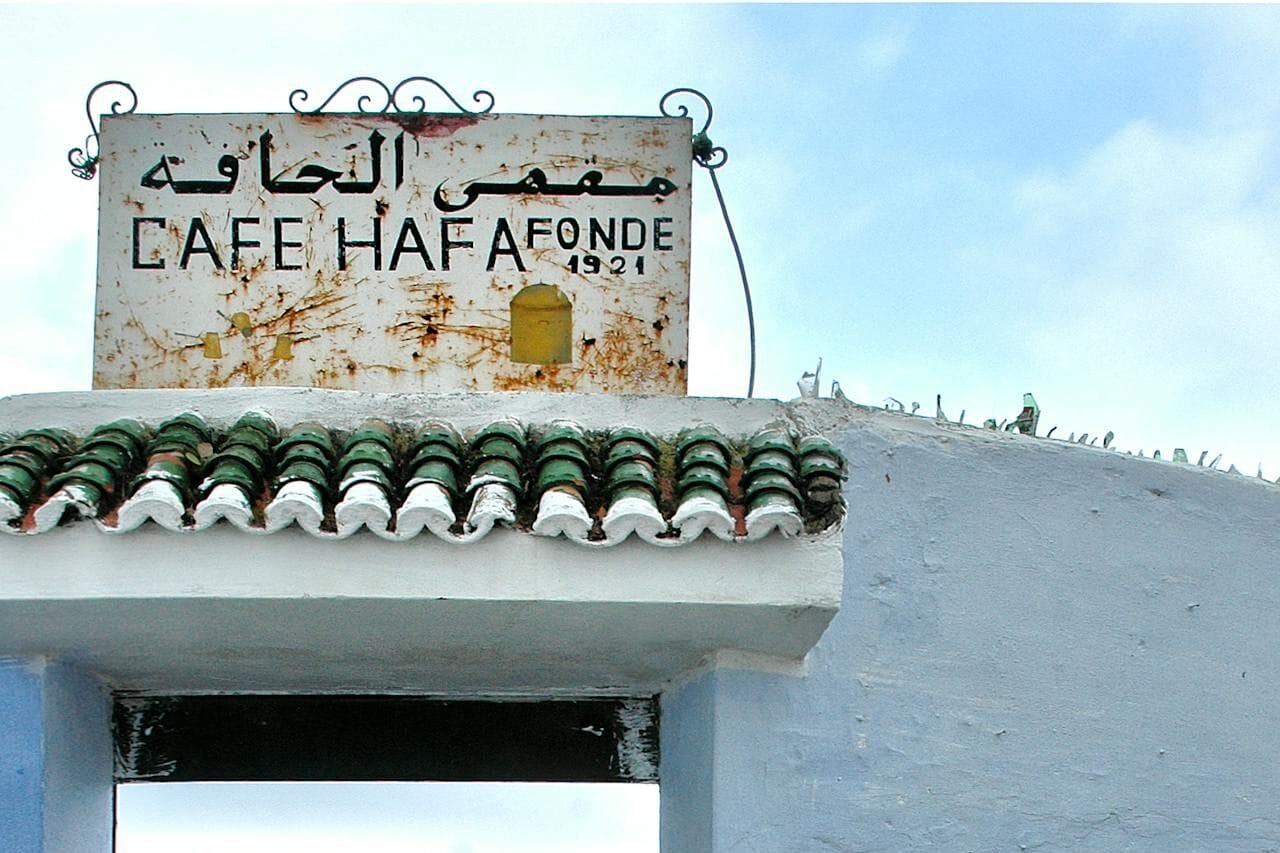
- Café Hafa: Technically below the Kasbah but inseparable from its legend. Since 1921, this cliffside café has hosted poets, musicians, and dreamers. The tea, poured into small glasses, tastes sweeter when the sun sets over the sea.
- Dar Nour Terrace: A boutique guesthouse offering a 360-degree panorama of Tangier, from the port to the mountains.
- Borj al-Hajoui: A quiet lookout point on the Kasbah’s edge, perfect for sunrise photography.
- Dar el-Makhzen Courtyard: Best at mid-morning when light floods the arches and the Strait glitters like mercury.
Why Artists Still Return
Tangier’s Kasbah continues to seduce because it feels timeless yet alive. It doesn’t belong to the past, it contains the past, protecting it amid the city’s modern rhythm. Artists once came searching for exotic beauty; now travelers come seeking authenticity. What they find is the same unfiltered truth: a meeting of sky, sea, and human imagination.
To stand on a Kasbah terrace, facing the horizon where Africa and Europe nearly touch, is to understand why so many fell in love with Tangier, and why none of them ever truly left.
Related: