On Morocco’s Atlantic edge, Essaouira lives to a rhythm shaped as much by nature as by history. Wind whistles through its white-and-blue streets, waves crash against centuries-old ramparts, and music.. deep, hypnotic, and ancestral, rises from courtyards and festival stages. Essaouira is not simply a coastal city; it is a state of mind, where the Atlantic breathes life into Gnawa rhythms and every gust seems to carry a story.
A City Written by the Wind
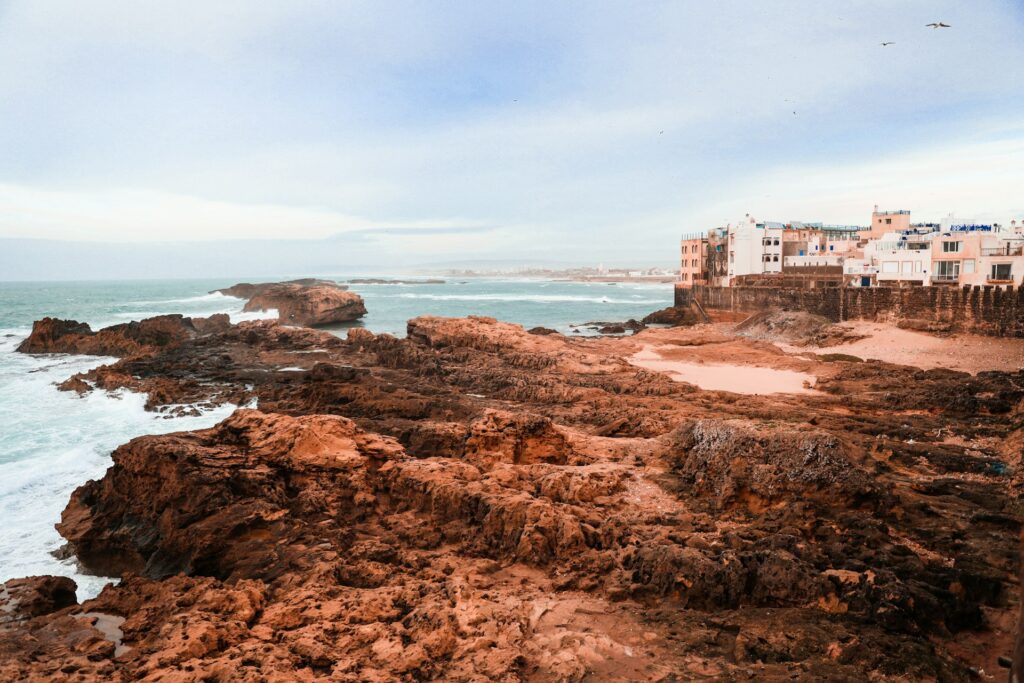
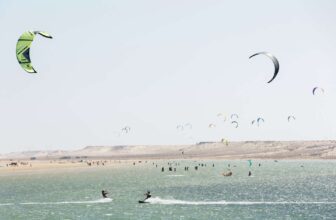
The wind defines Essaouira before anything else. Known locally as the alizé, it blows almost year-round, cooling summer heat and giving the city its famously mild climate. This constant breeze shapes daily life: fishermen time their outings to calmer mornings, café owners angle their terraces for shelter, and surfers and kitesurfers flock to the bay, turning the ocean into a moving canvas of sails and boards.
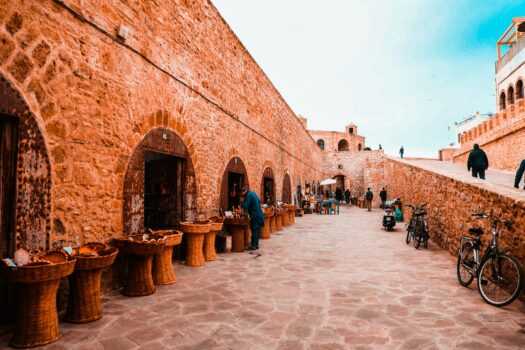
Architecturally, the wind influenced everything. Thick walls, narrow streets, and fortified ramparts were designed not only for defense but also to resist the Atlantic elements. Walk along the Skala de la Kasbah and you feel it immediately, the wind pushing against you, the ocean roaring below, and the sense that Essaouira has always been in dialogue with the sea.
Related: Essaouira travel guide: transport, hotels, food, festivals, weather, and local tips
Gnawa Music: Memory Turned into Sound
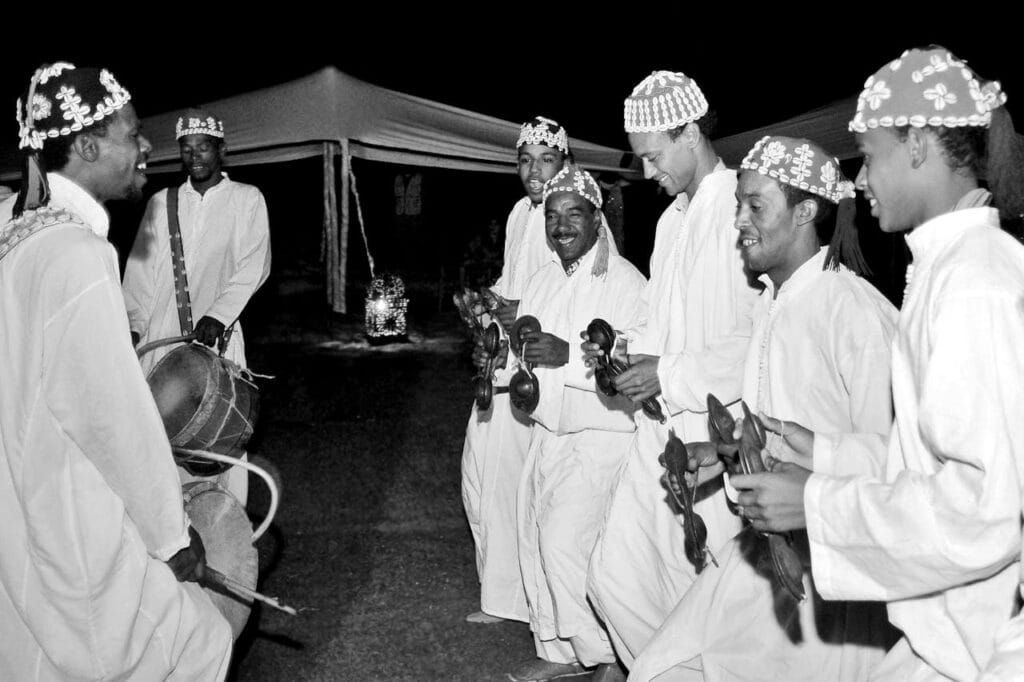
If the wind is Essaouira’s breath, Gnawa music is its heartbeat. Rooted in the spiritual traditions of sub-Saharan Africans brought north centuries ago, Gnawa is both music and ritual. Its core instruments, the three-stringed guembri and the metallic qraqeb, create a trance-like sound meant to heal, remember, and connect.
In Essaouira, Gnawa music found fertile ground. The city’s long history as a port made it a meeting point of cultures, beliefs, and sounds. Over time, Gnawa rhythms blended naturally with jazz, blues, rock, and world music influences. This openness reached global recognition through the annual Gnawa and World Music Festival, where traditional maâlems share stages with international artists, proving that ancient music can remain alive by evolving.
Yet Gnawa in Essaouira is not limited to festival stages. On quiet nights, you might hear it drifting from a modest house in the medina or echoing softly from a seaside square, unannounced, intimate, and deeply human.
Related: Gnaoua and World Music Festival 2026: Morocco’s Cultural Heartbeat in Essaouira
The Medina: Order, Light, and Salt
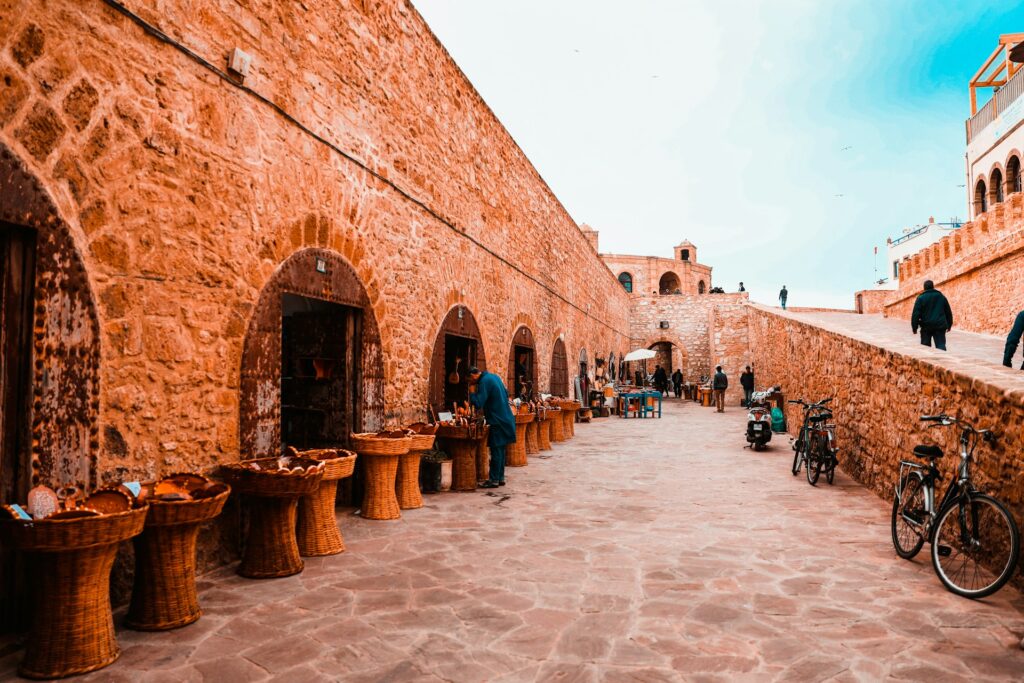
Unlike the labyrinthine medinas of Fez or Marrakech, Essaouira’s old city follows a grid plan designed in the 18th century. This European-influenced layout gives the medina an unusual sense of openness. Sunlight reaches deeper into the streets, and the ocean breeze moves freely between buildings, carrying the smell of salt and wood.
Art defines much of the medina’s soul today. Painters, sculptors, and photographers have long been drawn to Essaouira’s light, soft, diffused, and constantly changing. Thuya wood artisans carve intricate boxes and instruments, while small galleries display works inspired by the sea, Gnawa culture, and everyday life. Here, creativity feels less like a profession and more like a natural response to place.
Related: Essaouira Celebrates the Spirit of Andalusian Harmony
The Port: Raw, Loud, and Real
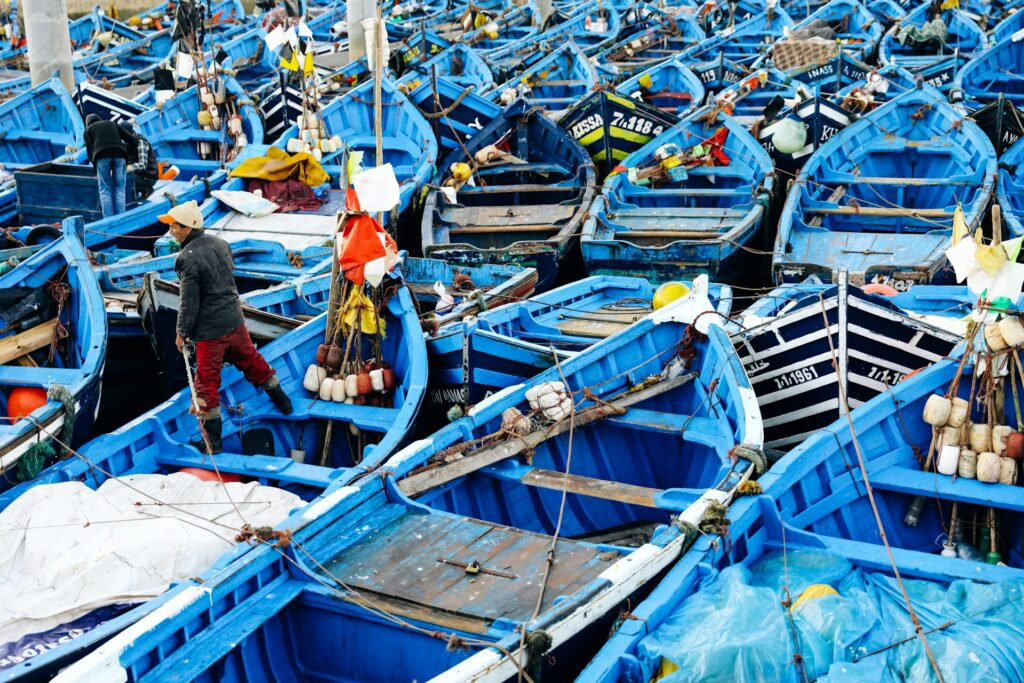
Down by the fishing port, Essaouira shows its most unfiltered face. Blue wooden boats crowd the harbor, nets are piled high, and the air buzzes with shouting, seagulls, and the scent of grilled fish. Sardines, Essaouira’s staple, sizzle on open flames, served moments after being pulled from the water.
This is not a polished attraction; it’s a working port where tradition continues uninterrupted. Watching fishermen unload their catch as waves crash nearby offers a reminder that the city’s beauty is inseparable from labor and routine.
Where Music Meets Surf Culture
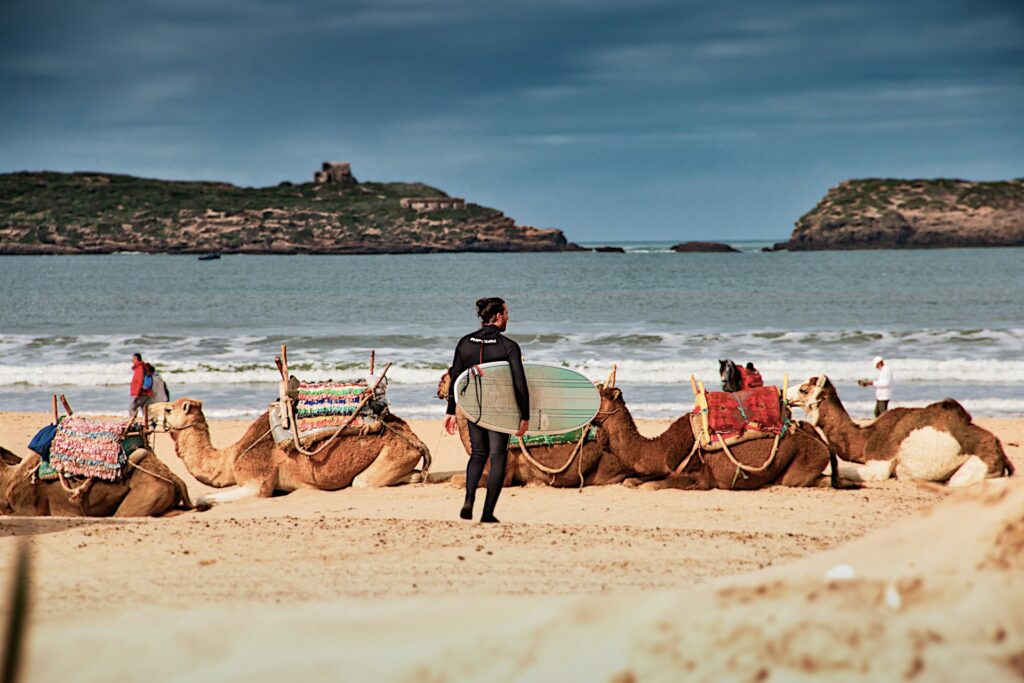
One of Essaouira’s most distinctive traits is how seamlessly different worlds coexist. A Gnawa musician can finish a late-night performance and, the next morning, watch kitesurfers dance across the bay. Travelers who come for music often stay for the ocean; surfers who arrive for wind end up discovering rhythms older than the ramparts.
As evening falls, the city slows. The wind softens, cafés glow with warm light, and conversations stretch late into the night. Sometimes a drum appears. Sometimes a song. In Essaouira, culture doesn’t need an invitation, it simply happens.
A Soul That Refuses to Be Rushed
Essaouira resists urgency. It encourages wandering without destination, listening without expectation, and staying longer than planned. Its soul lies in balance: between Africa and the Atlantic, tradition and experimentation, silence and sound.
In a Morocco racing toward the future, Essaouira remains intentionally unhurried. The wind will keep blowing. Gnawa rhythms will keep pulsing. And the Atlantic will continue to meet the city’s walls, writing the same story in new ways, every single day.