From Scarcity to Sustainable Power
Royal Vision for a Water-Secure Morocco
Under the visionary leadership of King Mohammed VI, Morocco has placed water at the heart of its national strategy for sustainable development. Recognizing the critical importance of this resource for the country’s economic and social stability, the King has repeatedly called for urgent and innovative measures to preserve water and ensure fair access for all regions.
In his royal speeches, King Mohammed VI emphasized that “water security is not only a matter of environment, but a pillar of sovereignty and human dignity.” This clear vision has guided Morocco toward a new model of integrated water governance based on efficiency, solidarity, and sustainability.
The 2030 Water Strategy: From Vision to Action
Morocco’s National Water Plan 2020–2050 and the Water Security Strategy 2030 aim to secure the country’s water needs through large-scale investments and smart management. The plan focuses on three main pillars:
- Expanding Desalination: Morocco is building one of Africa’s largest desalination networks, including plants in Agadir, Casablanca, and Dakhla, powered by renewable energy.
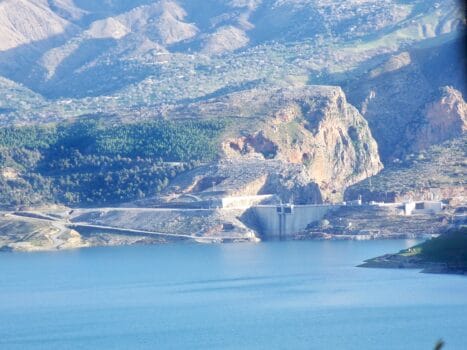
- Modernizing Dams and Reservoirs: Over 150 dams are already operational, with new projects designed to optimize water storage, reduce evaporation, and strengthen inter-regional water transfer.
- Efficient Use and Reuse: Advanced irrigation systems, wastewater recycling, and digital monitoring are helping reduce waste and secure water for agriculture and industry.
Facing Climate Challenges with Innovation
Morocco’s semi-arid climate and recurrent droughts have pushed the country to adopt a proactive approach. New technologies, such as smart irrigation, drone-based monitoring, and AI-driven water management, are transforming the way resources are controlled and distributed.
The government also encourages local communities and private sectors to engage in water-saving initiatives, aligning national policies with regional and agricultural realities.
Desalination: The Future of Fresh Water
One of Morocco’s flagship projects is the Casablanca-Settat Desalination Plant, expected to become one of the largest in the world, producing over 300 million cubic meters of water annually. By coupling these plants with solar and wind energy, Morocco is pioneering a sustainable approach that reduces both water scarcity and carbon emissions.
Water security and Human Development
Access to clean water remains central to social progress. The royal vision ensures that rural areas, small towns, and agricultural zones are not left behind. Through the National Program for Drinking Water and Irrigation (PNAEPI 2020–2027), Morocco aims to provide equitable access to water across all regions, fostering local development and improving quality of life.
A Model for Africa
Morocco’s experience in water governance is now being studied and emulated across the African continent. By combining strong political will, royal guidance, and technological innovation, the Kingdom stands as a model for countries facing similar environmental challenges.
The water security strategy demonstrates that sustainability is not just a policy, it’s a national culture, driven from the highest level of the state.