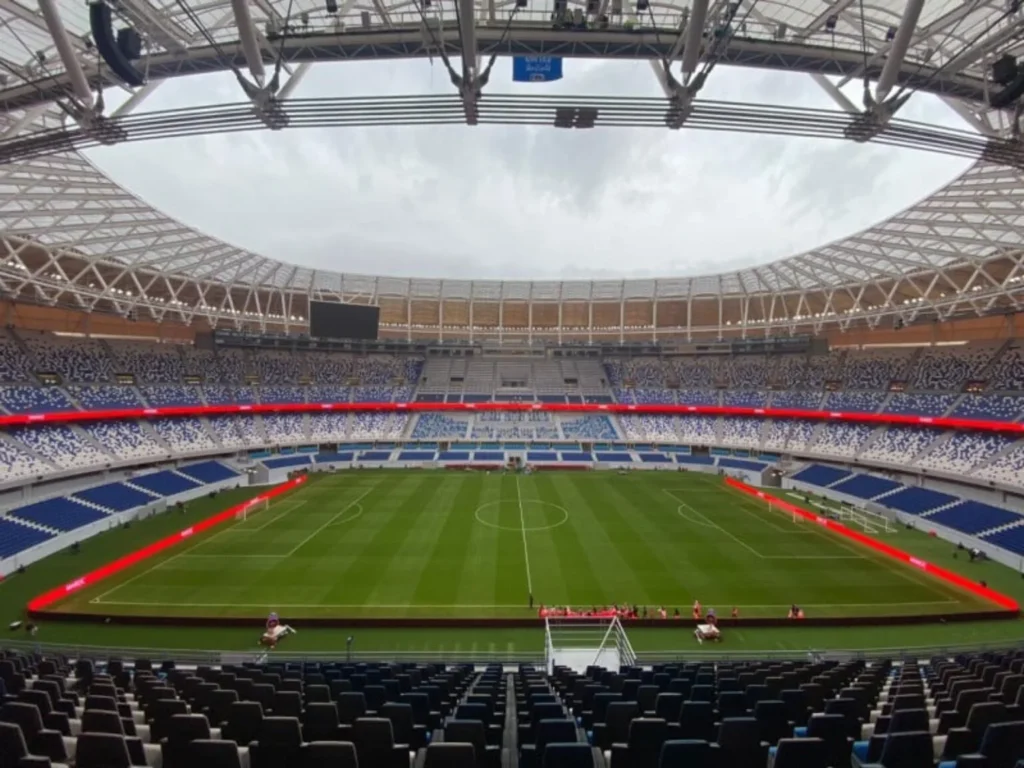
Tangier Grand Stadium after renovation. Photo Credit: SNRTNews
Morocco continues to reinforce its global football ambitions with the complete transformation of the Grand Stadium of Tangier, now fully aligned with FIFA standards ahead of the 2030 FIFA World Cup. This large-scale renovation positions Tangier as a strategic hub for international competitions, strengthening the Kingdom’s readiness to host major sporting events on a global scale.
Beyond its architectural upgrade, the stadium reflects Morocco’s long-term vision: combining world-class infrastructure, advanced technology, and premium fan experiences to deliver one of the most modern football venues in Africa and the Mediterranean region.
Increased Capacity and Global Positioning
The newly renovated stadium now boasts a capacity of 75,500 spectators, making it one of the largest stadiums on the continent. This expansion reinforces Tangier’s role as a key destination for major tournaments, including AFCON 2025 and the 2030 World Cup.
The main grandstand includes:
- 210 VIP seats with premium visibility
- 1,300 hospitality seats for official guests and partners
- Optimized sightlines and enhanced spectator comfort
This upgrade significantly improves match-day experience while meeting FIFA’s strict requirements for international competitions.
Premium Hospitality and VIP Experience
The stadium introduces a new level of luxury with VIP and VVIP lounges designed for sponsors, officials, and high-profile guests. A total of 142 private boxes are distributed across three levels, each accommodating between 10 and 20 guests.
These spaces provide:
- Private seating with panoramic pitch views
- Exclusive catering and services
- High-end comfort for corporate and international audiences
This transformation aligns Tangier with global stadium standards seen in Europe and major World Cup venues.
Advanced Media and Broadcasting Infrastructure
To support international broadcasting and media coverage, the stadium now includes a fully modernized press infrastructure:
- A press conference hall for 210 journalists
- Dedicated media zones and technical operation rooms
- Enhanced camera positions for optimal match coverage
- High-speed connectivity for live broadcasting
These improvements ensure seamless coverage for global audiences, reinforcing Morocco’s image as a reliable host for international sporting events.
World-Class Player and Team Facilities
The renovation places strong emphasis on player performance and recovery. The stadium now features:
- Four modern dressing rooms
- Recovery zones with cryotherapy facilities
- Massage and physiotherapy rooms
- Warm-up and training areas
- A 500 m² mixed zone for media interactions
Additional facilities include coaches’ offices, medical units, and optimized logistics areas, ensuring a professional environment for teams and staff.
Security, Smart Technology and Fan Experience
Security and innovation are at the core of the stadium’s transformation. The venue is equipped with:
- Nearly 900 surveillance cameras covering all zones
- Facial recognition systems to enhance safety
- Two giant LED screens of 220 m² each
- A 700-meter digital ribbon surrounding the stadium
These features not only improve security but also elevate the overall fan experience through immersive visuals and real-time content.
Accessibility and Transport Infrastructure
Accessibility has been significantly upgraded to handle large crowds efficiently. The stadium now includes:
- A VIP parking area of 10,000 m² for 400 vehicles
- Priority parking for 600–700 cars
- General parking exceeding 3,000 vehicles
- Elevators and dedicated access for people with reduced mobility
These improvements ensure smooth traffic flow and better accessibility for all spectators, aligning with international standards for inclusive infrastructure.
A Strategic Asset for AFCON 2025 and World Cup 2030
The Tangier Grand Stadium is more than a sports venue—it is a cornerstone of Morocco’s broader strategy to leverage football as an economic and diplomatic driver. As the country prepares to co-host the 2030 FIFA World Cup alongside Spain and Portugal, such infrastructure plays a vital role in boosting tourism, attracting investment, and strengthening global visibility.
With AFCON 2025 serving as a key testing ground, the stadium will showcase Morocco’s organizational excellence and readiness to deliver world-class events.
Morocco’s Vision: Infrastructure Meets Ambition
The transformation of Tangier’s flagship stadium reflects a deeper national ambition: positioning Morocco among the world’s leading football destinations. Combined with investments in transport, hospitality, and urban development, the project highlights a coordinated approach to long-term growth.
As global attention turns toward Morocco in the coming years, the Tangier Grand Stadium stands as a symbol of modernity, ambition, and readiness—an arena built not just for matches, but for history.
Related Reads on MoroccoBeat
- From King Hassan II’s Vision to Morocco’s 2030 World Cup Reality
- Casablanca’s Mega Projects for AFCON 2025 and World Cup 2030
- Prince Moulay Abdellah Stadium: Morocco’s New Football Jewel
MoroccoBeat – Inspiring Stories, Positive Energy, Proudly Moroccan.