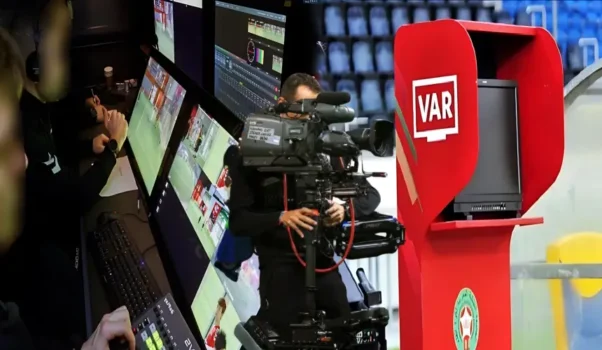
The Royal Moroccan Football Federation (FRMF) and SNRT have signed a landmark agreement introducing strict broadcast technical standards aimed at reducing refereeing errors and significantly improving the quality of football coverage in Morocco.
This strategic move comes at a crucial time, as the Kingdom prepares to host major continental competitions, including the upcoming AFCON 2025. By strengthening VAR integration, enhancing image quality, and securing match archiving systems, Morocco is positioning itself among the most advanced football broadcasting ecosystems in Africa.
Why This Reform Matters for Moroccan Football
In recent years, debates around refereeing decisions and inconsistent broadcast quality have intensified across African football. Limited camera angles, insufficient replay clarity, and poor VAR coordination have often led to controversial outcomes.
By enforcing new technical standards, the FRMF aims to:
- Improve transparency in refereeing decisions
- Strengthen VAR efficiency and reliability
- Enhance the viewing experience for fans
- Align Moroccan football with international broadcast standards
This initiative reflects a broader modernization strategy within Moroccan football governance, combining infrastructure, technology, and institutional reform.
New Broadcast Technical Standards Explained
The agreement introduces a comprehensive set of mandatory requirements for all official match broadcasts in Morocco.
1. Super Slow Motion Cameras (≥ 75 fps)
Broadcasters must deploy high-performance cameras capable of recording at a minimum of 75 frames per second. This allows ultra-precise slow-motion replays, essential for analyzing key moments such as:
- Offside decisions
- Penalty incidents
- Fouls and contact situations
Higher frame rates significantly improve the accuracy of VAR decisions by reducing motion blur and frame gaps.
2. Mandatory Camera Coverage & Pre-Match Calibration
Technical teams are now required to arrive well before kickoff to calibrate equipment and ensure optimal positioning.
A minimum number of cameras will be enforced to guarantee full pitch coverage, including:
- Main broadcast cameras
- Goal-line cameras
- Wide-angle tactical views
This ensures that no critical moment goes unrecorded.
3. Advanced VAR Coordination
Camera plans must be submitted in advance to allow seamless integration with VAR systems.
This coordination includes:
- Pre-defined camera angles for VAR review
- Synchronization between broadcast teams and referees
- Real-time communication protocols
This level of preparation reduces delays and improves decision-making consistency.
4. Early Broadcast Marker & Secure Archiving
A broadcast marker (PGM flag) must be delivered at least two hours before kickoff.
This enables:
- Reliable match recording
- Efficient post-match analysis
- Secure storage of official footage
Expected Impact on VAR and Refereeing
The integration of these technical standards is expected to significantly improve VAR performance across Moroccan competitions.
| Area | Before Reform | After Reform |
|---|---|---|
| Replay Quality | Limited clarity | High-definition slow motion |
| VAR Decisions | Occasional inconsistencies | More precise and faster decisions |
| Camera Coverage | Partial | Full pitch coverage |
| Match Archiving | Fragmented | Centralized & secure |
These improvements directly address the root causes of refereeing controversies and elevate the credibility of decisions on the pitch.
Benefits for Fans, Broadcasters and the Football Ecosystem
Enhanced Viewer Experience
Fans will enjoy clearer visuals, smoother replays, and a more immersive broadcast experience comparable to top European leagues.
Stronger Trust in Officiating
With better VAR support and clearer evidence, refereeing decisions become more transparent and easier to accept.
Professionalization of Local Production
Moroccan broadcast teams will gain valuable expertise, raising the overall standard of sports media production in the country.
Preparation for Major Events
These upgrades are essential ahead of major tournaments hosted by Morocco, ensuring compliance with international standards.
Challenges and Implementation Considerations
While the reform is ambitious, its success depends on effective implementation.
- Investment: Upgrading cameras and infrastructure requires significant financial resources
- Training: Technical teams must adapt to new workflows and technologies
- Consistency: Standards must be applied uniformly across all competitions
However, these challenges are outweighed by the long-term benefits for Moroccan football.
A Strategic Step Toward Global Standards
This agreement between the Royal Moroccan Football Federation and SNRT represents a decisive leap forward in the modernization of football broadcasting in Morocco.
By combining technological innovation with governance reform, the Kingdom is strengthening its position as a leading football nation in Africa and beyond.
As Morocco prepares to host major international tournaments, these measures will play a key role in showcasing the country’s capabilities on the global stage.