Morocco is advancing one of its most ambitious infrastructure projects with the development of Nador West Med, a new deep-water port complex on the Mediterranean coast. The project forms a central pillar of the country’s Vision 2030 strategy and reflects a broader effort to strengthen logistics capacity, industrial competitiveness, and global trade integration.
Located near the city of Nador in northeastern Morocco, the port is designed to complement existing infrastructure such as Tanger Med while expanding the country’s role as a strategic maritime hub connecting Europe, Africa, and the Atlantic trade routes. As Morocco prepares for the FIFA World Cup 2030, projects like Nador West Med illustrate how infrastructure investments extend beyond event hosting to support long-term economic transformation.
Nador West Med in Morocco’s National Infrastructure Strategy
The Nador West Med project aligns with Morocco’s broader development framework, which prioritizes logistics infrastructure as a driver of economic growth. The country has already established itself as a key maritime gateway through Tanger Med, one of the largest container ports in the Mediterranean.
By developing a second major port platform, Morocco aims to increase national capacity while diversifying its logistics network. According to official project data, Nador West Med is designed to handle container traffic, energy products, and industrial cargo, which supports both domestic industries and international trade flows.
This expansion of maritime infrastructure complements national transport investments, including highways and high-speed rail, which are detailed in Morocco’s infrastructure masterplan for World Cup 2030.
Project Overview and Technical Specifications
A Deep-Water Port with Industrial Integration
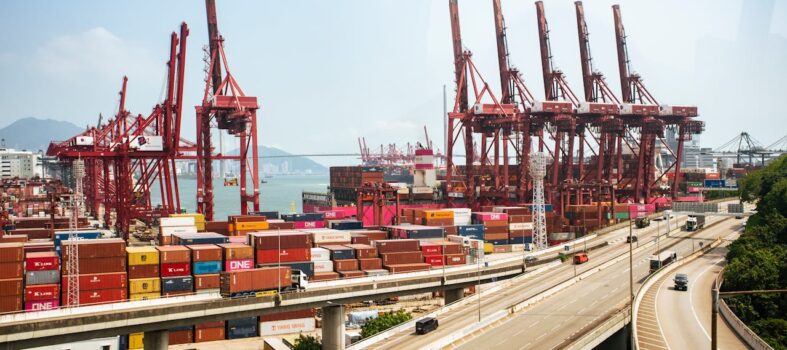
Nador West Med is being constructed approximately 30 kilometers west of Nador along the Mediterranean coastline. The port includes a main basin protected by breakwaters extending several kilometers into the sea, designed to accommodate large container vessels and tankers.
The infrastructure includes multiple terminals dedicated to containers, hydrocarbons, and bulk cargo. According to project authorities, the port will feature container terminals with an initial capacity of around 3.5 million TEUs, along with energy terminals capable of handling refined petroleum products.
The project also integrates an industrial zone adjacent to the port, which will host manufacturing and logistics activities. This integration allows goods to move directly between production facilities and maritime transport systems, reducing logistics costs and improving efficiency.
Strategic Role in Mediterranean and Global Trade
Complementing Tanger Med
Nador West Med is designed to complement the existing Tanger Med port complex rather than compete with it. While Tanger Med focuses heavily on container transshipment and automotive exports, Nador West Med expands capacity for energy logistics and industrial cargo.
This diversification strengthens Morocco’s resilience in global trade by reducing dependence on a single port system. It also allows the country to capture a broader range of maritime activities, including fuel storage and petrochemical processing.
Positioning Morocco as a Logistics Hub
The port’s location near major shipping routes in the western Mediterranean enhances Morocco’s strategic positioning. Ships traveling between Europe, Africa, and the Americas can access Nador West Med as a logistics hub for cargo redistribution.
Once operational, the port will contribute to Morocco’s ambition to become a leading logistics platform connecting multiple continents. This objective aligns with national strategies that integrate ports, railways, and highways into a unified transport network.
Integration With Transport and Industrial Infrastructure
The effectiveness of Nador West Med depends on its integration with inland transport systems. Morocco is investing in road and rail connections that link the port to industrial zones and urban centers.
Highway expansion projects improve connectivity between the eastern region and the rest of the country, as discussed in this analysis of the Rabat-Casablanca continental highway.
At the same time, rail infrastructure plays a critical role in transporting goods efficiently between ports and inland markets. High-speed and freight rail projects, including those examined in this report on Al Boraq expansion, support national logistics integration.
By connecting maritime, road, and rail systems, Morocco is building a multimodal transport network that enhances efficiency and reduces transit times.
Economic Impact and Regional Development
Industrial Growth in Eastern Morocco
The Nador West Med project is expected to transform the economic landscape of eastern Morocco. The adjacent industrial zone will attract investment in manufacturing, energy, and logistics sectors.
As a result, the region will benefit from job creation, infrastructure development, and increased economic activity. The project also supports Morocco’s broader industrial policy, which aims to diversify production and increase export capacity.
Energy Infrastructure and Security
The port includes specialized terminals for hydrocarbons and energy products, which strengthen Morocco’s energy infrastructure. These facilities allow the country to import, store, and distribute fuel more efficiently.
This capability improves energy security while supporting industrial activities that depend on stable energy supplies.
Relevance for World Cup 2030 and Long-Term Development
Although Nador West Med is not directly linked to stadium infrastructure, it plays a critical role in supporting the logistics required for large-scale events such as the FIFA World Cup 2030. Ports handle the import of construction materials, equipment, and goods necessary for infrastructure development.
More importantly, the project reflects Morocco’s long-term development strategy. Infrastructure investments associated with the World Cup are designed to create lasting economic benefits rather than temporary capacity.
Projects like Nador West Med therefore illustrate how Morocco uses global events as catalysts to accelerate structural transformation across multiple sectors.
Conclusion
Nador West Med represents a major milestone in Morocco’s infrastructure development strategy. By expanding its maritime capacity and integrating industrial and logistics systems, Morocco is strengthening its position as a key trade hub in the Mediterranean region.
The project complements existing infrastructure such as Tanger Med while supporting broader investments in highways, railways, and airports. Together, these developments form a coordinated national strategy aligned with Vision 2030 and preparations for the FIFA World Cup 2030.
As construction progresses, Nador West Med will play a central role in shaping Morocco’s economic future by improving trade connectivity, supporting industrial growth, and enhancing national logistics capacity.