
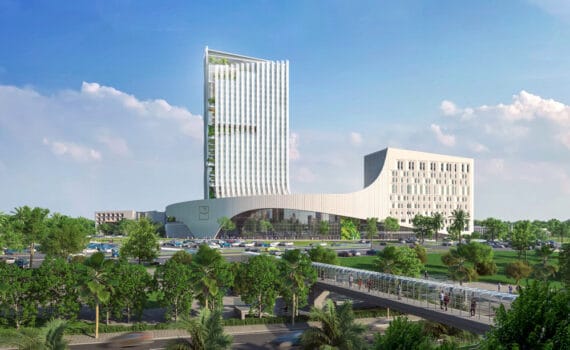
Morocco is entering a new era in healthcare development, marked by massive investments in medical infrastructure across the Kingdom. Just as the country has gained international recognition for building world-class stadiums and successfully hosting major sporting events, Morocco is now applying the same vision, ambition, and determination to strengthen its healthcare system.
A Vision for Accessible and Modern Healthcare
The construction of new hospitals is not only about adding buildings; it is about reshaping Morocco’s healthcare landscape to meet the growing needs of its population. The government’s strategy focuses on three priorities: expanding capacity with thousands of additional beds, ensuring geographic balance so that every region benefits, and integrating advanced medical technology to raise the quality of care.
New Hospitals Transforming the Kingdom
Over the past years, several new university hospitals and regional health centers have been built or are under construction, from the far north to the southern provinces. These projects aim to make specialized healthcare services accessible to millions of citizens who previously had to travel long distances for treatment.
Here are some of the most important projects and modernized hospitals, ranked by capacity:
Ibn Sina University Hospital in Rabat , more than 1,000 beds, one of the largest and most modern hospitals in Africa.
University Hospital of Agadir, 936 beds, a strategic hub for the southern region.
- University Hospital of Tangier, 771 beds, .
University Hospital of Béni Mellal, 500 beds.
University Hospital of Laayoune, 500 beds, dedicated to the needs of the southern provinces.
Regional Hospital of Béni Mellal, 450 beds.
Regional Hospital of Kenitra, 450 beds, reinforcing healthcare capacity in the Gharb region.
Specialized Hospital of Tetouan, 380 beds.
Provincial Hospital of Nador, 250 beds.
University Hospital of Guelmim, 250 beds.
Provincial Hospital of Berkane, 250 beds, serving the eastern provinces.
Provincial Hospital of Jerada, 190 beds.
Provincial Hospital of Moulay Yaakoub, 150 beds, an essential facility for the Fes-Meknes region.
Specialized Hospital of Meknes, 120 beds.
Provincial Hospital of Sidi Ifni, 120 beds.
Provincial Hospital of Taourirt, 120 beds.
Provincial Hospital of Azilal, 120 beds.
Provincial Hospital of Ouezzane, 120 beds.
Provincial Hospital of Al Hassani , Casablanca – modernized facilities to serve the city’s fast-growing population.
University Hospital of Errachidia (upcoming) – a major project to serve the southeastern region.
Beyond Infrastructure: A Systematic Transformation
These hospitals are not only concrete structures; they are equipped with state-of-the-art medical technology, modern surgical units, and specialized centers for cardiology, oncology, pediatrics, and other critical fields. This ensures that Moroccan citizens can access high-quality healthcare close to home, reducing the need for costly travel abroad.
The expansion of medical training centers alongside university hospitals is also preparing a new generation of doctors, nurses, and specialists who will sustain Morocco’s healthcare system for decades to come.
A Clear Response to Critics
These achievements stand as undeniable proof of Morocco’s determination to prioritize the well-being of its citizens. They also silence the pessimistic voices that attempt to undermine the Kingdom’s progress by exploiting healthcare challenges. Far from being neglected, the sector is experiencing one of the most ambitious development programs in the country’s history.
Hospitals as Symbols of National Pride
By building modern hospitals with thousands of new beds, Morocco is preparing a stronger and more resilient healthcare system that matches the country’s broader vision of development. Just like its impressive stadiums, these hospitals are becoming symbols of national pride, social progress, and a guarantee of a healthier future for all Moroccans.