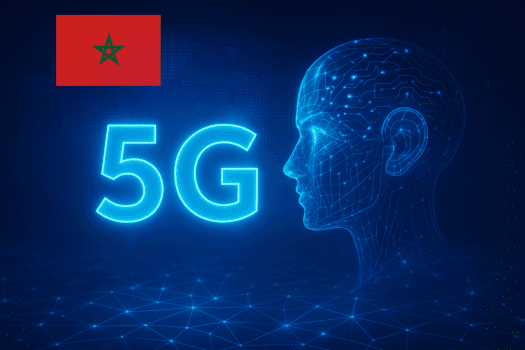
Morocco has officially entered the era of 5G technology, marking a major milestone in its ongoing digital transformation. This development places the Kingdom among Africa’s most advanced digital economies, reinforcing its long-term ambition to build a connected, innovative, and inclusive society powered by next-generation infrastructure.
A Strategic Milestone in Morocco’s Digital Transformation
The rollout of 5G comes after several years of preparation led by the National Telecommunications Regulatory Agency (ANRT) and Morocco’s main telecom operators. Through coordinated investments in infrastructure, spectrum allocation, and technical testing, the country has successfully laid the groundwork for nationwide deployment.
This step is fully aligned with Morocco’s broader Digital Roadmap 2030, which prioritizes high-speed connectivity, artificial intelligence integration, and digital sovereignty as pillars of future economic growth.
What 5G Will Change for Morocco
The introduction of 5G technology will significantly enhance mobile connectivity across the country, offering ultra-fast internet speeds, extremely low latency, and the ability to connect massive numbers of devices simultaneously.
Beyond consumer benefits, this transformation will support the emergence of smart cities, intelligent transport systems, and advanced digital services across key sectors such as healthcare, education, agriculture, and logistics.
| Sector | 5G Impact |
|---|---|
| Healthcare | Telemedicine, remote surgery support, real-time diagnostics |
| Transport | Smart traffic systems, connected mobility, reduced congestion |
| Agriculture | Precision farming, IoT sensors, predictive crop management |
| Education | E-learning platforms, immersive virtual classrooms |
According to the ANRT, 5G is not simply about faster downloads, but about enabling a fully connected ecosystem where data flows seamlessly between systems, devices, and services.
Telecom Operators Driving the 5G Rollout
Morocco’s digital transformation is being powered by its leading telecom operators: Maroc Telecom, Orange Maroc, and Inwi. Each operator has played a key role in preparing the national infrastructure for 5G deployment.
- Maroc Telecom: Early testing of 5G antennas in collaboration with global partners, focusing on performance optimization and network stability.
- Orange Maroc: Strong emphasis on digital inclusion and expanding connectivity to underserved rural areas.
- Inwi: Investment in cloud services, startup ecosystems, and innovation-driven digital solutions.
Over the past years, these operators have expanded fiber networks, modernized data centers, and strengthened cybersecurity systems to ensure a stable and secure digital environment.
5G and Artificial Intelligence: A Powerful Synergy
The combination of 5G connectivity and artificial intelligence is expected to reshape Morocco’s economic landscape. High-speed networks will unlock the full potential of AI-driven applications, from predictive infrastructure maintenance to smart logistics and automated public services.
This convergence supports Morocco’s ambition to become a regional leader in digital innovation, attracting investment in technology, startups, and research-driven industries.
A Step Toward Digital Sovereignty in Africa
With the launch of 5G, Morocco strengthens its position among Africa’s most digitally advanced nations, alongside countries such as South Africa and Egypt. However, Morocco’s approach is distinguished by its focus on digital sovereignty, infrastructure independence, and inclusive innovation.
The government continues to support research centers, technology incubators, and digital startups, ensuring that innovation extends beyond major urban hubs like Casablanca, Rabat, Tangier, and Marrakech.
Bridging the Digital Divide
A key priority of Morocco’s digital strategy is ensuring equitable access to technology. The Ministry of Digital Transition emphasizes that 5G deployment must benefit both urban and rural communities, reducing inequalities and enabling nationwide participation in the digital economy.
Initiatives targeting rural connectivity, digital education, and e-government services are expected to play a central role in this transformation.
Looking Ahead: Morocco’s Connected Future
As Morocco enters the 5G era, the country stands at the beginning of a new technological chapter. The infrastructure being deployed today will shape how citizens work, learn, travel, and interact over the coming decades.
From smart agriculture and telemedicine to autonomous mobility and digital public services, 5G will serve as the backbone of a modern, efficient, and connected Morocco.
This transformation reflects a broader national vision: building a resilient digital economy capable of competing globally while ensuring inclusive growth for all citizens.
MoroccoBeat – Inspiring Stories, Positive Energy, Proudly Moroccan.