A Vision for a Connected Kingdom
Announced by the Ministry of Digital Transition and Administrative Reform, the roadmap outlines a clear vision: to ensure every Moroccan citizen, business, and institution benefits from high-speed connectivity and intelligent digital services. The plan aligns with the Kingdom’s broader economic transformation agenda under the High Vision of His Majesty King Mohammed VI, which prioritizes technology as a driver of growth, equity, and national sovereignty.
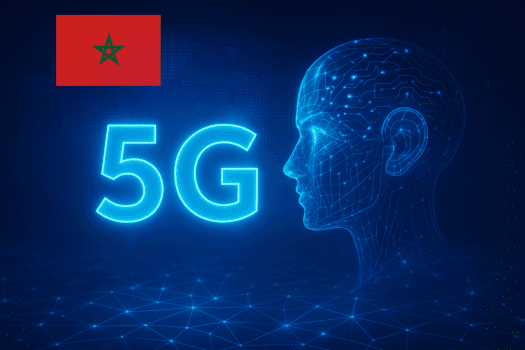
The government’s strategy places particular emphasis on the rollout of 5G technology, a milestone that will revolutionize communication, transport, industry, and healthcare. The deployment is expected to begin in 2026, following final spectrum allocation and regulatory approval. Telecommunications operators are already conducting pilot projects in major cities, laying the groundwork for a nationwide launch.
Fiber Optics: Connecting Urban and Rural Morocco
At the heart of Morocco’s digital transformation lies a massive expansion of its fiber-optic infrastructure. According to the roadmap, more than 90 percent of the population will have access to high-speed broadband by 2028. The plan focuses not only on metropolitan areas but also on rural and peripheral regions, ensuring that digital inclusion becomes a national reality rather than an urban privilege.
This effort builds on years of investment in Morocco’s telecommunications backbone, including submarine cables linking the Kingdom to Europe and West Africa. With over 150,000 km of fiber already deployed, the new strategy adds both capacity and resilience, supporting smart grids, e-governance platforms, and connected industries.
Artificial Intelligence: Morocco’s Leap into the Knowledge Economy
Morocco’s roadmap doesn’t stop at infrastructure, it also places artificial intelligence (AI) at the center of its innovation model. The plan includes establishing national AI laboratories, promoting public-private research, and encouraging startups focused on machine learning, data analytics, and robotics.
Among the strategic objectives is the creation of a National Center for Artificial Intelligence and Emerging Technologies, designed to support ethical innovation, AI regulation, and knowledge transfer. This initiative positions Morocco as a continental hub for data-driven solutions in agriculture, education, health, and energy, sectors where smart technologies can significantly improve efficiency and sustainability.
Empowering the Next Generation
A central component of the roadmap is human capital. The government aims to train over 200,000 young Moroccans in digital skills by 2030 through specialized university programs and vocational centers. This investment in talent seeks to bridge the gap between global technology trends and local opportunities, ensuring Morocco’s youth are active participants in the digital revolution.
Minister of Digital Transition Ghita Mezzour emphasized that “digital transformation is not just about technology, it’s about people.” She highlighted the importance of preparing Moroccan youth to create, manage, and export digital innovations rather than simply consuming them. This approach mirrors Morocco’s successful strategy in renewable energy and automotive manufacturing, industries that have already made the Kingdom a regional leader.
Public Services and Smart Governance
The roadmap also accelerates Morocco’s progress toward e-governance. Public institutions are set to digitize key services, from administrative documents and business registration to healthcare and education. By integrating AI and data analytics, Morocco aims to improve transparency, efficiency, and citizen engagement.
The government’s Digital Morocco 2030 platform will serve as a unified interface for online public services, helping citizens and businesses interact seamlessly with state institutions. This transformation is expected to reduce bureaucratic delays and enhance Morocco’s competitiveness in global innovation rankings.
Green Digital Transformation
In line with Morocco’s sustainability goals, the digital roadmap incorporates an environmental dimension. The 5G and fiber-optic expansion will prioritize energy-efficient infrastructure and the use of renewable power for data centers. Smart technologies will also support the management of natural resources, urban mobility, and waste reduction, helping the country advance toward a greener digital economy.
By combining clean energy leadership with digital innovation, Morocco is shaping a model of “green tech growth” that many developing nations could follow. The synergy between environmental responsibility and technological progress underlines the country’s unique approach to modernization.
Related: Morocco 2030: Building a Smart, Green, and Human-Centered Future
A Continental Benchmark
Across Africa, Morocco’s strategy stands out for its clarity and scale. The integration of 5G, fiber optics, and AI under a single national framework provides a benchmark for other nations seeking to accelerate digital transformation. Regional cooperation with countries such as Senegal, Côte d’Ivoire, and Nigeria is expected to deepen, positioning Morocco as a key digital partner for Africa’s future.
With this roadmap, Morocco confirms its role not just as a technology adopter but as a digital innovator, a nation capable of shaping the Fourth Industrial Revolution on its own terms.
Morocco’s Digital Decade Begins
From 5G towers rising above Casablanca to fiber-optic lines reaching remote villages and AI startups emerging across the country, Morocco’s digital decade has begun. The Kingdom’s roadmap is more than a policy, it’s a vision of confidence, connectivity, and creativity. As Morocco looks toward 2030, it is not merely catching up with global trends; it is setting them for Africa and beyond.
Source: 2M.ma
MoroccoBeat – Inspiring Stories, Positive Energy, Proudly Moroccan.