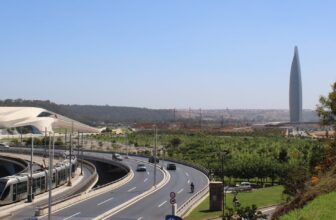
In just a few short months, the sound of drums, vuvuzelas, and tens of thousands of football fans will fill Morocco’s stadiums as the Africa Cup of Nations 2025 kicks off. But what’s happening behind the scenes is bigger than a single tournament.
Across the country, Morocco is rebuilding, expanding, and reimagining stadiums, not just for AFCON, but for a much larger goal: co-hosting the 2030 FIFA World Cup.
This is a story of ambition, engineering, and national pride. From Rabat to Tangier, and from Agadir to Fez, Morocco is transforming its sports infrastructure to deliver a tournament that CAF officials are already calling “one of the best in history.” And beyond the football, these projects are designed to leave a legacy that will last decades.
A Tournament as a Test Run for the World Stage
When Morocco won the bid to host CAN 2025, it was more than a sporting honor, it was a strategic opportunity. The timing, just five years before the World Cup, means that every improvement made for AFCON will directly support Morocco’s readiness for the planet’s biggest sporting event.
Instead of taking a short-term approach, the Moroccan strategy has been to future-proof stadiums. This means building and renovating to FIFA standards now, so that upgrades after 2025 are minimal. CAF has embraced this model, praising Morocco for its forward planning and integration of AFCON into the broader World Cup vision.
Nine Stadiums Across Six Cities
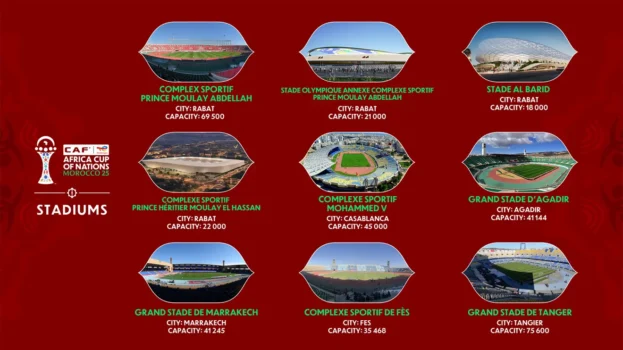
The Confederation of African Football (CAF) has confirmed that six cities – Rabat, Tangier, Casablanca, Marrakech, Agadir, and Fez – will host AFCON 2025 across nine stadiums. This diverse lineup ensures the tournament is both geographically inclusive and logistically sound.
Rabat, the capital, will play a starring role with four stadiums, an unprecedented concentration for an AFCON host city. Tangier’s Ibn Batouta Stadium is being massively expanded, while Casablanca’s legendary Mohammed V Stadium is receiving a modern facelift. The southern and historic charm of Agadir, Marrakech, and Fez adds a cultural depth that will make the fan experience unforgettable.
Rabat : The Beating Heart of Morocco’s Stadium Transformation
No city embodies Morocco’s stadium ambitions more than Rabat. By the time AFCON kicks off, the capital will boast four fully modernized or brand-new venues.
The Prince Moulay Abdellah Stadium is undergoing a near-total rebuild, with capacity expanded to almost 69,000 seats. It will have a striking roof design for shade and better acoustics, VIP lounges, updated media facilities, and a hybrid pitch that meets FIFA specifications. This is where they expect the tournament’s opening match and final to take place.
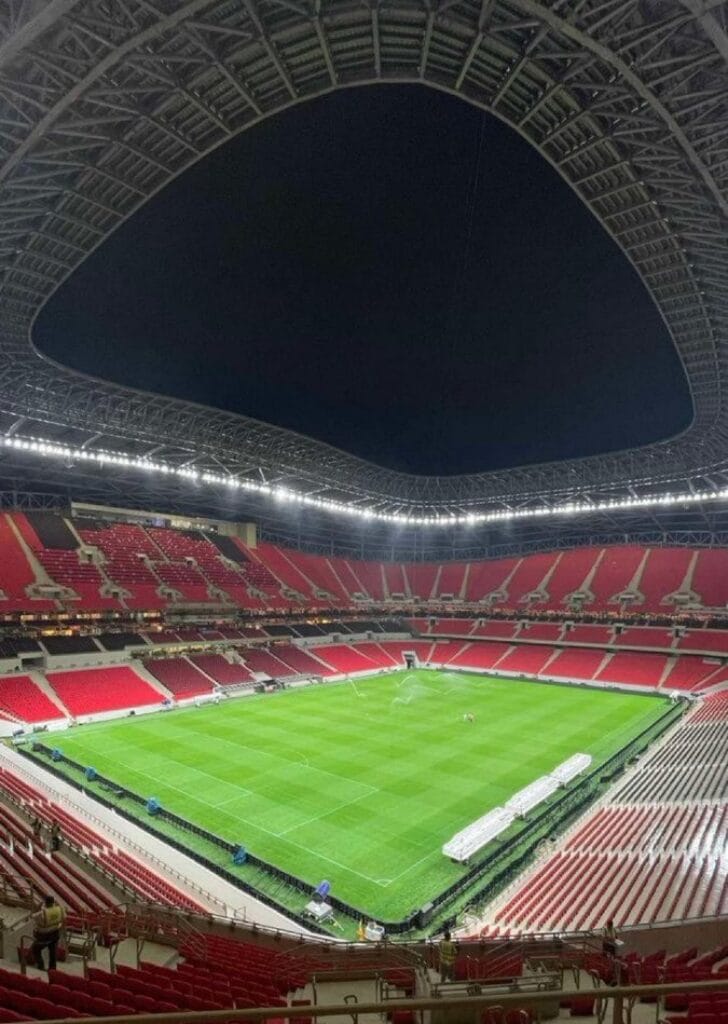
Nearby, authorities have completely rebuilt the Moulay El Hassan Stadium from its original 12,000-seat capacity into a modern 22,000-seat venue, designed for both football and athletics. The Al Barid Stadium, a brand-new 18,000-seater in Rabat’s Agdal district, will debut during AFCON, hosting key knockout matches. Then there’s the Olympic Annex Stadium (with 21,000 seats and a full athletics track) which will host group matches and serve as a training venue for World Cup teams in 2030.
This concentration of high-quality stadiums in Rabat reflects Morocco’s capital city status and its logistical advantages: an international airport, a modern tram system, and excellent road and rail connections.
Tangier : Northern Gateway to Africa
Moroccan authorities are transforming Tangier’s Ibn Batouta Stadium from a 45,000-seat venue into a 75,000-seat football arena, one of the largest in Africa. This expansion involves adding new tiers of seating, installing a vast roof structure, and upgrading hospitality and media zones to the latest CAF and FIFA standards.
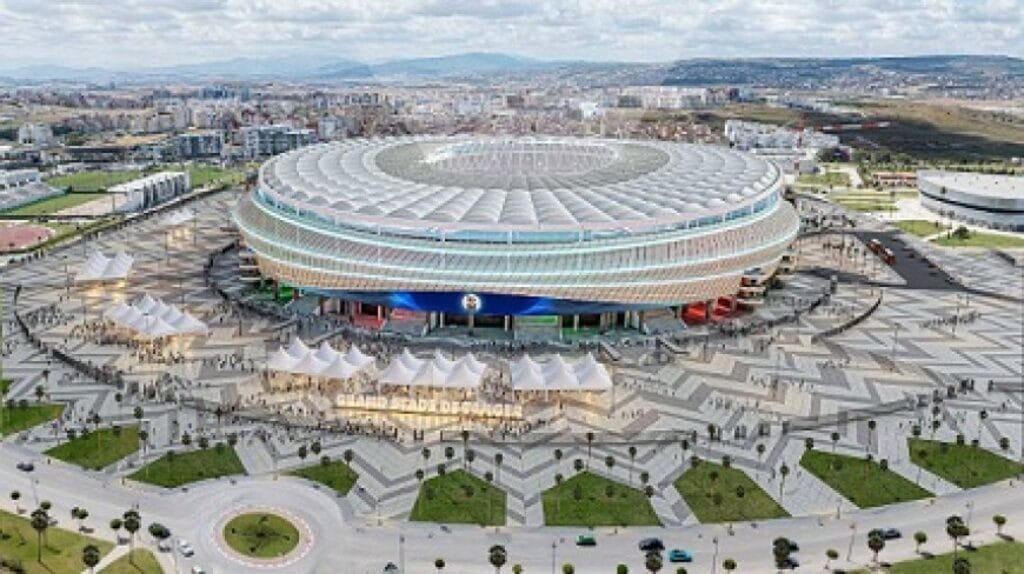
Tangier is strategically important. Located at the Strait of Gibraltar, it serves as a gateway between Europe and Africa. With a high-speed rail link to Rabat and Casablanca and a growing international airport, it is perfectly positioned to welcome large numbers of traveling fans.
Casablanca : Honoring History While Building for the Future
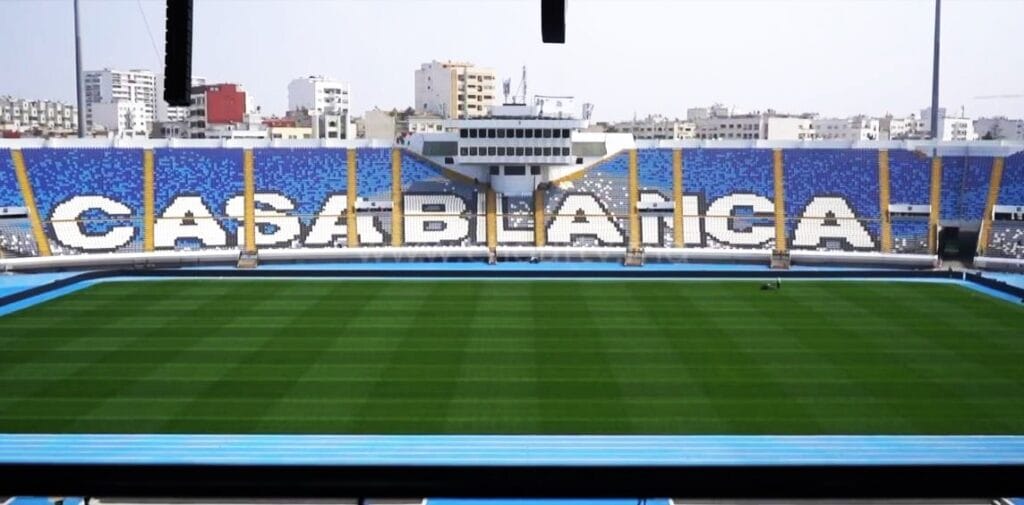
The Stade Mohammed V is a piece of Moroccan football history. Built in 1955, it has hosted countless memorable matches, from club derbies between Raja and Wydad to the 1988 AFCON final. For CAN 2025, it has received a major renovation: new seating, improved lighting, upgraded hospitality, and enhanced accessibility for people with reduced mobility.
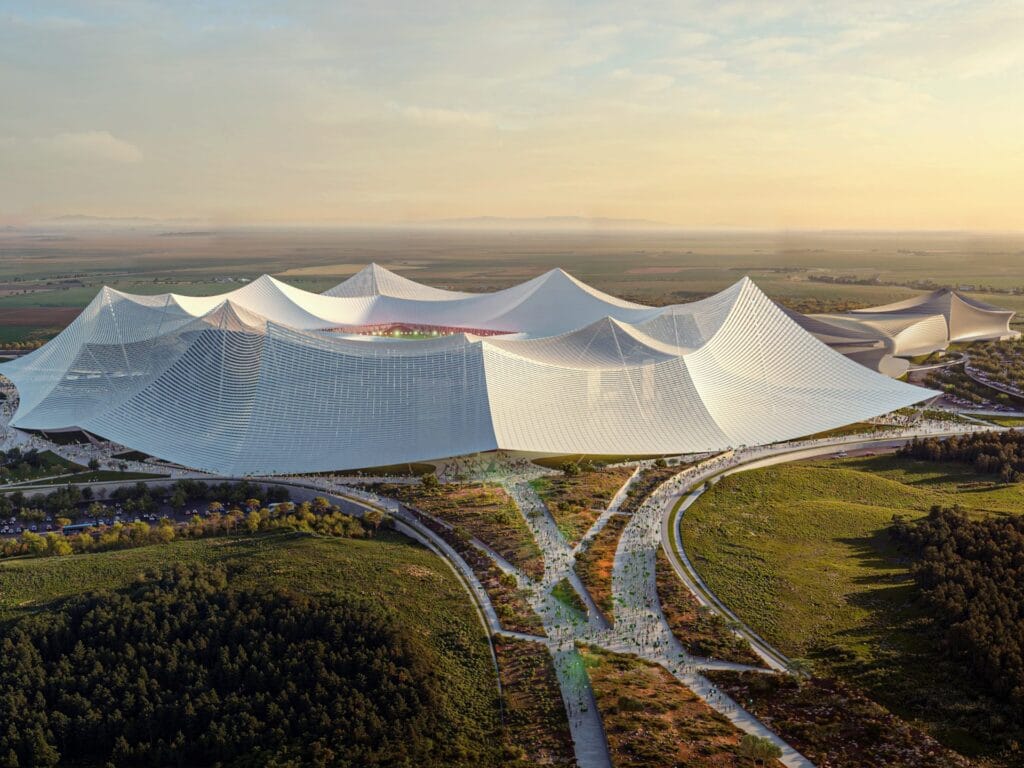
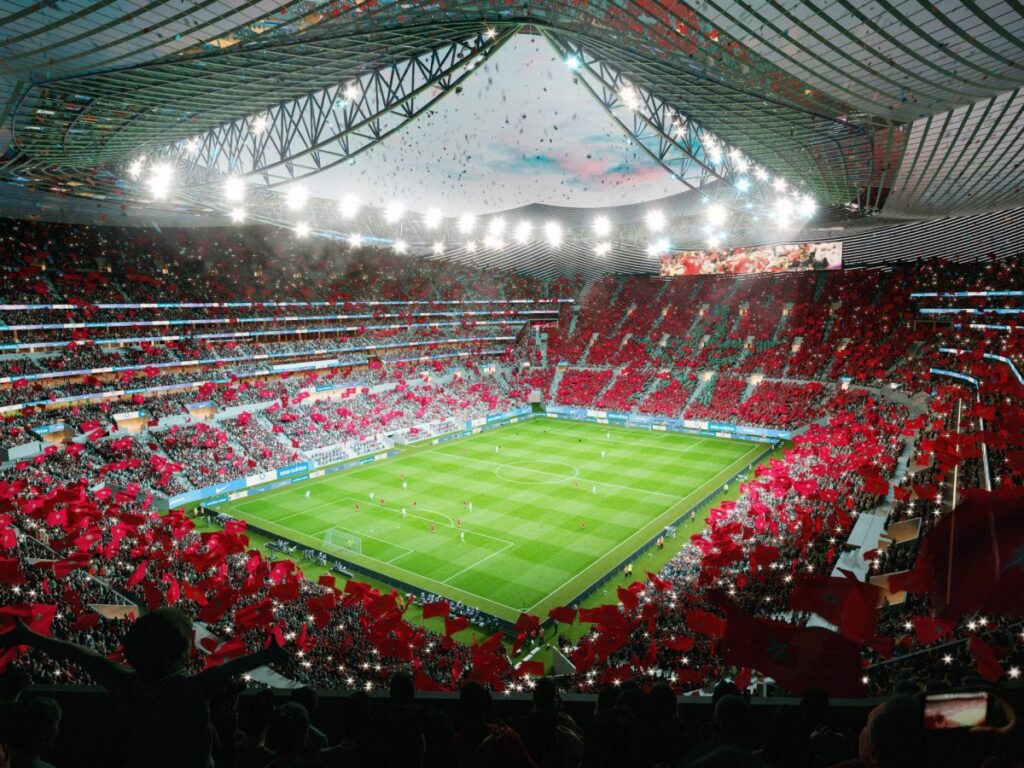
Long term, Casablanca will also be home to the Grand Stade Hassan II, a colossal 115,000-seat stadium currently under construction in nearby Benslimane. Scheduled for completion in 2027, it will be the largest football stadium in the world and is a candidate to host the 2030 World Cup final.
Marrakech : The Red City’s Grand Welcome
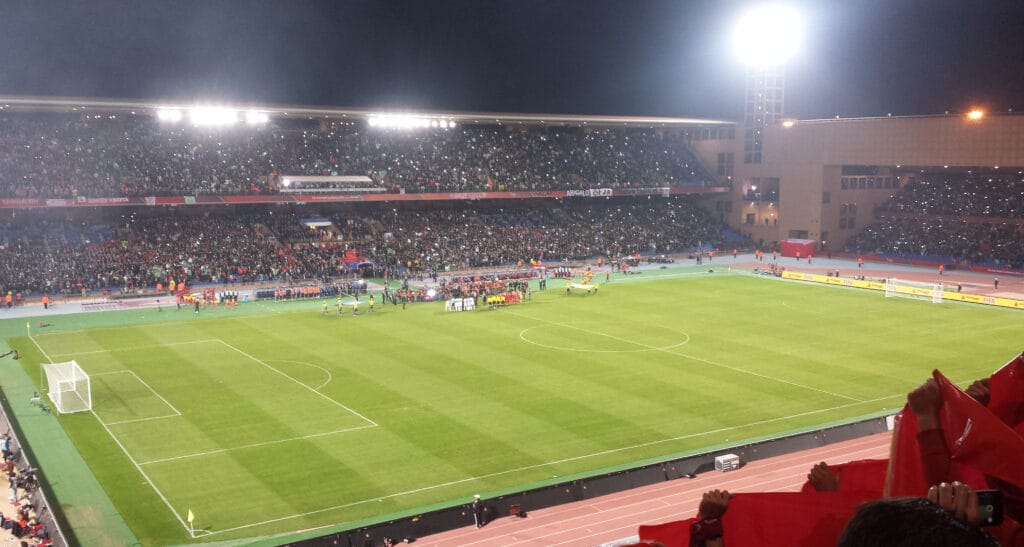
Marrakech’s Grand Stade is already one of Morocco’s most modern stadiums. With over 45,000 seats, it has hosted FIFA Club World Cup matches and international friendlies. For AFCON 2025, it is receiving technology upgrades (improved pitch lighting, better audio systems, and enhanced media facilities) to meet the demands of modern broadcasting.
Marrakech’s appeal goes far beyond football. Its historic medina, vibrant souks, and world-class hospitality make it one of the most attractive destinations for traveling fans. Combining the tournament with a Marrakech getaway will be irresistible for many visitors.
Agadir : Beach City with a Sporting Edge
Agadir’s Stade Adrar is the perfect fusion of sport and leisure. Built in 2013 with 41,000 seats, it has already hosted major football events. For CAN 2025, upgrades have focused on seating comfort, pitch quality, and player facilities. Fans attending matches here can enjoy Morocco’s best beaches, a relaxed pace of life, and excellent seafood.
Fez : Tradition Meets Modernity
Fez, Morocco’s spiritual and cultural heart, is making sure its football facilities match its historical prestige. The Complexe Sportif de Fès has been renovated to host AFCON group matches, with around 35,000 seats, modern dressing rooms, and improved access for fans.
The stadium’s location means that visiting supporters can pair football with exploring the world’s largest living medieval medina, a UNESCO World Heritage site.
Building Beyond the Pitch
While stadium upgrades take the headlines, Morocco’s preparations go far beyond the pitch.
Transport: The government is extending the high-speed rail network (Al Boraq) south toward Marrakech and eventually Agadir. Major airports, including Casablanca, Marrakech, and Agadir, are expanding to double national passenger capacity by 2030.
Fan Experience: All host cities are implementing modern ticketing systems, improved public transport links to stadiums, and multilingual signage
Technology: In a first for an AFCON, Morocco will deploy Spidercam aerial cameras in all nine stadiums, giving global viewers dynamic, high-quality coverage.
Sustainability: Morocco is fitting many stadiums with energy-efficient lighting, water recycling systems, and solar panels, aligning with its broader environmental goals.
The Road to 2030
Morocco’s hosting of CAN 2025 is a carefully designed rehearsal for the 2030 FIFA World Cup. Every seating upgrade, every roof installation, every fan facility is being built to meet FIFA’s higher demands.
By 2027, the Grand Stade Hassan II will join the lineup, and smaller stadiums will receive additional enhancements to raise them from AFCON to World Cup standard. The legacy will be more than infrastructure—it will be experience: tested operational plans, trained staff, and cities accustomed to hosting the world.
By 2027, the Grand Stade Hassan II will join the lineup, and smaller stadiums will receive additional enhancements to raise them from AFCON to World Cup standard. The legacy will be more than infrastructure, it will be experience: tested operational plans, trained staff, and cities accustomed to hosting the world.
More Than Football
In the words of FRMF President Fouzi Lekjaa, “Hosting CAN 2025 is about showing Morocco’s capacity to organize events that unite Africa and inspire the world.” That sentiment captures the ambition behind every stadium project in the country.
For Morocco, this is about more than football. It’s about tourism, cultural exchange, national pride, and economic opportunity. It’s about creating spaces where the world can gather, cheer, and remember.
Related Reading: CAN 2025 in Morocco: Full Guide to Host Cities and Venues