
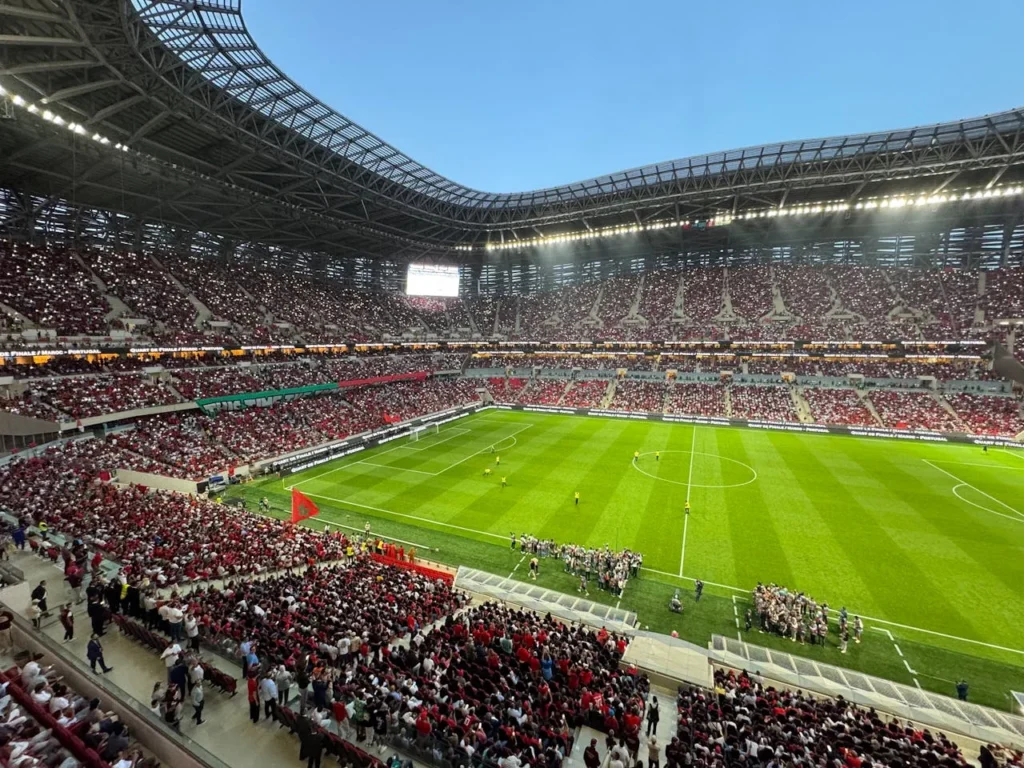
Rain or shine, Morocco’s stadiums deliver as AFCON 2025 continues without disruption. Moulay Abdellah Stadium. Photo by Earth Photart via Pexels
As periods of heavy rain accompanied several matches during AFCON 2025 in Morocco, one conclusion quickly became clear: the Moroccan stadiums passed the test. Far from disrupting the tournament, the weather provided a real-life stress test for infrastructures designed, renovated, and built to meet the highest international standards.
Advanced drainage systems, high-quality playing surfaces, and roofing structures covering large sections of the stands ensured that matches could continue smoothly while protecting spectators. Across host cities including Rabat, Casablanca, Agadir, Fez, Tangier, and Marrakech, games were played without major interruptions, confirming the reliability of the technical choices made long before kickoff.
Infrastructure designed for performance and resilience
From water-draining pitches to efficient rainwater evacuation systems, every detail was carefully planned to preserve both the quality of play and fan comfort. Even under heavy skies, the ball circulated smoothly and the rhythm of matches remained intact—clear proof that anticipation and engineering took precedence over improvisation.
The consistency observed across multiple venues highlights the depth of Morocco’s investment in modern sports infrastructure, capable of withstanding unexpected weather conditions without compromising the spectacle.
Beyond football: a statement of organization and vision
This resilience goes beyond the sporting dimension. It reflects a broader vision of hosting major international events with sustainability and professionalism at their core. Packed stadiums, colorful umbrellas in the stands, and uninterrupted chants from supporters painted a picture of confidence in venues built to face climatic challenges.
By successfully overcoming this meteorological test, Morocco sends a clear message: AFCON 2025 is not only being played on the pitch, but also on the organizational front—and there too, the host nation remains firmly in control.
Related Moroccan Stadiums Ressources:
- Tangier Grand Stadium: SubAir System Shows Global-Level Performance
- Prince Moulay Abdellah Stadium: Morocco’s New Football Jewel
- Tangier Grand Stadium Renovation – FIFA 2030 World Cup Ready
- Your Complete Guide to the Stadiums of the CAN Morocco 2025
- Mohammed V Stadium: Casablanca’s Legendary Home of African Football
- Hassan II Stadium: Morocco’s 115,000-Seat Giant